
Eighty Years Later, a Hoquiam Sailor’s Letters from the USS Fargo Sail Home
Eighty years after an 18-year-old from Hoquiam, Washington, first stepped aboard a light cruiser in San Diego, his handwritten words are finally reaching the public. Starting November 11—Veterans Day—registered nurse Aaron Avery will begin releasing a trove of letters written by his uncle, Seaman First Class Charles Raymond “Ray” Fenton, who served aboard the USS Fargo (CL-106) from 1946 through 1948.
Avery, an Enumclaw resident, nearly let the collection vanish into a landfill. For more than a century, his family had been the custodians of a dusty box containing letters, postcards, and photographs dating back to that earlier era. When the time came to clear out the family home, the box was headed for the trash until Avery intervened at the last minute, choosing instead to become its new guardian and spend months sorting through his ancestors’ daily events and travels.
The first chapter of what Avery calls “The Fargo Files” focuses on Ray’s Mediterranean deployment, a journey that took the USS Fargo through Italy, Greece, France, Malta, and more. The letters, penned in cursive on blue-and-gold USS Fargo letterhead, offer a deck-level view of the postwar Navy—something history books rarely capture. They arrive just in time for Veterans Day, highlighting how urgent the project is: primary sources like these vanish annually as families clear out homes, and each loss is permanent.

A Kid from Hoquiam Watching America’s New Place in the World
Ray Fenton enlisted in May 1946, went through boot camp in San Diego, and joined the light cruiser USS Fargo for her Mediterranean cruise. Avery describes his uncle as a “homesick and funny” 18-year-old “trying to sound grown up.” “To the world: history usually keeps the admirals,” Avery wrote. “Letters like these are what the postwar Navy actually looked like from the deck—a kid from Hoquiam watching America take up its new place in the world in 1946.”
The letters show a young man moving through a world far from Grays Harbor County, where mail from home took weeks to arrive and family members replied in turn. On December 15, 1956, Ray wrote from Naples, Italy, about the holidays approaching: “Gee it sure doesn’t seem like Xmas is only 10 days away. It sure won’t be much of a Xmas being over here, but maybe next Xmas I will be home.” He noted that he had not sent a money order home “because [I] haven’t got it insured yet,” and mentioned receiving holiday gifts he planned to save until Christmas Day: “I won’t open them til Xmas, but I sure would like to know what you sent.”
Months later, writing from Rome, Ray described a visit that stopped just short of the Vatican’s official tour schedule: “… [W]e couldn’t go to Vatican City because it is only open to tours on Monday and Sat. But I did go to St. Peters Church in the Vatican.” He struggled to capture the beauty in words: “… The inside of the church was really beautiful. I won’t even try to tell you about it now because it would be too hard to write how beautiful it is, so I will wait till I get home and tell you all about it and show you pictures of it.” These letters touch on both the wonders of the world and domestic events back home, capturing a sailor caught between two worlds while the ship steamed between Mediterranean ports.
Stamps, Ephemera, and the Cost of Preservation
To fund the digitization and release of these letters, Avery is selling a collection of vintage items that belonged to his family. The offerings are chiefly postage stamps organized by country and year, spanning from 19th-century issues forward, including U.S. airmail material, plus historical paper and ephemera. As of November 4, 2026, the listings included a “Bergedorf 4 Shilling” stamp from 1861—described as “potentially the most important single stamp in the collection”—and a November 7, 1918 edition of the Yerba Buena Gazette that incorrectly declared “GERMANY SURRENDERS!!” four days before the actual armistice.
The sales support a model Avery hopes will sustain the archive: releasing the letters serially, free, one piece at a time, beginning November 11 on The Fargo Files website. After Ray’s correspondence concludes, Avery plans to publish a second archive of World War II-era letters from Ray’s brother Bud, correspondence from a 1927 family road trip, and the story of his family in the Humptulips and Grays Harbor timber country from the 1880s through the 1920s. Each release follows the same chronological model, building a public record from what was once a private inheritance nearly lost to the dump.
“Releasing them in order, free, one piece at a time, turns a family’s box into something a whole community can follow—and I hope it makes other families think twice before a box like this gets thrown away,” Avery said. “Boxes like this one are disappearing every year when families clean out houses. Every one that survives is a primary source nobody has to interpret secondhand.”
What Gets Lost When the Box Goes to the Dump
The letters do not offer strategic analysis of the early Cold War; they offer a teenager’s voice, preserved in ink on government letterhead, waiting eighty years to be read by strangers who can now follow along, one letter at a time.
By November 11, the first installment will be live, offering a window into 1946 that no textbook can replicate.
Worth a look

Victoria Broderick Upsets Republican Incumbent in Tennessee’s 4th District
Victoria Broderick won Tennessee's 4th Congressional District on Tuesday, unseating 16-year Republican incumbent Scott DesJarlais by fewer than...

Can New Governor Gina Hinojosa Save Austin ISD From State Takeover?
"In case you have not heard, on day one, I will fire Mike Morath, and we will work...

SDSU Formalizes interactive process for disability accommodations
South Dakota State University has spelled out a detailed roadmap for how employees, visitors and applicants with disabilities...
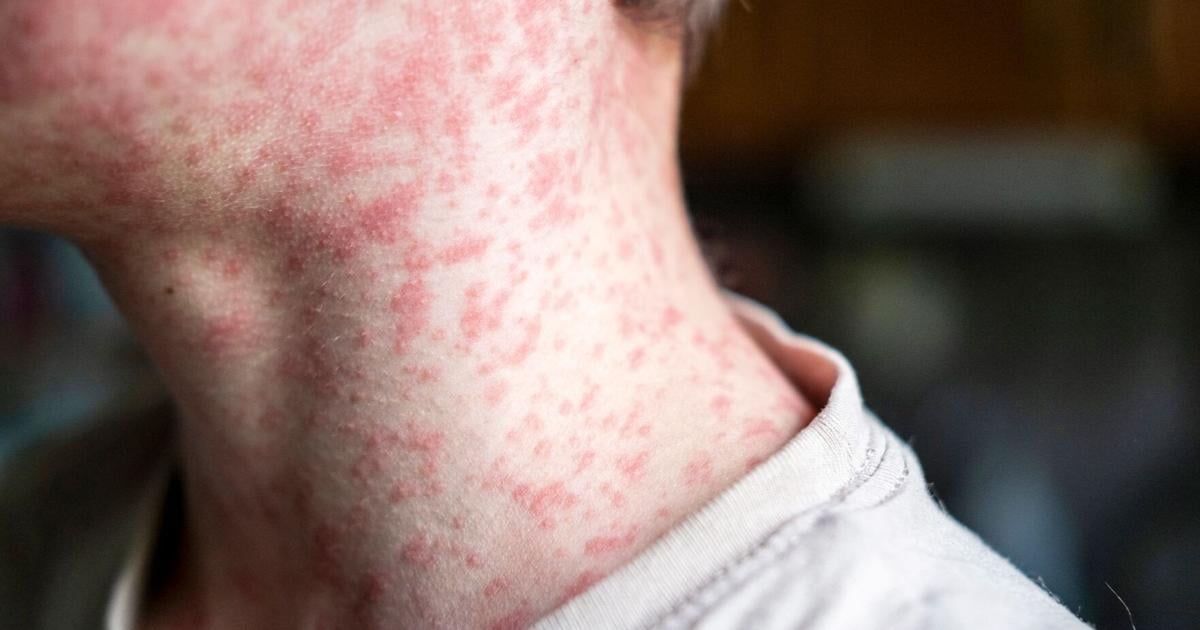
Wisconsin measles cases reach 431 after three Columbia County reports
PORTAGE, Wis. — Columbia County Public Health confirmed three measles cases Wednesday, sending Wisconsin's statewide tally to 431,...