Social Security’s trust fund could be depleted by the end of 2032, triggering benefit cuts, Yahoo Finance reported.
The program’s annual report shows the Old-Age and Survivors Insurance (OASI) Trust Fund would only be able to pay about 80% of benefits to retirees if no changes are made. The depletion is driven partly by changing income patterns that have eroded the program’s revenue base, according to Rich Johnson, author of a new AARP Public Policy Institute report.
“Demographics are important, but Social Security’s finances have weakened in large part because the economy has shifted but Social Security’s funding model has not,” Johnson told Yahoo Finance.

He found that earnings growth is increasingly concentrated among high-income workers whose wages exceed the Social Security taxable earnings cap. For 2026, that cap was $184,500. Earnings for the roughly 6% of workers above this cap grew much faster than for the 94% below it, causing the share of total earnings subject to payroll tax to decline.
Over the past four decades, the economic share subject to payroll taxes has shrunk. In 1983, payroll tax revenue accounted for 41% of GDP. Today it is down to 34%. AARP estimates that if the payroll share had remained at 41%, Social Security could have paid full benefits until 2059.
“A greater share of the economic output of GDP is going to owners of capital rather than workers because of technological change and more automation,” Johnson said. “More of the nation’s output is going to things like investment income and corporate profits, and a smaller share going to earnings.”
Workers and employers each pay 6.2% in payroll taxes on wages up to the taxable maximum. For 2027, that maximum will increase to $192,300, meaning the maximum Social Security withholding for a worker will be $23,842.
Lawmakers have proposed various fixes, including raising the payroll tax cap, increasing the retirement age, and taxing investment income for high earners. A recent bill from Republican Sen. Ron Johnson would delay benefit cuts by authorizing transfers from the U.S. Treasury, but it is unlikely to gain traction.
“Strengthening Social Security does not require recreating the economy of 1983,” Johnson said. “It just means updating Social Security’s financing to reflect how Americans receive income today and ensuring that people working today can count on the Social Security they’ve earned in their retirement.”
Keep reading
- Construction Begins On $309.65M Red Hill Water Treatment Plant in Honolulu
- Braves Sign Mauricio Dubón to Three-Year, $30 Million Contract
- 3.6% for Social Security, 2.6% for FERS, and a Bill Still Pending for VA (daybreakwire.com)
- Pope Leo XIV Concludes South American Journey Focused on Evangelization, Social Doctrine, and Peace (world-today-news.com)
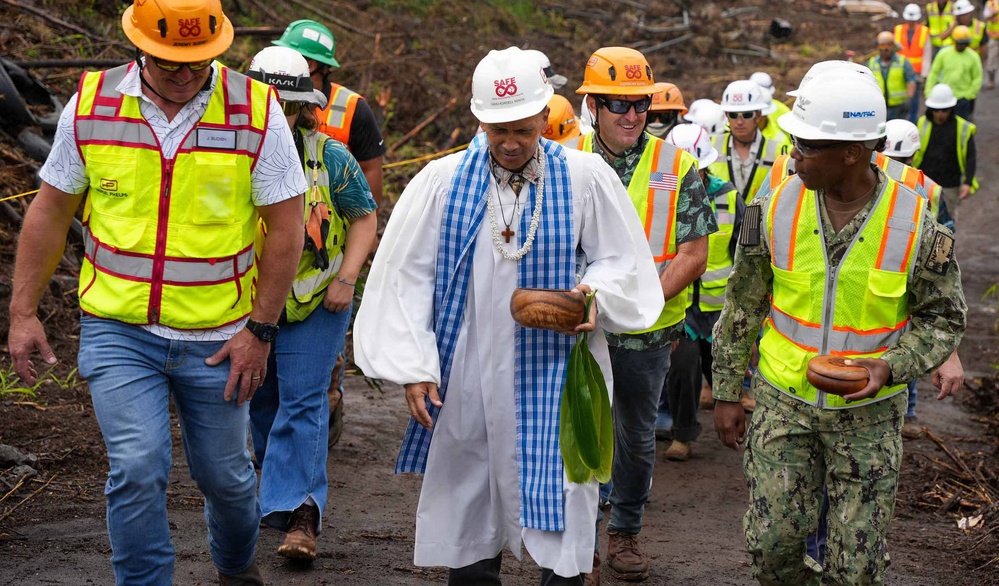
Construction Begins On $309.65M Red Hill Water Treatment Plant in Honolulu
Construction began November 12 on a $309.65 million water treatment plant at Joint Base Pearl Harbor-Hickam, marking the...

Braves Sign Mauricio Dubón to Three-Year, $30 Million Contract
The Atlanta Braves signed utility player Mauricio Dubón to a three-year, $30 million contract Saturday, hours after re-signing...
Minneapolis Reopens Nicollet Avenue Block at Lake Street After 49 Years
A car drove north on Nicollet Avenue, crossed Lake Street and kept going Tuesday morning for the first...

Young Endangered Right Whale Dodged Ships off NJ, NY Coast in 2021
A young endangered right whale swam through a maze of hundreds of ships off the New Jersey and...