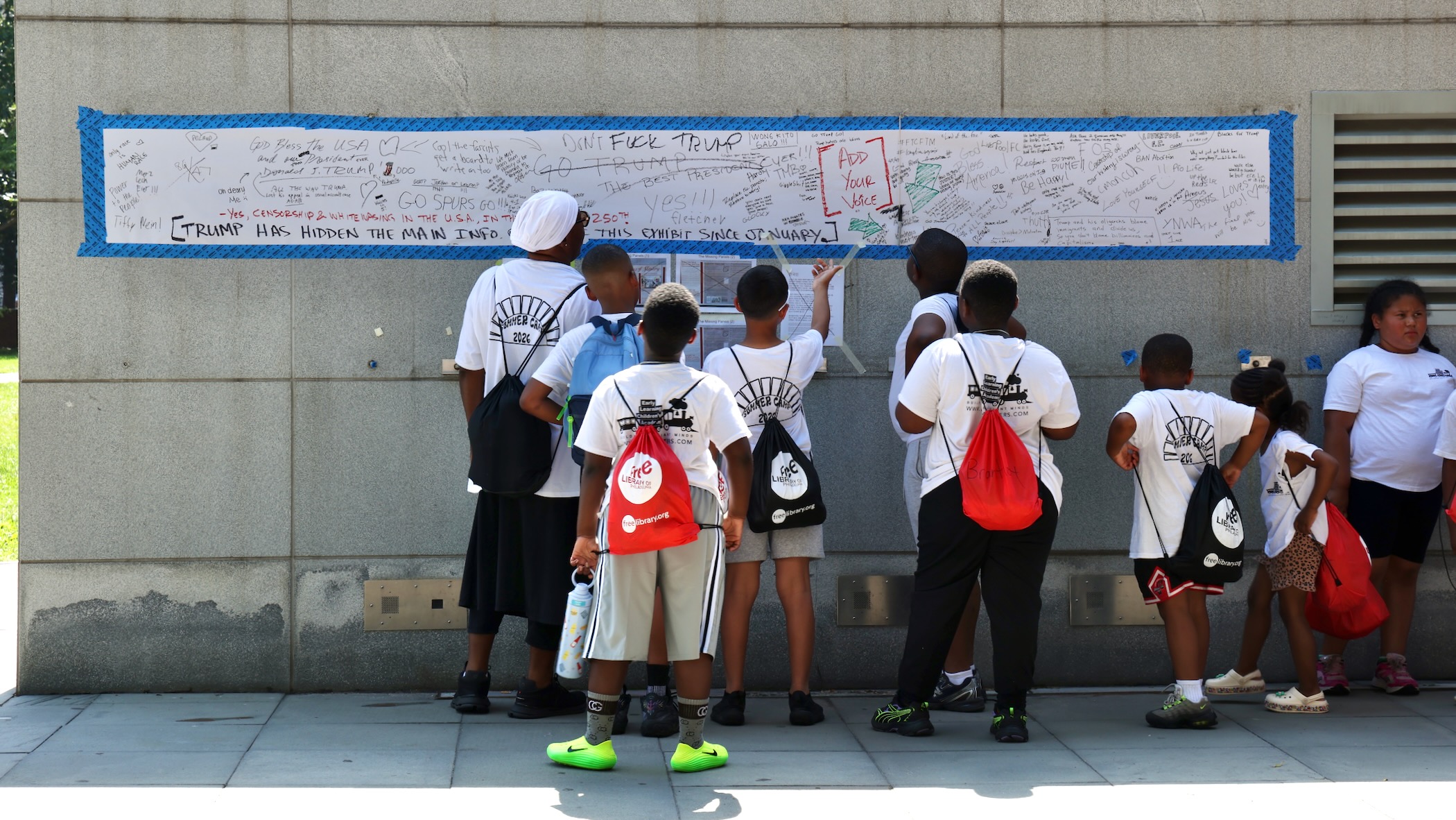
Activist groups filed a federal lawsuit Monday challenging the Trump administration’s replacement of the slavery exhibit at the President’s House site in Philadelphia, arguing the changes violate the Constitution’s equal protection guarantee.
Original exhibit replaced after executive order
The National Park Service installed new panels in July following a six-month legal fight and a Trump executive order titled “Restoring Truth and Sanity to American History.”
The original exhibit, which opened in December 2010 near the Liberty Bell Center, was the first commemoration of enslaved people within the National Park System and the first slavery memorial of its kind on federal property, according to the 77-page complaint filed by the Avenging the Ancestors Coalition and The Black Journey. The old exhibits were removed in January 2026, though a federal judge ordered them preserved.
New panels shift focus from enslaved people to Founders’ views
New panels erected by the park service significantly reduced references to slavery and shifted focus toward the “anti-slavery sentiments” of the slave-owning Founding Fathers, WHYY reported. One panel notes the U.S. Constitution did not contain the word “slavery,” while another states Washington had “doubts” about the institution.
“Privately, George Washington often expressed discomfort with the institution and a desire to see it abolished,” the panel reads. “Yet as a Virginia plantation owner, his wealth and livelihood were deeply tied to it.” The lawsuit also alleges NPS employees disabled five motion-activated videos depicting the lives of the nine enslaved Africans, which remain off.
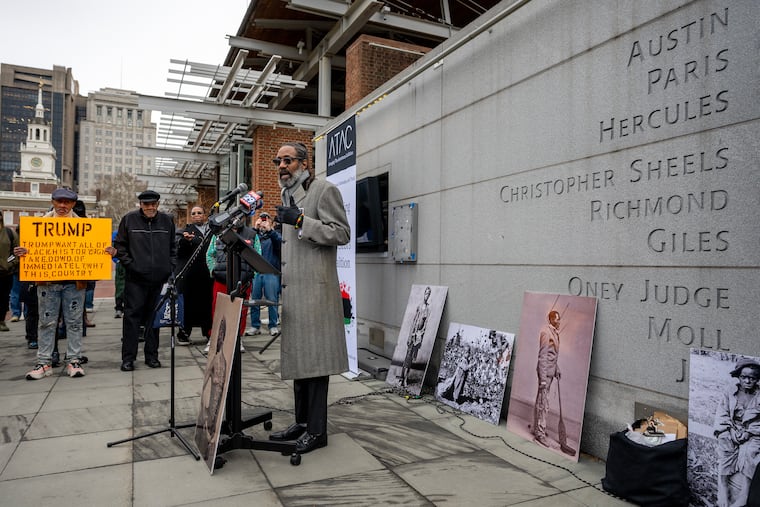
“Black people are uniquely impacted by the selective removal of their history, while history involving white historical figures at the President’s House site remains undisturbed,” the complaint says. The groups are represented by University of Pennsylvania Law Professor Cara McClellan, attorneys from the NAACP Legal Defense Fund, and WilmerHale.
“At the end of the day, under the constitution, we are all provided equal protection,” McClellan said. “And the targeting of Black history and discussions of slavery violates the equality principle.”
Lawsuit details exhibit's original scope and removal
A federal judge ordered the old panels preserved, CBS News said. The complaint names Interior Secretary Doug Burgum and acting National Park Service director Jessica Bowron as defendants, the Inquirer reported.
Plaintiffs cite financial harm and endangered status
The Black Journey spent roughly $14,000 on research and labor to update its tour to “maintain the examination of the paradox between slavery and freedom” after the panels were removed, the Inquirer reported. The suit says the harm extends beyond the economic impact, the Inquirer said.
The complaint argues the new exhibit title, “Visiting the President’s House Site: From Enslavement to Emancipation,” is misleading because none of the nine people enslaved by Washington in Philadelphia were emancipated there, the Inquirer reported.
Site marks where Washington held nine people in slavery
The President’s House served as the executive residence for Presidents George Washington and John Adams from 1790 to 1800, before the White House was built in Washington, D.C. Washington held nine people in slavery at the Philadelphia site, rotating them in and out to circumvent Pennsylvania’s Gradual Abolition of Slavery Act. Among them was Ona Judge, who escaped in 1796 and resisted efforts to return her to slavery.
The names of the nine enslaved people are engraved in a wall of the exhibit. Raina Yancey, founder of The Black Journey and daughter of a former National Park Service ranger, said the original exhibit helped visitors understand the contributions of Black Americans to the nation’s founding.
“We cannot tell the story of liberty without acknowledging those who were denied it,” Yancey told WHYY. “We cannot celebrate the promises of our founding without confronting the people who were excluded from them.”
Pennsylvania state Sen. Sharif Street, D-Philadelphia, whose father, former Mayor John Street, was in office during early efforts to develop the memorial, said understanding the country’s shortcomings at its founding is essential to appreciating progress made since.
“If we deny the history of what happened here, if we deny that George Washington held enslaved individuals here, if we deny the very history of this country, we do an injustice to what we have been able to overcome,” he told WHYY.
The National Park Service and the Department of Interior did not immediately respond to a request for comment, the Inquirer reported.
Related reading
- Archbishop Grob Reflects on Christ the King, Advent, and Thanksgiving
- Architect Magazine: MakeSpace by Glasstone announces $400M Morada Orlando
- Global Rights Groups Urge Pakistan to Free Idris Khattak on Seventh Anniversary of Detention (world-today-news.com)
- Trump's Beef Quota Filled About 37% in Month One; Ground Beef Fell 13 Cents (daybreakwire.com)
Archbishop Grob Reflects on Christ the King, Advent, and Thanksgiving
Archbishop Jeffrey S. Grob of Milwaukee marked the liturgical transition from the Solemnity of Christ the King into...

Architect Magazine: MakeSpace by Glasstone announces $400M Morada Orlando
MakeSpace by Glasstone Group announced the Morada Orlando development on November 11, a roughly $400 million luxury residential...

Oregon, Virginia Sue xAI Over Grok AI Deepfakes of Minors, Adults
Oregon and Virginia on Monday filed separate consumer-protection lawsuits against SpaceX, alleging its Grok AI tool on X...

Pro Football Hall of Fame Announces 2027 Nominees Including Eli Manning
The Pro Football Hall of Fame announced 52 player nominees for the Class of 2027 on Monday, a...