
The High-Stakes Calculus of New Mexico’s Wildfire Resilience
When we talk about the future of the American Southwest, the conversation often gets bogged down in abstract climate models. But for Steve Bassett and his colleagues at The Nature Conservancy in New Mexico, the reality is measured in something far more tangible: the precise, often brutal math of forest restoration and wildfire risk. Their work, documented across years of rigorous research and field assessments, is moving from the pages of technical reports into the essential, front-line strategy for protecting the state’s water and landscape.
The stakes here are not just environmental; they are economic and municipal. As detailed in the 2019 report on the Rio Grande River Basin, the intersection of wildfire risk reduction and source water protection isn’t just good ecology—it is a critical fiscal necessity for communities relying on these watersheds. When forests are overgrown and prone to catastrophic, high-intensity fires, the resulting debris flows can compromise municipal water supplies for years.
Mapping the Danger Zones
In recent years, the approach to these threats has undergone a fundamental shift. Rather than reacting to fires after the smoke clears, researchers like Bassett—alongside a collaborative network of foresters and hydrologists—have leaned into predictive modeling. Their 2021 assessment, published as a General Technical Report by the USDA Forest Service, provides a clear-eyed look at restoration priorities. It isn’t just about thinning trees; it is about identifying exactly where intervention will yield the highest return in public safety and ecological stability.
This data-driven focus is evident in their 2024 work concerning the Santa Fe Municipal Watershed. By conducting pre-fire assessments of debris-flow hazards, the team provides local officials with a roadmap. They are essentially quantifying the “what if” scenarios that keep city planners up at night.
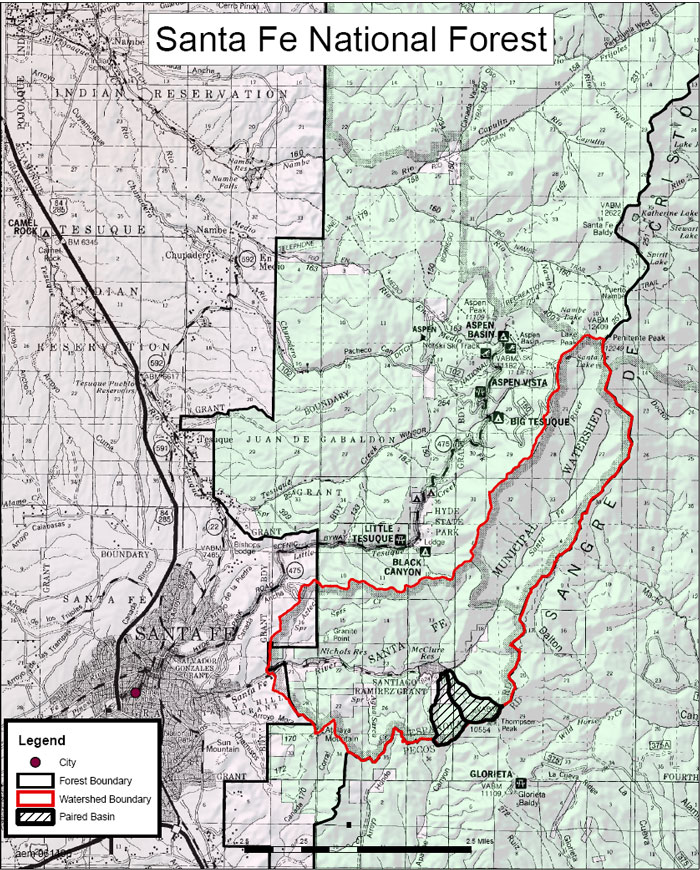
Our ability to manage these landscapes depends on understanding the spatial reality of risk. We aren’t just looking at trees; we are looking at the connectivity of the entire watershed system.
The Economic Reality of Natural Climate Solutions
The argument for this work often faces a standard political headwind: the upfront cost. Skeptics frequently point to the immediate expense of large-scale restoration projects. However, the 2018 study on natural climate solutions in the United States, which Bassett co-authored, flips this narrative by highlighting the long-term cost-avoidance of proactive land management. Protecting carbon-rich forest ecosystems is a strategy that pays dividends in both climate stability and community resilience.
This is not a new interest for the team. Their work dates back to foundational efforts like the 2013 assessment of the Sky Island region, where they sought to identify the most intact grassland valley landscapes. Even then, the focus was on the “grassland sea”—a recognition that these ecosystems are not isolated patches but a connected, living infrastructure.

The Persistent Challenge of Dryland Rivers
Beyond the forests, the work extends into the arid reality of our river systems. A 2025 study in the Journal of Environmental Management titled “Shrinking channels, growing threats” brings a stark warning: habitat degradation in dryland rivers is being compounded by channel narrowing and the encroachment of invasive vegetation. For those living along the Gila River or the Rio Grande, this is a clear signal that the water security challenges of the next decade will be as much about physical river morphology as they are about drought.
The question that remains open, however, is one of scale. While the science—from the Rio Grande Cutthroat Trout wildfire risk assessments to the Gila River flow needs—is comprehensive, the implementation of these restoration projects must navigate complex jurisdictional boundaries and fluctuating public funding. Whether the pace of restoration can outrun the increasing frequency of high-intensity fires is a question the landscape itself will answer in the coming seasons.
Related reading

A new holiday experience is coming to Salt Lake City – KUTV
Magical Lantern Nights Brings Massive Illuminated Displays to the Utah State Fairgrounds Utah's winter holiday calendar is adding...

Austin Championship Field Announced: Smotherman Leads
Austin Championship Arrives in Texas Hill Country with Tour Cards and Signatures on the Line Time is running...

Nashville Health Officials Confirm Second Measles Case and Identify 7 Exposure Locations
Nashville Confirms Second Measles Case of 2026 as Officials Track Seven Exposure Sites Nashville health authorities have confirmed...

Omaha rallies past Tri-City 8-5 and Waterloo wins 5-1 over Lincoln
Omaha Rallies Past Tri-City in 13-Goal USHL Shootout The Omaha Lancers erased a two-goal deficit with a pair...