
Private climate finance across Africa reached USD 26.5 billion a year in 2023/24, marking a more than threefold increase since 2019/20, according to a report published on Friday.
The findings come from the third edition of the Landscape of Climate Finance in Africa, released in Antalya by the Climate Policy Initiative, FSD Africa, the government of Norway, and the UK government.
Domestic actors are powering the shift, with more than three-quarters (76%) of private climate investment originating within the continent. African banks and businesses are leading this transformation, as commercial financial institutions accounted for almost half of the private climate finance increase recorded between 2021/22 and 2023/24.
Household climate investment more than doubled to USD 5.1 billion annually, accounting for 19% of private climate finance and over a fifth of the overall increase. Small-scale solar drove more than 90% of that growth. Household spending on solar PV surged nearly fivefold to USD 3.3 billion a year, showing how African households, alongside businesses and financial institutions, increasingly fund the continent's clean energy transition.
According to the document, the expansion in private investment stems from greater climate involvement by African lenders, heightened oversight of climate threats from regulators, and cheaper worldwide expenses for wind, solar, and battery energy storage. Despite this progress, private climate finance in Africa remains at 36% of total flows, the lowest proportion of any region globally.
International public finance continues to serve as the backbone, supplying almost two-thirds of total climate flows. This funding is also becoming increasingly catalytic: private finance mobilized by multilateral and bilateral development finance more than doubled since 2021/22, reaching USD 8.2 billion.

However, growth remains uneven. International public climate finance directed to low-income African countries fell by 11%, even as funding to middle-income nations rose by 33%. Overall climate finance more than doubled to USD 74 billion annually in 2023/24, but that figure remains far below the estimated USD 300–USD 572 billion needed each year for mitigation alone.
Investment is concentrated in a handful of countries and sectors. Annually, USD 32.3 billion went to the energy industry, whereas agriculture, forestry, and other land use were allocated only USD 6.5 billion. Middle-income countries secured more than 80% of energy finance, while low-income nations saw slower deployment. Meanwhile, climate adaptation received just 21% of climate finance, dropping from 28% in 2021/22.
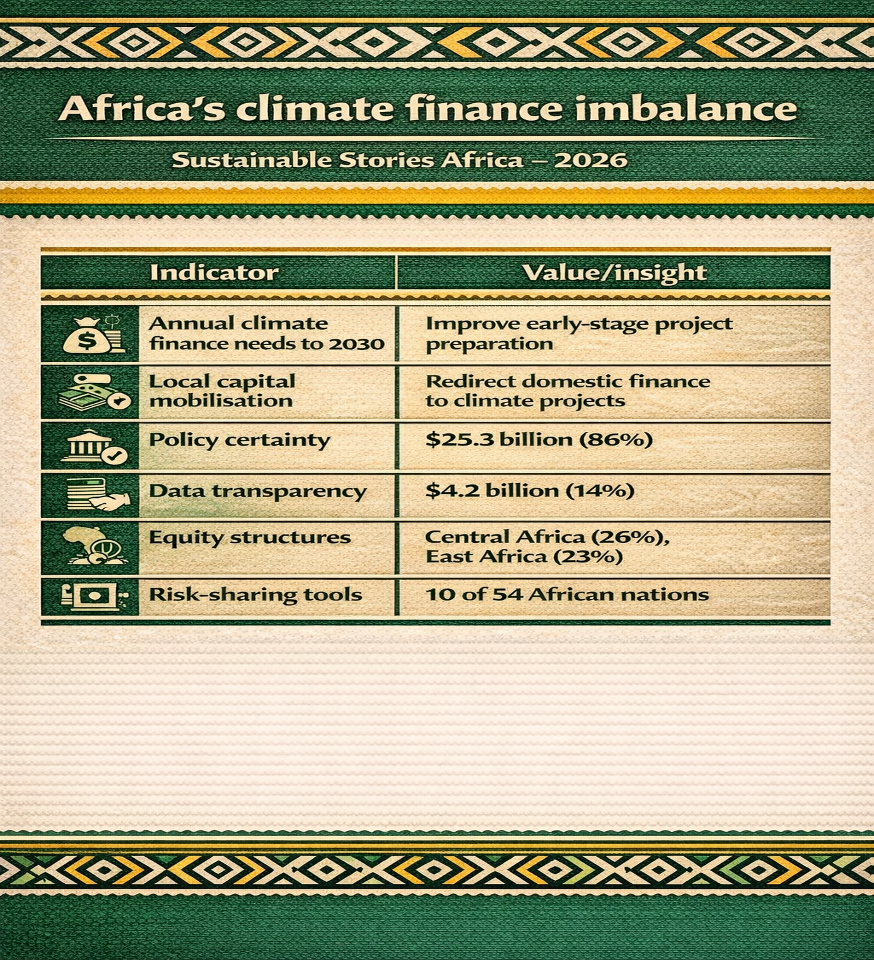
Africa’s climate finance has grown significantly, driven in large part by homegrown private investment. But the challenge is not only volume. African banks, insurers and pension funds manage around USD 3.2 trillion in assets, yet many projects are too small and fragmented for these investors to reach. Clear, predictable policy frameworks and investment vehicles can help bridge this gap, as parts of the renewable energy sector have shown.
Barbara Buchner, CEO of Climate Policy Initiative
Mark Napier, CEO of FSD Africa, said that the trends align with the global picture of private sector-led climate finance. Napier highlighted that establishing durable financial systems can stimulate capital deployment beyond clean energy into diverse green economy areas like transport, housing, and agriculture, thereby fostering dynamic markets that yield climate advantages alongside employment and essential public services.
Keep reading

4 Best Comfort TV Shows for Nostalgic Escapism and Relatable Realism
In a column, writer Caoimhe Mahon explores how 2000s comfort television shows such as Friends, Gilmore Girls, The...

BBC Responds to Celebrity Traitors Charity Complaints
The BBC confirmed it received complaints about the charities chosen by the winners of The Celebrity Traitors, after...
Arnold Schwarzenegger Teases Predator and Conan Sequels
During an appearance on Jimmy Kimmel Live! to promote his upcoming Prime Video release The Man with the...

Claire Byrne Challenges Jamie Oliver on Home Cooking During Newstalk Show
When celebrity chef Jamie Oliver appeared on The Claire Byrne Show, he encountered a host who pushed back...