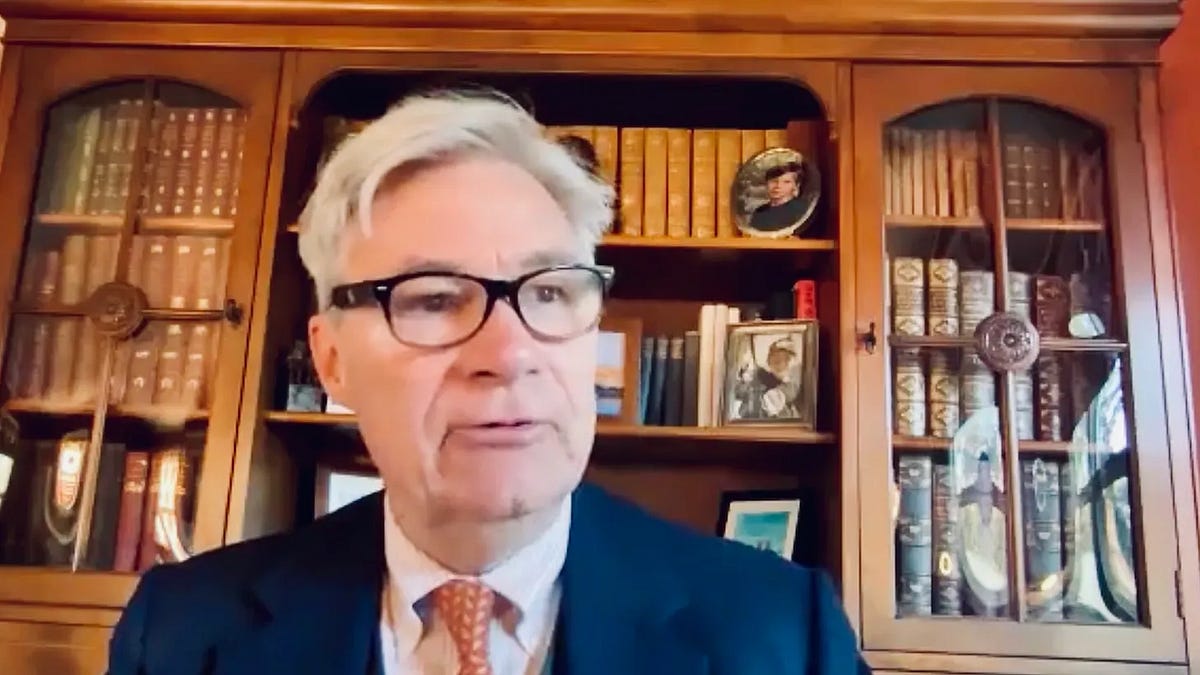
Sheldon Whitehouse built a national reputation as the Senate’s most relentless climate voice, but a Rhode Island journalist’s deep dive reveals a pattern of shielding fossil fuel infrastructure when the political heat rises at home.
In a Substack investigation published this week, Steve Ahlquist traces Whitehouse’s evolution from vocal supporter of a fracked-gas power plant in Burrillville to a senator who claimed procedural helplessness as the project faced a quasi-judicial board — and now, to a lead negotiator on federal legislation environmentalists say guts bedrock permitting laws.
The Burrillville plant, proposed by Invenergy, would have burned fracked gas and diesel oil on pristine forest land. In January 2016, Whitehouse told WPRI’s Ted Nesi the facility was needed to lower the price of fracked gas in Rhode Island. Two years later, with the project before the Energy Facilities Siting Board, Whitehouse reversed course.
He said he had “a very strong belief that when something is subject to a rule of law proceeding like a trial, in which you have lawyers and evidence and appeal to courts, that that’s not a really good place for political pressure to be brought to bear.”
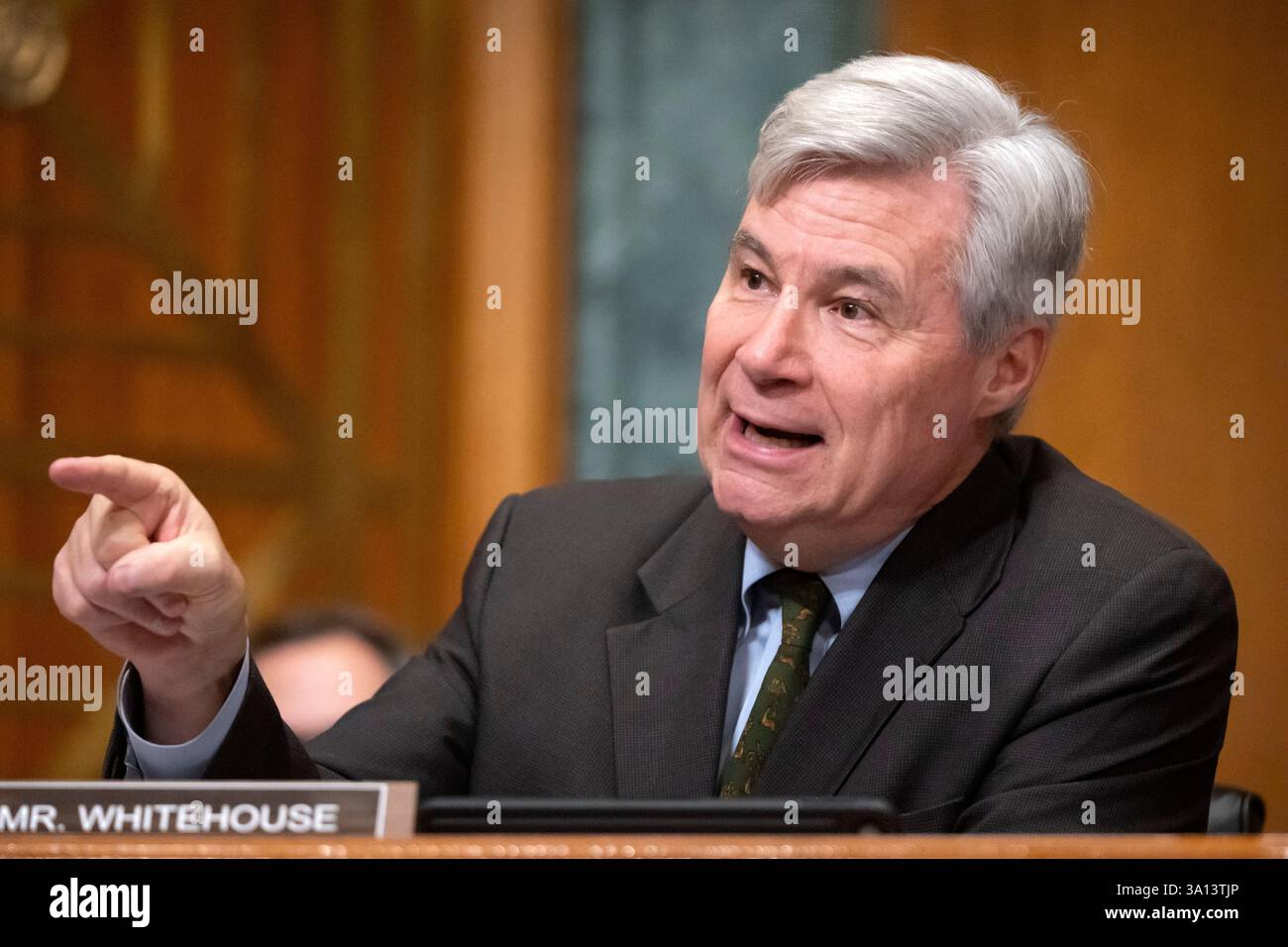
The EFSB ultimately rejected the plant in a 3-0 vote, ruling it would not lower costs for ratepayers. But Ahlquist notes the board was designed to override local opposition, not invite it.
“The EFSB was designed to take the power to stop a proposal like Invenergy’s out of the hands of the local people… and put it into the hands of the EFSB,” Conservation Law Foundation Senior Attorney Jerry Elmer told Ahlquist.
The bill that bridges the gap
Whitehouse is now the ranking member of the Senate Environment and Public Works Committee and a lead architect of the Bipartisan American Affordability and Jobs Act of 2026. The Senate advanced BAAJA on a 73-25 cloture vote this week.
Environmental policy expert Ayana Elizabeth Johnson describes the bill as a “gift” to the fossil fuel industry that would “weaken the Clean Water Act and National Environmental Policy Act, insulate the Trump administration from lawsuits, and prevent new science from being considered in permitting decisions, while making those same decisions almost impossible to reverse.”
“The bill is opposed by all the Democrats on the Environment and Public Works Committee except the lead negotiator/ranking member. Quite telling that Senator Whitehouse can’t even get his own committee colleagues to support the bill he champions in a cloture vote. And 6 of the 9 Democrats on the Energy and Natural Resources Committee voted against it… in other words, most Democrats close to this negotiation think it’s fatally flawed.”
Whitehouse framed the bill as a win for consumers and the climate.
In a press release after the cloture vote, he said: “Democrats are focused on lowering energy costs, reducing emissions, and stopping data centers’ free ride. Americans will start to get some relief quickly if this bill passes. As I have said all along, the ultimate success of this bill depends on the Trump administration getting wind turbines up and spinning to get affordable energy on the grid, and we still need to make progress on that front before final passage.”
President Trump has already undercut that premise. “The bill hasn’t been fully negotiated. I will not approve wind turbines because wind turbines are a major loser,” Trump said.
Forbes names Whitehouse top AI investor; office silent
Forbes recently identified Whitehouse as one of the top five senators personally invested in AI companies. BAAJA’s permitting changes would accelerate the data-center buildout that drives demand for those holdings.
Ahlquist emailed Whitehouse’s office a draft of the piece and asked for comment. The office did not respond. He also reached Bill McKibben, who in 2016 called Whitehouse “the most indefatigable leader” on climate and floated his name for president. McKibben did not reply.
The EFSB’s enabling statute and the BAAJA text are both public record. The board’s 2019 rejection of the Burrillville plant is documented in its official docket.
A system working as designed
North Kingstown resident Vanessa Mascaro testified this year against a proposed sludge pyrolysis facility: “Right now, major industrial projects with real impacts on our health, homes, and quality of life can move forward without local input, transparency, or accountability to the people who live here. It’s a failure of the system, and it has left this community feeling blindsided and shut out.”
Burrillville, the town where Invenergy sought to build the plant, was incorporated in 1806 and named for U.S. Senator James Burrill Jr. It covers 57.2 square miles in the northwestern corner of Rhode Island, bordering Connecticut and Massachusetts, and its population reached 16,158 in the 2020 census.
The town grew around 19th-century mill villages such as Harrisville and Oakland and is now part of the Blackstone River Valley National Heritage Corridor. In 2016, Donald Trump became the first Republican presidential candidate to win Burrillville in more than three decades.
As Ahlquist paraphrases W. Edwards Deming: the system isn’t failing. It’s doing exactly what it was designed to do. BAAJA would replicate that design at the federal scale.
Keep reading
- New York Regents Give Teacher Programs Until 2028 to Adopt Science of Reading
- Payne Institute Frames Pulsed Power as “Third Current” for Industrial Deployment
- Credit Card Debt Hits Record $1.29 Trillion but Trails 2008 After Inflation (daybreakwire.com)
- Anthropic shares close 17% higher after record $107bn IPO (newsarchyuk.com)

New York Regents Give Teacher Programs Until 2028 to Adopt Science of Reading
New York's Board of Regents adopted new regulations last week requiring the state's teacher preparation programs to align...

Payne Institute Frames Pulsed Power as “Third Current” for Industrial Deployment
The Payne Institute for Public Policy at the Colorado School of Mines has published a new analysis framing...

15 Gorilla Stone Members Charged With Running Drug Market in Sara D. Roosevelt Park
Federal prosecutors unsealed an indictment Thursday charging 15 members of the Untouchable Gorilla Stone Nation with running a...

British Airways Flight BA95 Returns to Heathrow After Flap Issue Forces Emergency Declaration
British Airways Flight BA95 turned back to London Heathrow on Wednesday after a flap or slat issue forced...