
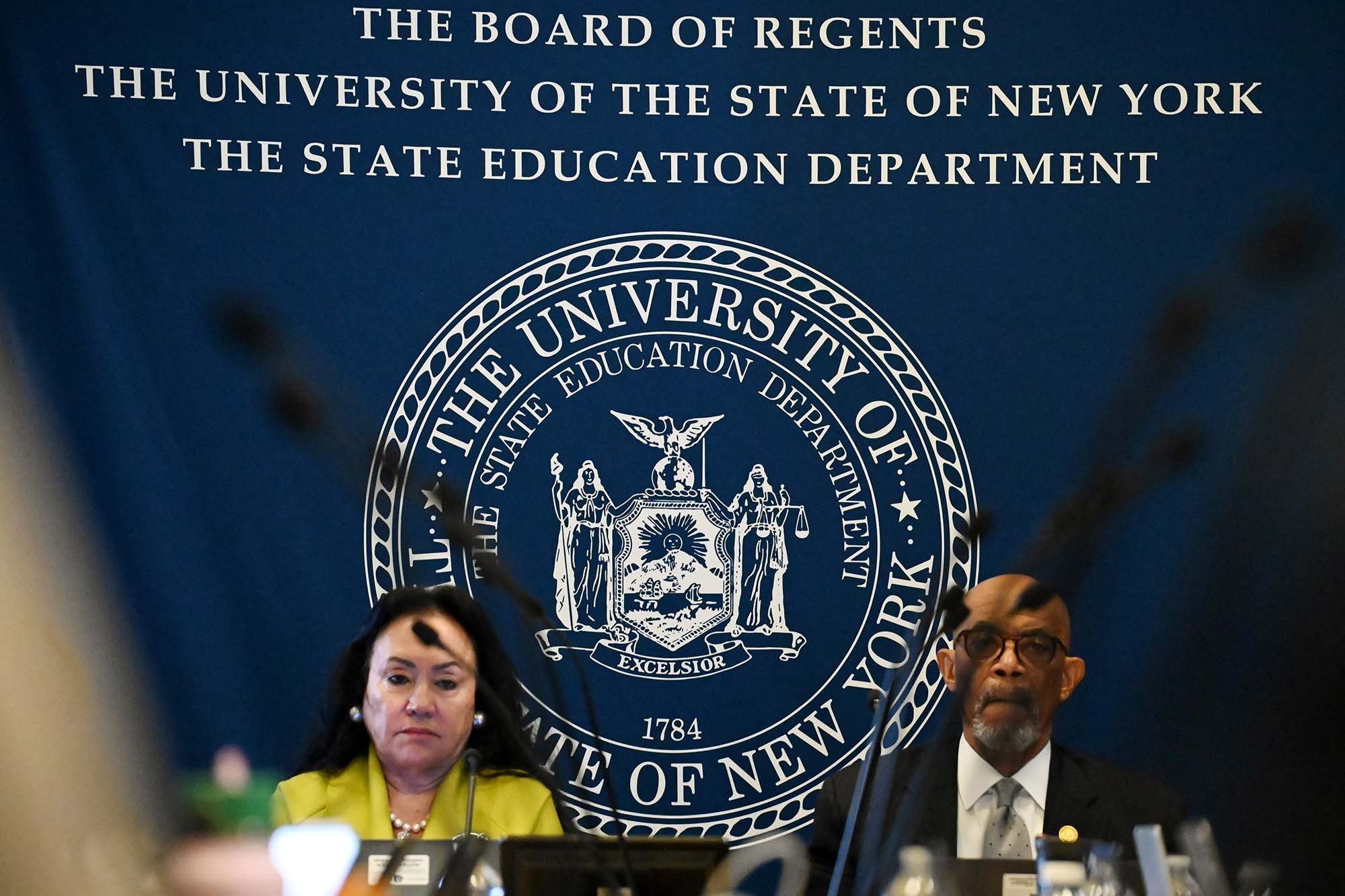
New York’s Board of Regents adopted new regulations last week requiring the state’s teacher preparation programs to align with the science of reading, but gave the 85 schools they oversee until 2028 to comply.
The move comes more than a decade after Mississippi passed landmark literacy legislation in 2013 that turned the state into a national model. Poor fourth graders in Mississippi now read better, on average, than their counterparts in New York, according to National Assessment of Educational Progress data.
The Mississippi comparison that should alarm Albany
As recently as 2003, only four states significantly outperformed New York in fourth-grade reading on the Nation’s Report Card. Today, New York finds itself looking up at Mississippi. Nearly three-fourths of New York City public-school students are economically disadvantaged, and they would literally be better off attending school in the Magnolia State.
“This ought to be a five-alarm fire in Albany,” said Robert Pondiscio, senior fellow at the American Enterprise Institute and former New York City public school teacher.
Teacher prep programs flunk independent review
Another 51 programs declined to make their materials available for review at all.
SUNY moved in one year; Regents take three
Gov. Kathy Hochul made reading instruction a priority with her Back to Basics initiative, enacted in 2024.
If SUNY can manage compliance in a year, the Regents’ three-year timeline raises questions. Every year the state dallies, another cohort of children falls behind, never to catch up.
A pattern of urgency — except on reading
The Regents have demonstrated capacity for urgency before. In 2017, they eliminated a certification exam designed to assess prospective teachers’ literacy skills. In 2021, they instructed school districts to pursue diversity, equity and inclusion “with fidelity and urgency.”
They have devoted years to making it easier to earn a New York high school diploma. By 2028 — the same year they expect education schools to get serious about teaching kids to read — they intend to stop requiring students to pass Regents exams to graduate.
New York City has lost roughly 200,000 K–12 students in little more than a decade. Rochester, Buffalo, Syracuse and Yonkers have also seen substantial enrollment losses. For generations, New York could count on its economic dynamism to draw educated people from elsewhere. The state ought to be at least as concerned with its capacity to produce them.
Keep reading
Burlington Reports Progress on Problem Property Initiative Amid Continued Enforcement Actions
Burlington's Problem Property Initiative has moved six long-vacant buildings into active rehabilitation, but the former Bove's restaurant on...

Nevada Favored Over Hawaii with Bowl Eligibility on Line
Nevada hosts Hawaii at Mackay Stadium on Saturday night with bowl eligibility on the line for the Wolf...

Ukrainian Transformer Maker LIMiK Invests $328M in SC Plant, Creating 400 Jobs
Ukrainian power transformer manufacturer LIMiK International will invest $328 million to open a factory near Gaffney, Cherokee County...

Springfield High Students Serve Breakfast to Honor Delco Veterans
Springfield High School students served pancakes to Delaware County veterans Thursday at the First Presbyterian Church of Springfield,...