
Alabama’s Statement Win in Baton Rouge Reshapes the Playoff Picture
The Alabama Crimson Tide arrived in Baton Rouge this week facing a singular, deafening narrative: their place in the College Football Playoff was in question. By the time the clock hit zero at Tiger Stadium, the noise had been replaced by a dominant performance that underscored Alabama’s resilience on the road. According to the A to Z Sports CFB Playoff Predictor, updated November 7, 2026, the Crimson Tide now holds a 67% chance to secure a playoff berth and a 9% probability of claiming the national title. This win in Death Valley was not just a victory; it was a calibrated response to the scrutiny surrounding the program’s postseason viability.
Coordinators Kane Womack and Ryan Grubb Answer the Critics
Few figures in the Alabama program have navigated as much public heat this season as defensive coordinator Kane Womack and offensive coordinator Ryan Grubb. In Baton Rouge, however, both called games that silenced the skeptics. Womack’s defense operated with a high-pressure intensity, effectively utilizing varied blitz packages to disrupt LSU quarterback Sam Leavitt. While the unit’s soft zone coverage occasionally allowed for small gains, the defense consistently tightened when it mattered most, bending without breaking. The interception of Leavitt served as the primary catalyst for the Tide’s defensive momentum.

On the other side of the ball, Ryan Grubb faced a significant challenge: a stagnant run game that forced him to lean heavily on his aerial attack. Despite the inability to establish a traditional ground presence, Grubb’s play-calling remained fluid. He focused on stretching the field horizontally and creating spacing for his receivers, ensuring the offense maintained its rhythm even when the interior run lanes were closed.
The Playmakers Who Defined the Night
The victory was built on the back of individual efforts that turned the game’s trajectory. Luke Metz provided a critical turning point just before halftime, hauling in an interception while LSU was within field goal range. His physical presence, punctuated by a jarring hit on Leavitt, signaled a shift in the game’s intensity. That defensive stop paved the way for Ryan Coleman-Williams, who electrified the crowd with a substantial punt return that directly set up an Alabama touchdown.
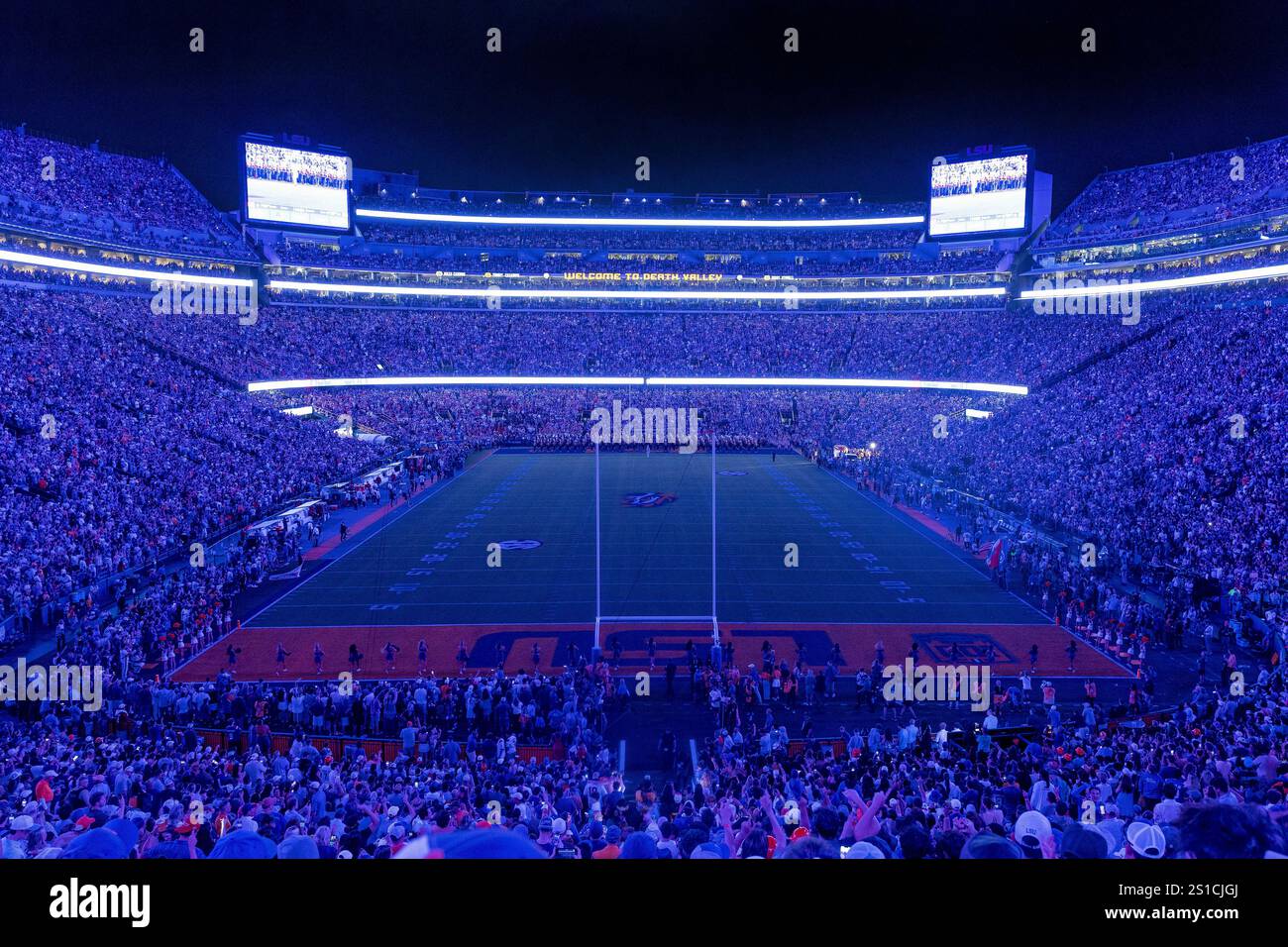
Quarterback Keelon Russell managed the game with a composure that belies his status as a relatively inexperienced starter. Playing through a lingering ankle injury, Russell completed 17-of-24 passes, demonstrating the poise required to succeed in one of college football’s most hostile environments. His performance was complemented by Cederian Morgan, who showcased his immense potential. Grubb utilized a switch release concept that allowed Morgan to find space for a touchdown—a play that highlighted the growing chemistry between the quarterback and his young receiver.
Defensively, the pass rush duo of Yhonzae Pierre and Devan Thompkins proved nearly impossible to contain. Pierre’s versatility allowed him to rotate through the A-gap, while Thompkins provided consistent pressure off the edge. Thompkins’ one-handed sack late in the game effectively sealed the victory, forcing a turnover that allowed Alabama to drain the remaining time on the clock.
Refining the Tide: Penalties and the Ground Game
Despite the celebratory atmosphere, the coaching staff faces two clear areas of concern as the season reaches its final stretch. First-half penalties, specifically holding calls and false starts by players like Jayvin James, repeatedly stalled momentum. These self-inflicted wounds are manageable in the regular season but carry a higher risk against elite postseason opponents.
The more pressing issue remains the run game. Alabama struggled to generate consistent yardage on the ground, a vulnerability that must be addressed if the team intends to compete at the highest level of the playoff bracket. While the return of Racin Delgatty and the injury-related absence of William Sanders provide context for the current instability, the lack of a productive ground attack remains the primary bottleneck for the offense. For one night in Louisiana, the defensive intensity and opportunistic play-calling were enough to mask these deficiencies, but the road to the national title will require a more balanced, disciplined approach.
Worth a look

OUAZ Women’s Basketball Beats Saint Mary 96-54 to Move to 3-0
The OUAZ women’s basketball team pushed their record to a perfect 3-0 on Saturday, dismantling the College of...

Cattle Club opens in Billings after nearly $1 million liquor license cost
A Million-Dollar Hurdle for a Neighborhood Bar For the first time on a Saturday, the Cattle Club opened...

27 Arrested in Major Georgia Dogfighting Operation; 29 Dogs Seized
A Multi-State Investigation into Organized Dogfighting The investigation into a sophisticated, multi-state dogfighting operation in northeast Georgia has...

Colin Woodard presents Nationhood Lab research at various events
Colin Woodard Maps the Fault Lines of the American Experiment Over the past two months, historian and Nationhood...