
Before New York, There Was Anthony the Turk — and a New Book Asks What That Really Meant
Yale historian Alan Mikhail has published a new book that reframes the founding of New York around a couple most history reduced to caricatures, Yale News reported. In Newcomers: The Story of Anthony and Grietje and the Founding of New York (Liveright/W.W. Norton), Mikhail draws on archives in the Netherlands, Istanbul, Spain, Morocco, and New York to reconstruct the lives of Anthony Jansen and Grietje Reyniers, two of the earliest settlers in the Dutch colony of New Netherland in the 1630s.
For generations, Anthony and Grietje have been treated either as proof of how harsh colonial society could be — cast out for his supposed Islam and her supposed sex work — or as props in the booster tale of a tolerant, cosmopolitan New Amsterdam. Mikhail argues in his book that neither story holds up against the record.
A Couple on the Rough Edge of the Colony
Anthony Jansen projected Christianity his whole life but was nearly always perceived as Muslim, Mikhail writes, possibly because he may have been held captive in North Africa. Yet the archival record points the other way: he married twice in the Dutch Reformed Church, baptized a daughter, and became a church community leader in New Netherland. Grietje Reyniers came from western Germany, worked as a maid in the booming Dutch cities, then as a barmaid around Amsterdam’s docks, and possibly as an occasional sex worker. They met in Amsterdam and married in the Dutch Reformed Church in 1629, then sailed to New Netherland a few years later.
New Netherland itself was a fragile place. At its greatest extent it stretched from the Delaware River to the Hudson and into central Connecticut, lasting from 1624 until the English takeover in 1664. The colony peaked at roughly 8,000 to 10,000 settlers, with about 2,500 in New Amsterdam, alongside enslaved West Africans first brought in 1627 and Indigenous nations — the Lenape, Canarsee, Massapequa, and others — whose homelands numbered perhaps 30,000 to 50,000 people. Food was scarce, winters brutal, and most settlers came only to trade furs and leave.
“The usual image of them is as almost cartoonish figures — ‘the Turk’ and ‘the whore.’ That’s where it begins and ends for most historians.” — Alan Mikhail
Mikhail’s central claim is that we should be humble in the face of the sources. No document proves Anthony practiced Islam; equally, his outward Christianity is well documented. What matters, he argues, is why colonial Europeans and later historians were so convinced of his Islam. In New Netherland, being perceived as Muslim meant being an outsider to European Christianity, a rabble-rouser, and a racialized “other.”
Banished, Then Indispensable
The label of sex worker followed her across the Atlantic and was used to malign her and justify the couple’s banishment from Manhattan to what is now Gravesend in Brooklyn. But she fought back, questioning the morals of her accusers in ways that Mikhail notes would have been unthinkable in contemporary Salem.
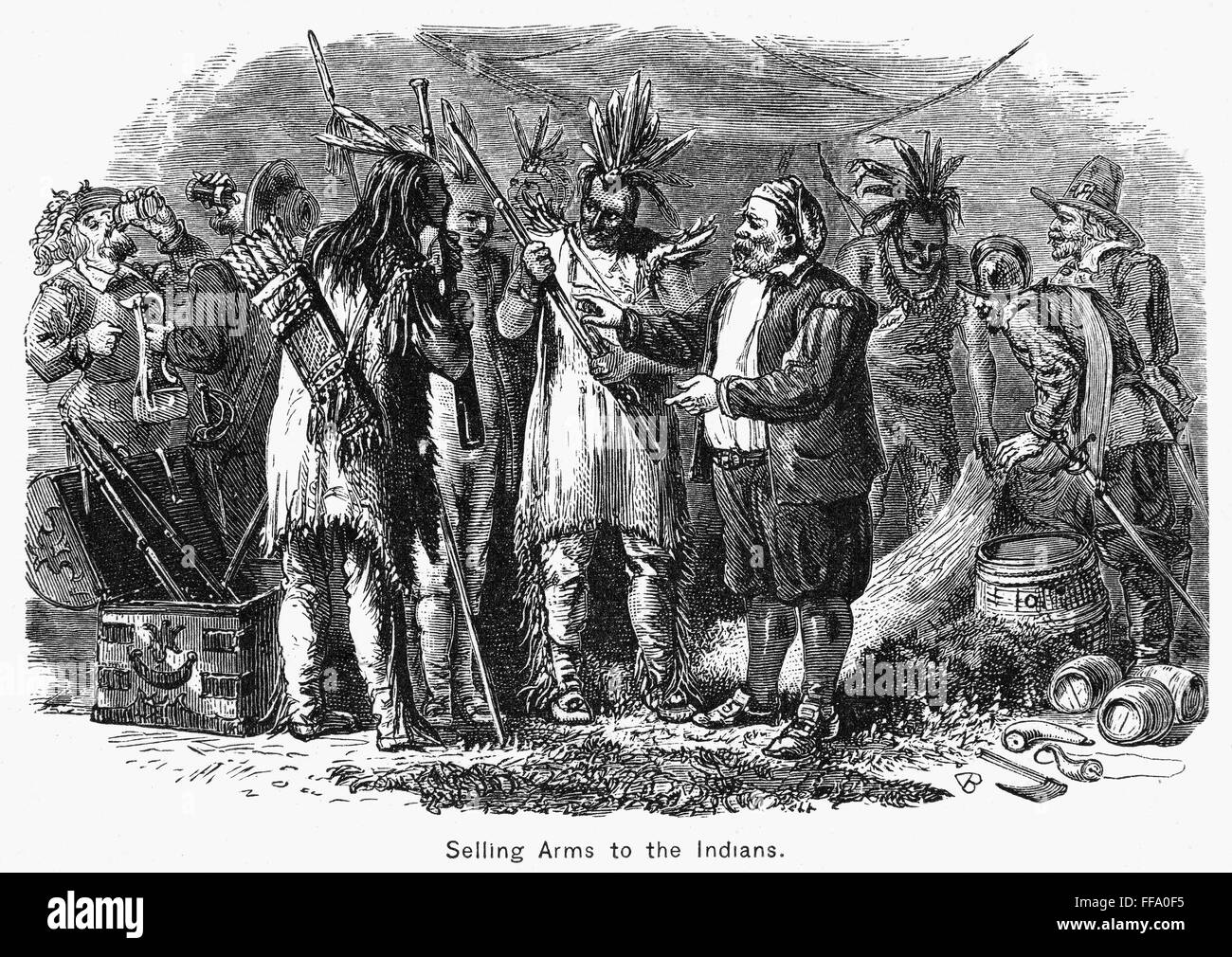
The couple’s fortunes turned on persistence and circumstance. Unlike the fur traders who left after a few years, Anthony and Grietje put down roots, had children, and lived in New Netherland for nearly its entire existence. When they were banished to Long Island at the start of the colony’s most important war in the 1640s, their farm became a defensive outpost against Native peoples and sometimes the English. They proved they could be trusted with arms, their land became a bulwark against English encroachment, and by the 1650s they had become a kind of landed gentry — their farm so large and productive that they hired laborers from the Netherlands. Early nineteenth-century maps of Brooklyn still identified their farm as theirs.
Their rehabilitation was complete enough that Grietje, once slandered as a whore, served as a witness at baptisms, and Anthony became an authority on property lines and farming. Grietje died in 1669; Anthony remarried and lived another seven years.
Why Their Story Belongs in the Founding Narrative
Mikhail says the couple’s story forces a broader question: where is Islam in the standard account of early America, which usually runs through First Nations, European colonists, and enslaved Africans? A sizeable share of enslaved Africans in the Americas were Muslim or knew Islam, and Anthony — whatever his private beliefs — adds another strand.
The skeptic’s counterpoint is real, too: some scholars read Anthony and Grietje as evidence of New Netherland’s limits rather than its tolerance, since a man perceived as Muslim and a woman tagged as a sex worker were ultimately banished from the colony’s core. Mikhail’s answer is that the couple’s survival and rise show something more complicated than either myth allows — adaptability, longevity, and a knack for proving useful exactly when the colony needed them most.
And the story lands with a jolt in the present: the couple’s four daughters married into well-placed European families, producing descendants that include the Vanderbilts and President Warren G. Harding.
Keep reading

SDSU Formalizes interactive process for disability accommodations
South Dakota State University has spelled out a detailed roadmap for how employees, visitors and applicants with disabilities...

Wisconsin measles cases reach 431 after three Columbia County reports
PORTAGE, Wis. — Columbia County Public Health confirmed three measles cases Wednesday, sending Wisconsin's statewide tally to 431,...

Rhode Island throws away roughly 673,869 tons of material each year, and buried in that waste
Rhode Island throws away roughly 673,869 tons of material each year, and buried in that waste stream is...

Pennsylvania Democrats Secure trifecta to advance election and marijuana reform
On November 3, 2026, Pennsylvania voters handed Governor Josh Shapiro a second term and delivered control of the...