
The State of Alaska’s Ballot Counting
As of November 6, 2026, the political landscape in Alaska remains suspended in a familiar state of uncertainty. Days after the polls closed, several key races are still too close to call, leaving the state’s ranked choice voting system to determine the ultimate winners. This process, which requires additional rounds of tabulation to redistribute votes from eliminated candidates, is once again at the center of a high-stakes electoral drama, as reported by Alaska’s News Source.
The tension is compounded by the ongoing fate of Ballot Measure 2. According to Alaska Public Media, early results indicate that Alaskans are narrowly rejecting the repeal of the ranked choice voting system. With 98% of precincts reporting, the “No” campaign—which seeks to preserve the current system—is holding a lead with nearly 52% of the vote. However, history suggests that the final tally is far from guaranteed. In 2024, a similar ballot question saw the “Yes” side lead on election night, only to have late-counted ballots push the “No” side to victory by a razor-thin margin of just 743 votes.
The Mechanics of the Senate Race
The scrutiny on Alaska’s voting process is intensified by the U.S. Senate race, which has been complicated by the presence of two candidates sharing the name of incumbent Republican Senator Dan Sullivan. Reason reports that this confusion stems from a maneuver involving a retired teacher named Dan J. Sullivan. While Democratic challenger Mary Peltola has denied orchestrating the candidate’s appearance on the ballot, the situation has created a unique stress test for the ranked choice system.

In a traditional first-past-the-post election, the presence of a second candidate with the same name could act as a spoiler, siphoning off critical votes from the incumbent. Under Alaska’s current model, however, the system is designed to mitigate this. If a voter mistakenly selects the wrong Sullivan, the ranked choice structure allows for the redistribution of votes once a candidate is eliminated. As Reason notes, if the second Sullivan is eliminated, his votes can be reallocated to the incumbent, provided the voter listed him as a subsequent preference.
The state has an open primary, and its top four vote-getters then advance to the general election—a model more similar to a “regular season” and “playoffs” format familiar to sports fans than to the process most states use.
The Financial Stakes and Outside Influence
The battle over Ballot Measure 2 has drawn significant national attention and millions of dollars in outside funding. Both sides have leveraged heavy financial support from billionaire donors, turning the debate into a proxy war over the future of American election reform. Alaska Public Media notes that the “Repeal Now” campaign, which supports reverting to partisan primaries, received $1.5 million from Elon Musk. Conversely, those opposing the repeal and defending the current system raised $10.4 million, with contributions from figures including former New York Mayor Michael Bloomberg and election reform advocate Kathryn Murdoch.
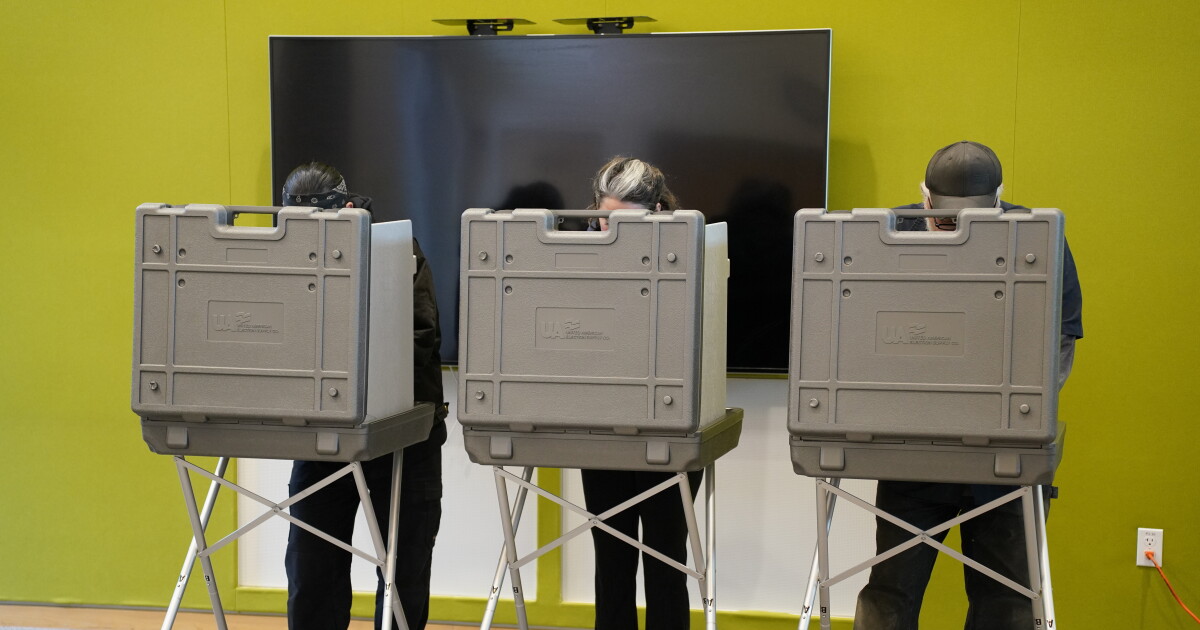
Proponents of the repeal argue that the system is confusing and susceptible to manipulation by political operatives. They point to instances like the withdrawal of candidates after the primary or the advancement of longshot candidates as evidence that the system needs to be scrapped. Supporters of the current system, however, maintain that it encourages moderation and reduces the “spoiler effect” that often plagues traditional elections.
Citizenship and Ballot Measure 3
While the focus remains on the future of ranked choice voting, Alaskans have also expressed a clear preference on Ballot Measure 3. Early results show the measure passing by a wide margin. This initiative specifies that “only” U.S. citizens may vote in state elections. Although the measure does not change existing law—as citizenship is already a requirement for voting in Alaska—the passage reflects a broader trend of states seeking to codify election security requirements into their state constitutions. No formal organized opposition emerged against this measure, marking a quiet but decisive result in an otherwise volatile election cycle.
As the final ballots are processed, the outcome for both the candidates and the voting system itself will likely remain in flux for several days. For the voters of Alaska, the wait is not merely a delay in results, but a reflection of a system that prioritizes a more granular, albeit slower, accounting of the popular will.

North Kansas City vs. Rockhurst Live: High School Football Updates & Highlights
Rockhurst and North Kansas City Face Off in High-Stakes Friday Night Matchup The Rockhurst varsity football team travels...

No. 1 Maryland Defeats No. 10 Iowa 4-1 in Big Ten Tournament Semifinals
The No. 1 Maryland field hockey team defeated No. 10 Iowa 4-1 in the Big Ten Tournament semifinals...

Art Institute of Chicago Launches First Children’s Alphabet Book in Decades
The Art Institute of Chicago releases its first children's book in two decades “We wanted to include icons...

Uncounted Seminole County Ballots Flip Georgia House District Race
A Memory Card Discovery Shifts the Balance in Georgia House District 154 The math behind the error is...