
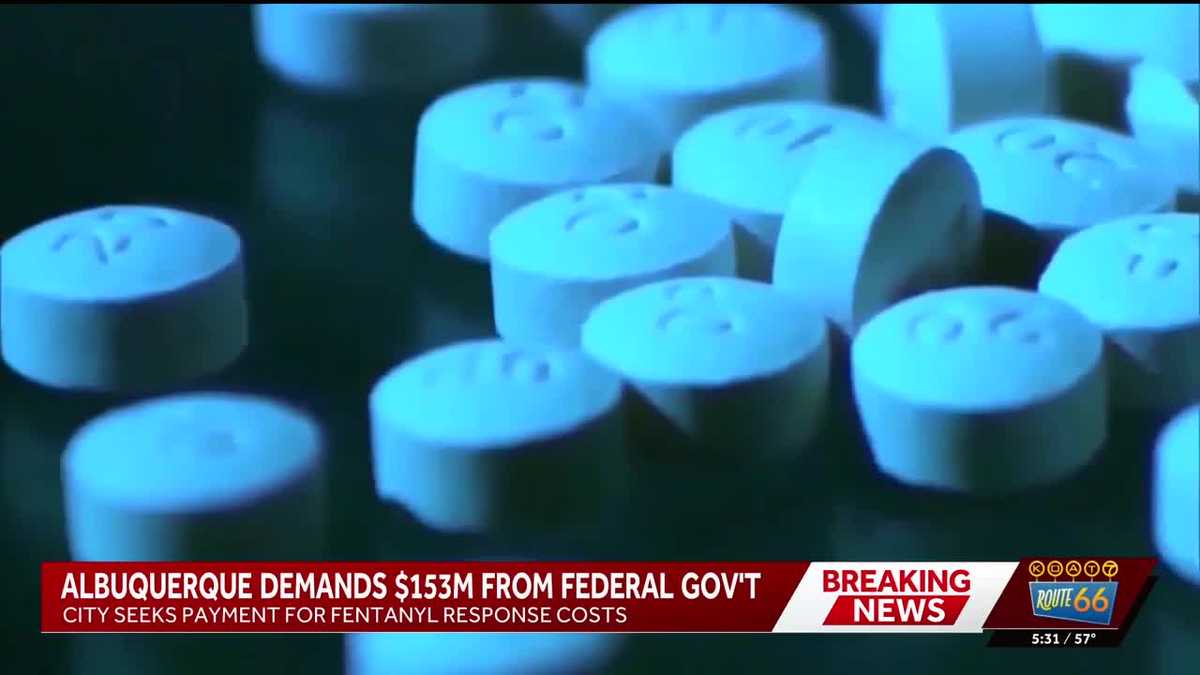
Albuquerque just handed the federal government a bill for $153,483,915.24, arguing the Drug Enforcement Administration turned the city into a fentanyl thoroughfare so agents could build bigger cases.
The demand letter, filed Thursday under the Federal Tort Claims Act, alleges the DEA allowed hundreds of thousands of pills to “walk” onto local streets between 2023 and 2025 while investigators monitored wiretaps and watched transactions unfold. Instead of seizing the drugs, agents let them circulate to climb the trafficking ladder — a tactic the city says flooded neighborhoods, overwhelmed first responders, and left taxpayers covering the tab.
“We are putting the DEA on notice,” City Attorney Joshua Boone said, acknowledging the uphill fight to actually collect. “By allowing the drugs to remain in the community, these actions helped proliferate and spread an epidemic of addiction, overdoses, and significant monetary investment from the city of Albuquerque.”

The math behind the claim
The city broke the $153 million figure into five line items, each tied to a specific department’s ledger from the last three years. The largest chunk — $106.2 million — covers public health, housing, homelessness and personal injury response costs.
Albuquerque Fire Rescue’s emergency runs and property damage total $29.9 million. Solid Waste cleanup and remediation adds $9.7 million. Police patrol response accounts for $7 million, and the crime lab’s fentanyl testing bill comes to $631,000.
KOAT confirmed the same breakdown Thursday, noting Boone built the totals from increases in fentanyl possession cases, lab submissions, and municipal cleanup data. The city argues the spike tracks with the period agents allegedly stood down.
Whistleblower exposed DEA practice of walking
The practice — known internally as “walking” — surfaced publicly this summer when DEA Special Agent David Howell filed a whistleblower complaint. He told investigators he was reprimanded in 2023 for intercepting suspected traffickers because he believed public safety was at risk. An earlier internal Justice Department probe concluded no actual harm occurred, a finding the city’s letter directly challenges.
“There’s no justification for knowingly allowing deadly drugs into a community and leaving local governments to deal with the consequences,” Boone told KOAT.
Overdose rates that lead the nation
The financial claim lands against a grim epidemiological backdrop. New Mexico recorded the largest increase in drug overdose deaths of any state from June 2025 to June 2026, according to the Centers for Disease Control and Prevention.
The unintentional overdose death rate in Bernalillo County hit 56.1 per 100,000 people between May 2025 and April 2026 — nearly triple the national rate of 17.8. Statewide, the projected 2025 rate reached 46.4 per 100,000, more than double the U.S. average of 20.0, according to New Mexico Department of Health data cited by KOB.
Emergency department visits for overdoses rose roughly 20 percent from 2024 to 2025, KOB reported, while predicted deaths climbed 38.3 percent over the same window — even as the national trend declined 11.5 percent.
Three investigations, one silent agency
The “walking” practice is now under scrutiny from the New Mexico Attorney General’s Office, a federal watchdog, and a congressional oversight committee. Governor Michelle Lujan Grisham asked Attorney General Raúl Torrez to investigate and urged the White House to respond to the whistleblower allegations, KOB reported. Torrez’s office subsequently sued the federal government for access to fentanyl records after two additional whistleblowers came forward.
The DEA has declined to comment on the practice or the city’s claim, citing the pending investigations.
City plans federal suit if DEA refuses
The administrative claim starts a six-month clock. If the DEA does not respond or denies the demand, the city can file suit in federal court. Boone told KOAT it is too early to estimate litigation costs. Mayor Tim Keller said any recovery would fund case management, unhoused services, and addiction treatment — “so these funds can be put to use to help reduce the impacts the DOJ had on our community.”
“Albuquerque should never have been treated as collateral damage in a federal investigation,” Keller posted Thursday. “We’re demanding accountability because our residents should not be left footing the bill for decisions that put their safety at risk.”
The Drug Enforcement Administration was created on July 1, 1973, when President Richard Nixon signed Reorganization Plan No. 2, merging the Bureau of Narcotics and Dangerous Drugs, the Office of Drug Abuse Law Enforcement, and about 600 special agents from the Bureau of Customs into a single agency to lead domestic enforcement of the Controlled Substances Act.
The DEA also runs an intelligence unit that is a member of the U.S. Intelligence Community, reporting to both the DEA chain of command and the director of national intelligence.
The city has not spoken directly with Agent Howell about his allegations, Boone said, and linking specific overdoses to the walked shipments remains difficult. “What you’re seeing with this notice is that in general and across the board, there was a spike,” he told KOAT.
Related reading

Pennsylvania Farmers Call for Visa Reform, End to Aggressive ICE Tactics
More than 30 Pennsylvania farmers, agribusinesses and organizations endorsed a letter to U.S. Agriculture Secretary Brooke Rollins and...

Franciscan Health Runs Free Lactation Clinics, Phone Support in Indiana
Franciscan Health runs outpatient lactation clinics staffed by registered nurses who hold international board certification, offering Indianapolis-area families...

UAlbany Study: Google AI Hurricane Model Outperforms NOAA Model at 1-5 Days, Matches Human Forecasters After Day 1
Google DeepMind's WeatherNext Cyclone model predicted Hurricane Melissa's track and Category 5 strength a week before landfall in...

Former Moorhead Truck Driver Gets Probation in Crash That Killed Adam Amin, 9
Victor Port, the 65-year-old former Moorhead city truck driver, pleaded guilty Thursday to a single misdemeanor charge tied...