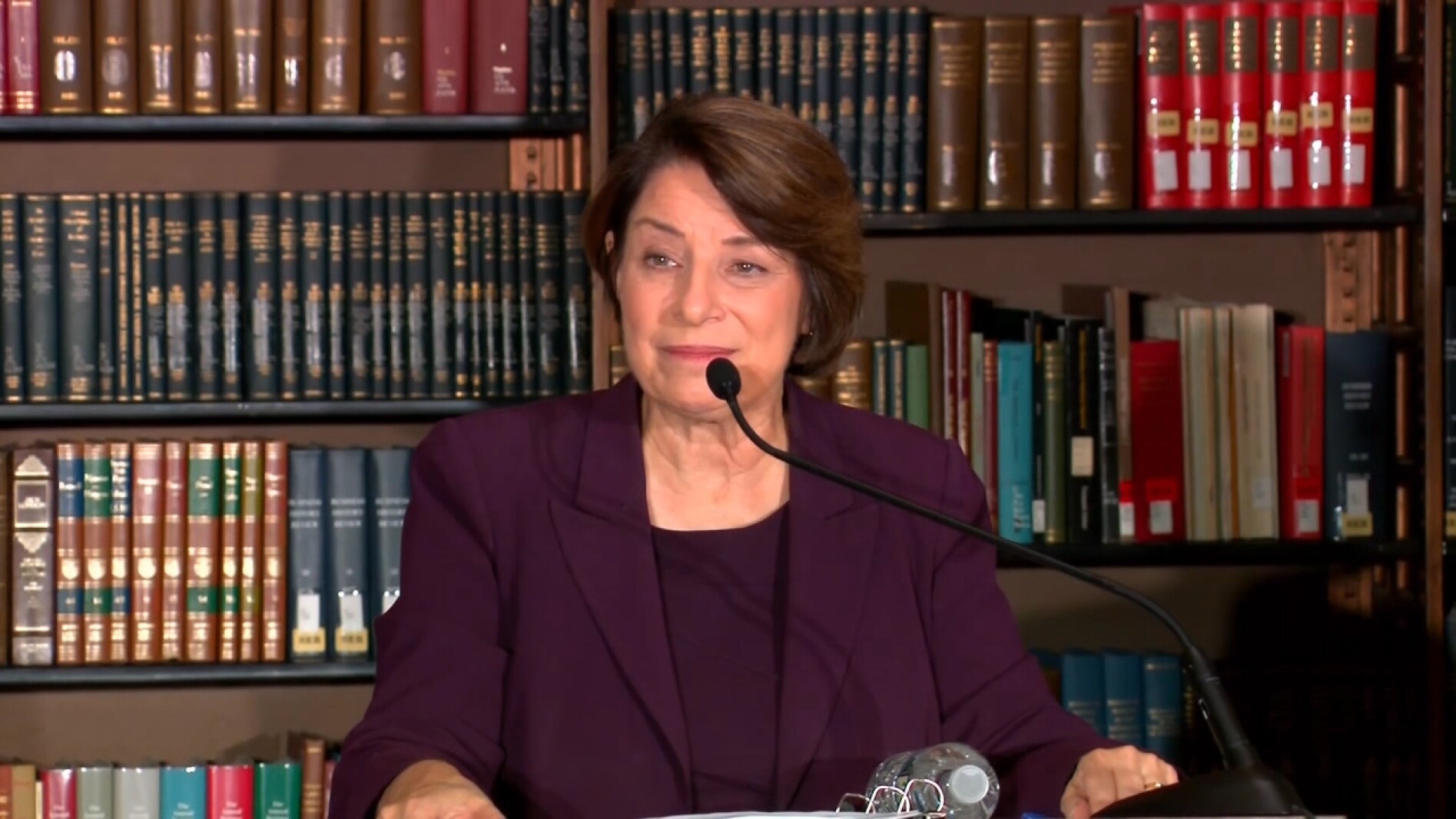
Amy Klobuchar’s Senate Resignation to Spark National Political Firestorm in Minnesota
Minnesota is about to find itself back in the national political spotlight, all because of a single decision yet to be made by Governor-elect Amy Klobuchar.
The clock is ticking on a question with no public answer: When will Klobuchar resign? The senator, who will be officially sworn in as Minnesota’s first woman governor on Jan. 4, 2027, in St. Paul, holds the power to time her exit. If she resigns now, current Governor Tim Walz would choose her replacement. But Klobuchar has hinted she will wait until shortly before her inauguration, a strategic move that would allow her to personally select her own successor in the U.S. Senate.
Appointing a Temporary Senator
“I will do right by the state of Minnesota with that person,” Klobuchar said, signaling the gravity of her impending decision. Her choice of timing is critical. Whoever she appoints would not be a long-term solution. That person would be required to run in a special election in 2027 to serve out the remainder of Klobuchar’s Senate term, which extends all the way to January 2031.
This creates a scenario ripe for national attention. “So there is going to be a lot of attention and a lot of internal and external spending,” said Nick Howard, a political scientist at Concordia College, as quoted by InForum. The special election is expected to draw immense focus, potentially becoming the only U.S. Senate race of its kind. Howard believes the political climate will be comparable to this year’s Senate race, which Democrat Peggy Flanagan ultimately won against Republican Michelle Tafoya.

“One of the things to think about for the amount of attention that will be on the Senate race is where we are at in the run up to the 2028 primaries for president, because those two things will be occurring simultaneously.”
The timing is no coincidence. As the 2028 presidential primary heats up, candidates will be crisscrossing the country, and Minnesota’s high-profile Senate race will be an irresistible stop.
Minnesota’s History of Senate Appointments
The last time Minnesota faced a similar situation was in 2017, following the resignation of Senator Al Franken. In that instance, then-Lt. Gov. Tina Smith was appointed to fill the seat.
Who will Klobuchar pick? “Closed mouth about what they are going to pick,” Howard noted. The secrecy surrounding her choice only fuels speculation. The list of potential candidates is expected to be a closely guarded secret until Klobuchar makes her move.

The Republican Contenders
On the Republican side, the field appears to be taking shape. Howard suggested that Tafoya, the recent gubernatorial candidate, or Lisa Demuth, who lost to Klobuchar in the race for governor, could emerge as leading contenders for the Senate seat. Both figures already possess significant name recognition and established rapport with Republicans in Minnesota, giving them a head start in what would be a competitive special election.
The stakes for Minnesota are immense. This is not just about filling a vacancy; it’s about representation in the upper echelons of American government. The financial cost of the campaign will be borne by donors, political parties, and outside interests, but the ultimate cost or benefit will be shouldered by the voters of Minnesota.
The national spotlight, once again, will be fixed on the North Star State. The question is no longer if Minnesota will be in the center of the political universe, but how it will navigate the intense pressure and what kind of senator will emerge from the process to carry its voice for the next several years.
Related reading

Boise State QB Maddux Madsen Questionable for Week 10 vs. Colorado State
Maddux Madsen listed as questionable ahead of Boise State at Colorado State Boise State quarterback Maddux Madsen is...
New England Midterm Election Results: Democrats Secure Sweeping Wins and Senate Gains
New England Democrats Ride National Blue Wave to Senate Gains, Statehouse Wins Democrats in New England are celebrating...

Georgia Elects Keisha Lance Bottoms as First Black Woman Governor
Georgia voters elected at least eight Black women to statewide executive offices Tuesday night, FOX 5 Atlanta reported....

Mitchel Miyashiro Sentenced to 20 Years for Fatal Hit-and-Run
Driver Sentenced in 2023 Hit-and-Run That Killed McKinley High Student A Honolulu man was sentenced to 20 years...