
Democrats won 53 of 99 Assembly seats this month, but under the 2022 map the same votes would have left Republicans with a 61-38 majority, two analyses released Monday found.
The Law Forward and Harvard Election Law Clinic analysis concluded that the redrawn districts “were a far more critical force in breaking the Republican stranglehold than the blue wave was.” Without the 2023 court order that forced new maps, Democrats would have flipped only three Assembly seats despite Gov.-elect David Crowley’s 54 percent statewide victory, the groups reported.
“Crowley’s 54% of the vote adds up to a majority of 54 seats in the current map, and those exact same votes cast in the exact same places only comprise a majority in 45 of the seats used in 2022,” Marquette Law School fellow John Johnson told the Wisconsin Examiner. His ward-level analysis reached the same conclusion: the 2022 gerrymander would have withstood an 8-point statewide win, the largest since Barack Obama in 2008.
Republicans held 64 Assembly seats under the 2022 map even as Gov. Tony Evers won reelection with over half the statewide vote. The state Supreme Court ruled those maps an unconstitutional gerrymander in Clarke v. WEC late in 2023, shortly after liberals gained a court majority.
Republican lawmakers then passed and Evers signed new maps ahead of the 2024 election.
Democrats gained 10 Assembly seats and four Senate seats in 2024, then added eight Assembly seats and three Senate seats this month to secure 53-46 and 18-15 majorities respectively — the first Democratic legislative majorities since the 2009-10 session, WPR reported.
Two analyses released Monday found the Republican-drawn 2022 Assembly map would have withstood the November “blue tsunami” that delivered Democrats every statewide office and both legislative chambers. Law Forward Director of Litigation Doug Poland and Harvard Election Law Clinic attorney Jack Deschler concluded that under the old districts, Democrats would have flipped just three Assembly seats despite Gov.-elect David Crowley’s 54 percent statewide victory.
The same votes that produced a 53-46 Democratic majority under the new map would have left Republicans with a 61-38 advantage, a 23-seat margin, according to their report.

Marquette Law School fellow John Johnson reached the same conclusion using ward-level data rather than statewide totals. “No, and it would not even have been particularly close,” Johnson wrote of whether the wave could have broken the gerrymander.
Without the state Supreme Court’s 2023 decision in Clarke v. WEC, they said, “the will of the majority of Wisconsin voters would still not be reflected in their Legislature.” Poland told WPR he was shocked by the finding: “Yes, there was a wave election, and it was big. But guess what?”
Law Forward, which represented plaintiffs in the redistricting lawsuit that forced the new maps, urged incoming lawmakers to adopt a nonpartisan, independent redistricting system. Law Forward general counsel Jeff Mandell has pressed Democratic legislators to act, while Sens. Kelda Roys and Mark Spreitzer said they are committed to implementing a fair maps process.
Law Forward general counsel Jeff Mandell has urged Democratic lawmakers to advance a nonpartisan, independent redistricting system. Sen. Kelda Roys (D-Madison) and Sen. Mark Spreitzer (D-Beloit) told the Examiner they are committed to a fair maps process; Spreitzer has floated a constitutional amendment.
Johnson cautioned that “fair” remains contested: some want maps drawn without partisan data, which in Wisconsin would likely tilt Republican though far less than the 2022 map; others want a map that reliably delivers a seat majority to the vote-winning party, as Michigan’s constitution requires; a third camp prioritizes competitive seats either party could win.
Worth a look
Stick to the Script! Returns to ATA for Limited Run Starting Dec. 1
The award-winning backstage comedy “Stick to the Script!” returns to the American Theatre of Actors for a seven-performance...

St. Paul Leads Minnesota in Copper-Theft Convictions, Yet 4,000 Streetlights Stay Dark
St. Paul has secured more copper-theft convictions than any Minnesota city, yet roughly 4,000 of its streetlights remain...
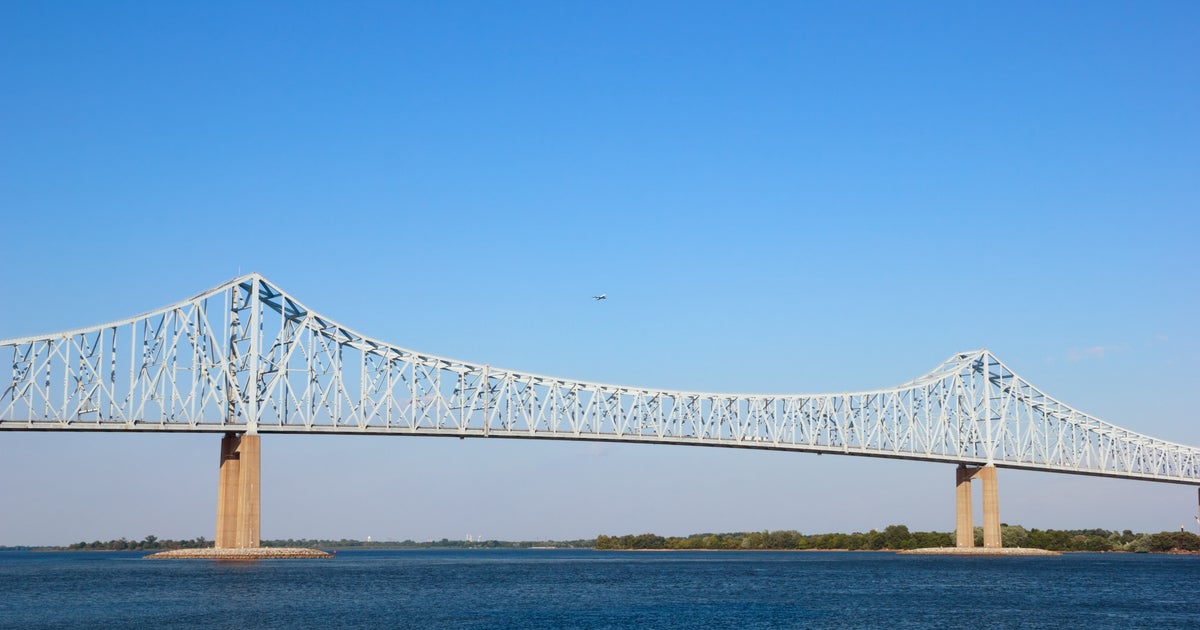
Commodore Barry Bridge Closed Through Nov 28 After Storm Damages Work Platforms
The Commodore Barry Bridge is closed in both directions through Saturday, November 28, after powerful winds from a...

Forbes India Unveils ‘The Changemakers’ List Profiling Leaders Across Tech, Healthcare, Fragrance, Real Estate, Education and Skincare’
Forbes India released its digital edition "The Changemakers: India's Leaders of Progress" on November 25, profiling entrepreneurs across...