
Wisconsin candidates shift away from election denial
Republican candidates in Wisconsin largely avoided claims of election fraud during their 2026 midterm concession speeches, marking a notable departure from the political rhetoric that followed the 2020 election.
This change in tone was observed by political analysts across the state. Spectrum News reported that election denial and fraud claims were significantly harder to find in recent concession remarks compared to previous cycles.
Charles Franklin, the director of the Marquette Law School Poll, noted that the absence of these claims was a striking development during the post-election period.
“I’m glad I’m not the only one that noticed that, because it really did strike me that we didn’t hear election denial,” Franklin said. Poll Director Charles Franklin
The shift suggests a strategic pivot among some Republican figures. Mordecai Lee, a political science professor at the University of Wisconsin-Milwaukee, observed that the style of politics seen after 2020—where Republican legislators were often willing to support investigations into election results—has given way to a different approach.
The return of Wisconsin Nice
The 2026 midterms saw several high-profile candidates adopt a more conciliatory stance. U.S. Rep. Tom Tiffany, a Republican and candidate for governor, previously supported efforts to overturn the 2020 election results in Wisconsin, but his recent tone was markedly different.
Tiffany accepted responsibility for his loss, stating, “The responsibility for this race and us not winning as Republicans falls on me. I did not deliver the message clearly enough.” He also told supporters, “We’re going to be magnanimous tonight.”
Other representatives followed suit with gestures of cooperation. One Assembly representative met with an opponent for coffee to offer congratulations, while U.S. Rep. Derrick Van Orden, R-Wis., focused his remarks on ensuring a stable transition of power.
“I wish Rebecca Cooke the absolute very, very best and if she needs any help, my staff will be at her beck and call to make sure that we have a smooth transition, because this has never been about me,” Van Orden said.
Lee characterized this movement as a return to “Wisconsin Nice,” a political culture where candidates compete vigorously but accept the outcome once the votes are tallied.
Questioning election integrity alienates significant portions of the electorate
The movement away from election denial may be driven by the perceived electoral risks associated with such claims. Data from the States United Democracy Center suggests that questioning election integrity can alienate significant portions of the electorate.
Before the 2022 midterms, surveys indicated that a large segment of voters viewed election deniers unfavorably. The political implications for candidates are reflected in the following voter sentiment data:
| Voter Group | Likelihood to vote less for “election deniers” |
|---|---|
| General Voters (across four states) | 43% |
| Independent Voters | 34% |
Franklin suggested that Republican candidates might be distancing themselves from the approach used by President Donald Trump. He noted that the practice of “brutalizing” opponents or denying outcomes may no longer be viewed as the most effective image for candidates or the party at large.
While the shift toward more traditional concession styles is evident in these speeches, it remains to be seen if this represents a permanent change in Wisconsin’s political landscape or a temporary reaction to specific electoral pressures.
Worth a look

Burlington High School Students Report Feeling Isolated in New Building
The isolation of 250,000 square feet Forty percent of students at Burlington High School say they feel less...
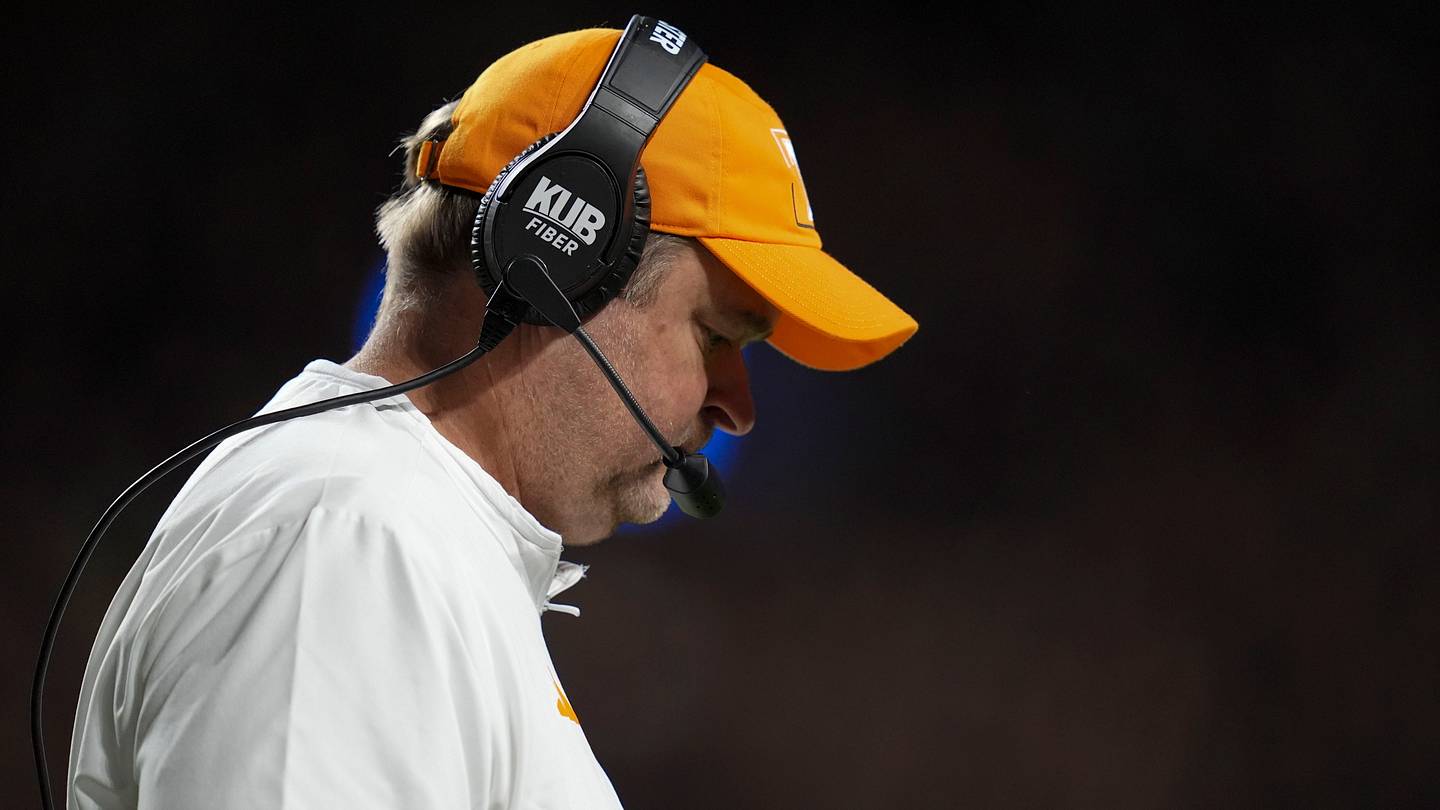
Why Tennessee’s Win Over Kentucky Boosts Its Playoff Chances
Tennessee boosted its College Football Playoff chances on Saturday by defeating sixth-ranked Kentucky 34-6. The victory moves the...

Rhode Island Energy Nears Completion of Natural Gas Modernization
Rhode Island gas infrastructure nears completion Rhode Island Energy is nearing the end of a major project to...

Oklahoma State Favored Over Texas Tech Amid Big 12 Title Hunt
Oklahoma State faces Texas Tech in Big 12 title hunt Oklahoma State enters this weekend as a 3.5-point...