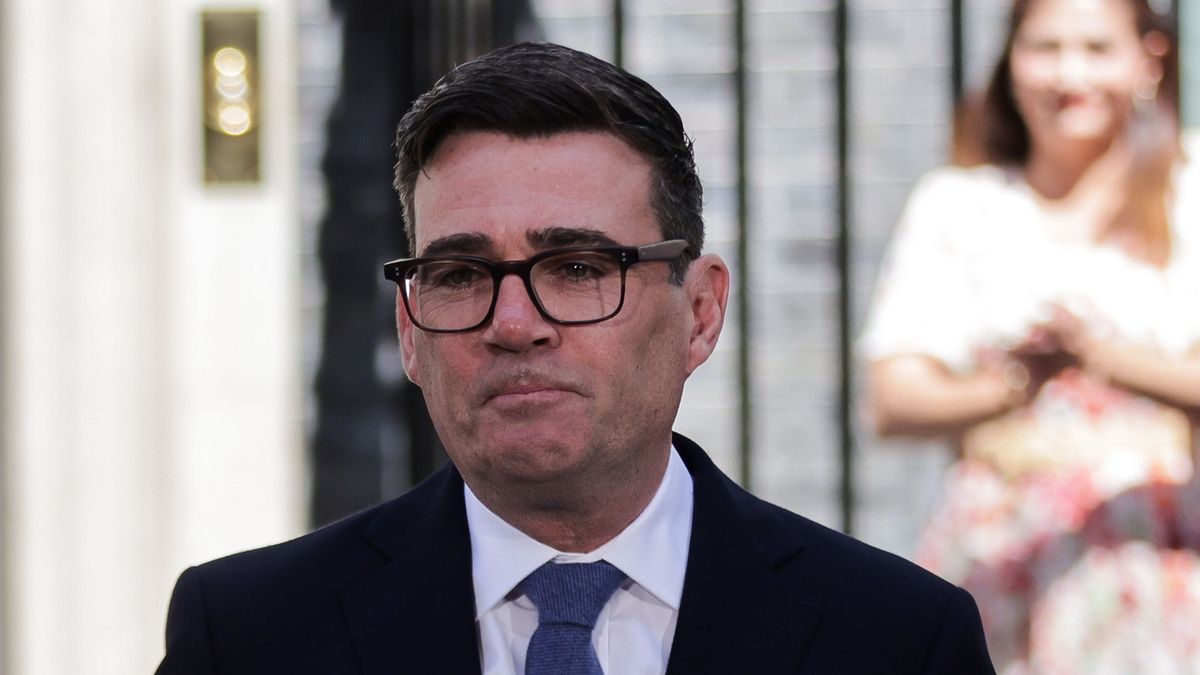
Prime Minister Andy Burnham has paused Labour’s controversial early prisoner release scheme following a fierce public backlash over plans to free two men convicted of killing police officer PC Andrew Harper. The suspension halts changes scheduled for September, pending an urgent government review into public safety risks.
Emergency Release Plans Halted After Killer Controversy
Under reforms tied to the Sentencing Act, approximately 6,000 offenders were slated for release from September onward. Those on standard determined sentences would have been eligible after serving one-third of their terms, while violent or sexual offenders faced release at the halfway point.
However, public outcry erupted after it was revealed that Jessie Cole and Albert Bowers—who were passengers in a car that dragged PC Andrew Harper for more than a mile down a country road in Berkshire in 2019—could be released within months. Both men were convicted of manslaughter in 2020 and sentenced to 13 years in custody.
Political Intervention and the Prime Minister’s Vow
Stepping into the unfolding political storm, newly installed Prime Minister Andy Burnham announced a dramatic halt to the scheduled rollouts during a statement on Thursday. He stressed that protecting the public remains his administration’s overriding responsibility.
“Keeping the public safe will always be my top priority. I am working closely with the new justice secretary and have instructed my team to put a pause on the changes that were due to start in September. No prisoners will be let out under this policy until we have conducted an urgent review and done everything we can to minimise risk to the public. Where changes are needed, we will not hesitate to make them.”
Andy Burnham, Prime Minister
Prior to announcing the suspension, Burnham told reporters that he wanted to ensure every aspect of the program was examined. While declining to declare the entire policy scrapped, he made clear that the government would review the framework in deep detail before proceeding further.
Victims’ Families and Police Leadership Speak Out
The decision to pause the scheme follows days of searing criticism from victims’ advocates and law enforcement leaders. Lissie Harper, the widow of the slain officer, voiced profound anger over the prospect of her husband’s killers walking free early.
“It is deplorable to me that we have reached a point where releasing prisoners early is even considered acceptable. We speak of justice, accountability and standing with victims, yet decisions like this do the opposite.”
Lissie Harper, Widow of PC Andrew Harper
In her statement, Mrs Harper added that it took years to pick up the pieces of a life shattered by the tragedy, criticizing politicians for making decisions from behind a desk that will have real and lasting consequences
for families like hers. PC Harper’s mother similarly denounced the potential release as an insult, while Thames Valley Police Chief Constable Jason Hogg stated that freeing the killers early feels wrong
and noted they would have faced life sentences if sentenced today under Harper’s Law, secured through family campaigning in 2022.
Victims’ Commissioner for England and Wales Claire Waxman OBE welcomed the government’s reversal, noting that thousands of victims had already received distressing notices that their abusers might soon leave custody.
Weighing System Capacity Against Public Confidence
The underlying dilemma facing Downing Street remains the severe capacity deficit across British penitentiaries. Successive administrations have turned to emergency measures to avert total system gridlock. The prior Conservative administration operated the End of Custody Supervised Licence scheme from 2023, releasing over 10,000 inmates early. This was succeeded by Labour’s SDS40 program, which saw 56,323 offenders released after serving 40 percent of their sentences between September 2024 and December 2025.

Defending the necessity of legislative reforms last month, justice minister Jake Richards told the Commons that the Sentencing Act 2026 was essential to prevent courts from grinding to a halt amid zero remaining prison spaces. Yet the inclusion of violent and serious offenders in the latest framework—while excluding those serving life sentences and public protection orders—has brought the administration’s balancing act between court capacity and public confidence to a sharp head as the urgent review gets underway.
Sources: mirror.co.uk.
Keep reading

Worker Dies After Being Struck by Compressed Air Hose at Jurong Port Road
A 35-year-old worker died at a Jurong Port Road construction site on September 11, 2026, after being struck...
Singapore Police Investigate Three Traffic Officers Over Unsafe Riding Footage
The clip, which surfaced online, shows the outriders cutting across lanes and forcing sudden braking near the Traffic...
Justice Department Deports Legal Resident to Afghanistan in First ATRC Case
The Justice Department deported a 47-year-old legal U.S.

Mahnoor Safdar Marries Azan Jabbar Today at Jati Umra Estate
The private family gathering brings together close family and invited guests for the celebration.