
Meta's Muse agent reached No. 2 in the App Store with over 10 million activations in 45 days.
“Over 10 million people activating in the span of 45 days. I mean, that’s pretty incredible,” AMD CEO Lisa Su told Yahoo Finance about Meta’s Muse agent.
Apple pulled a job listing for a Senior Engineering Manager, Agentic AI – Proactive on Friday after the posting revealed the company is building an AI agent that can browse the web, work across apps, write code, and coordinate specialized sub-agents — capabilities that directly target the same space Meta’s Muse now occupies.
Listing Reveals Agent Ambitions
Bloomberg spotted the posting earlier this week. It described “an AI agent that can use a computer the way a capable person does,” and said the engineer would work across Apple’s Siri, UI Frameworks, and Apple Foundation Models divisions. “People already do their most valuable work by moving fluidly between tools: a browser, a document, a terminal, an editor, a service,” the listing read.

By Friday the page was gone. “Apple killed the job listing, which is typical when they reveal too much about future plans,” Bloomberg’s Mark Gurman posted on X. The Verge confirmed the removal in an update on November 20.
Rivals Lead App Store Rankings
Competitive pressure is already visible on Apple’s own platform. AI assistants from rivals hold four of the top six free apps in the App Store, led by Meta’s Muse agent at No. 2. That foothold gives competing agents a distribution advantage Apple’s own Siri upgrades have not yet matched.
Apple killed the job listing, which is typical when they reveal too much about future plans. https://t.co/kmJ9CXpzH2 pic.twitter.com/9IL5mRWqOt
Spending Strategy Diverges From Peers
Apple’s capital expenditures — what it invests in long-lasting assets like buildings and equipment — dropped nearly 30% to about $9 billion in its latest fiscal year. Meanwhile, Microsoft, Meta, Alphabet, and Amazon spent more than $600 billion over four quarters. Apple’s research budget jumped about $11 billion, exceeding its entire capex bill. For heavy AI compute, Apple rents capacity, paying Google about $1 billion a year for Gemini to power the new Siri, according to Bloomberg.
Agents change that calculus. They grind through multistep tasks in the background, consuming far more compute than a single query response. CFO Kevan Parekh said Apple is “in very, very early stages of understanding the kind of mix of those costs.”
Internal Clock Slows Release
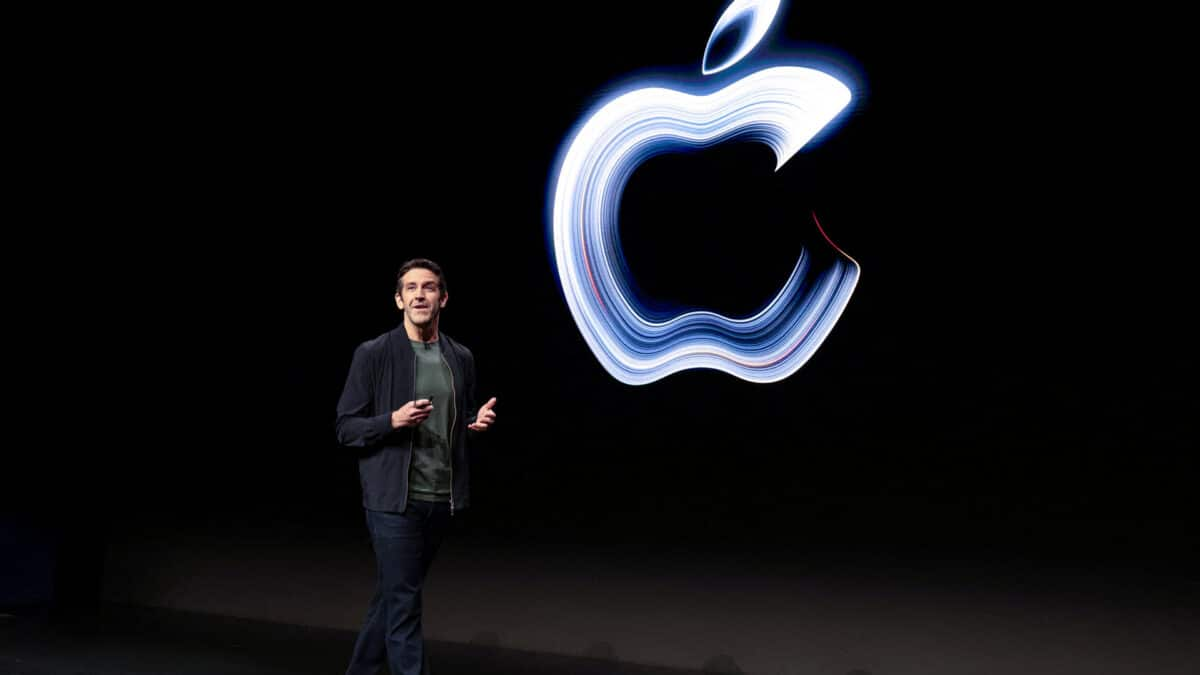
John Ternus has been pressing software chief Craig Federighi to move faster, Bloomberg reported this month. Apple is targeting a launch as soon as late next year. But the company’s engineering and release processes are tied to an internal calendar known as ABCDEF and G, which locks plans in place roughly 12 months before products reach consumers.
That rhythm ensured polish in the past; in the current AI race it may leave Apple operating as much as a year behind rivals, according to reporting summarized by CuriousCats.
Privacy Architecture Constrains Deployment
Constructing a system that performs complex, private, server-side inference without ever retaining data is a monumental engineering challenge that slows deployment of new agent capabilities, Piggypedia’s analysis notes. This is a classic “innovator’s dilemma” scenario: by adhering to a strict privacy architecture, Apple effectively opts out of the “move fast and break things” cycle yielding the most impressive agent behaviors today.
If users find an open-source or competitor agent can reliably manage their calendar, budget, and communications through flexible cloud integration, they may trade a degree of privacy for that functional leap.
Hardware Gates Limit Reach
Recent AI features have been gated behind the latest Pro-model silicon, limiting the user base and the feedback loop necessary to refine agent performance. Competitors are pushing agents to browsers, legacy smartphones, and third-party software, capturing behavioral data Apple misses. The next macOS update will require users to click through 14 steps to let ChatGPT run their computer, up from four today — a friction layer that highlights the control-versus-utility tradeoff.
Apple has the App Store distribution channel, a reputation for privacy, and a tightly integrated hardware ecosystem. Whether those advantages can close a gap that widened while Apple watched from the bleachers is the question the next 12 months will answer.
“As far as agentic capabilities, we think these are promising tools for users,” Ternus said on his first earnings call as CEO. The job listing that vanished this week suggests Apple is no longer just watching.
Keep reading

Photojournalists Sue St. Paul Police Alleging Constitutional Violations During ICE Protest Coverage
Three photojournalists sued St. Paul Police Chief Axel Henry and 12 unidentified officers Tuesday, alleging constitutional violations during...

Vienna Airport MSFS 2024 Release Set for Nov 26; Cheyenne IIXL Targets 2027
Gaya Simulations set a November 26 release for its Vienna International Airport (LOWW) add-on for Microsoft Flight Simulator...

Carson-Newman Rushed for 453 Yards Without a Pass to Eliminate Kentucky State 42-14 in NCAA DII Playoffs
Carson-Newman rushed for 453 yards and six touchdowns without attempting a single pass, overwhelming Kentucky State 42-14 in...

Two Fatal Motorcycle Crashes in Columbia, Mo., and West Columbia, S.C., This Month
A 22-year-old Columbia, Missouri, man died Saturday evening when his motorcycle collided with a vehicle on West Broadway....