The Arizona Court of Appeals ruled Tuesday that news organizations may publish statements read aloud in open court by the daughters of Michael Abatti, a farming tycoon charged with murdering his estranged wife, Courthouse News Service reported.
Judge Jennifer Perkins wrote for a unanimous three-judge panel that the First Amendment protects the press’s right to publish what was said during a public proceeding, even though the court failed to warn the daughters their remarks would be public.
“We are troubled that no one told the daughters the consequences of reading their statements in open court,” Perkins wrote. “But once the daughters spoke in open court, the First Amendment protected the press’s right to publish what they said, even if the failure to warn the daughters was inconsistent with the Victims’ Bill of Rights.”
Presiding Judge Michael Catlett concurred, writing that the Arizona Constitution alone forbids such prior restraint and makes federal analysis unnecessary. Judge Angela Paton joined Perkins’s majority opinion.
Gag order issued at arraignment
The case stems from the November 20, 2025, shooting death of Kerri Ann Abatti, 59, in her Pinetop home. Michael Abatti, 64, a California farmer, was charged with first-degree murder amid a bitter divorce involving a $200 million trust, the Arizona Mirror reported.

At a December 31, 2025 arraignment, Abatti’s two adult daughters attended remotely and asked to read victim impact statements aloud. A KPNX-TV Channel 12 reporter was also listening remotely with court approval. After the first daughter read her statement, both the prosecutor and defense attorney asked the court to block the media from reporting the content. Navajo County Superior Court Judge Jon Saline issued the gag order before the second daughter spoke.
Divorce and $200 million trust framed murder case
Michael Abatti and his wife Kerri Ann were locked in a bitter, three-year divorce when she was killed, Courthouse News Service reported. At the center of the split was a $200 million trust that remained in dispute. The Arizona Mirror confirmed the couple had been separated for more than a year before the November 2025 shooting.
Abatti, a 63-year-old prominent farmer from the Imperial Valley, was arrested four weeks after the shooting and has remained in custody, apparently unable to post $5.5 million bail, according to Courthouse News. He pleaded not guilty to first-degree murder and is awaiting trial.
Concurring judge relies on state constitution
Presiding Judge Michael Catlett concurred in the result but wrote that the Arizona Constitution alone resolves the case, making federal First Amendment analysis unnecessary, the Arizona Mirror reported. “Our supreme court has already told us how to solve this case,” Catlett wrote. “The Arizona Constitution forbids courts from imposing prior restraints on publication of open-court proceedings.”
Appeals court rejects prior restraint
KPNX, joined by other local outlets, challenged the order as unconstitutional prior restraint. Navajo County Superior Court Judge Joseph Clark upheld the gag order, prompting the appeal.
Perkins cited a 1976 U.S. Supreme Court standard: a court may not bar publication of open-court proceedings unless the “gravity of the evil” resulting from publication, “discounted by its improbability, justifies such invasion of free speech as is necessary to avoid the danger.”
The panel found Abatti’s jury-pool argument too speculative. “Even if the small, rural community here increases the risk of jury prejudice, that risk remains too speculative,” Perkins wrote, noting ordinary tools — a larger jury pool, voir dire on media exposure, and limiting instructions — could protect his fair-trial rights.
“A judicial prior restraint preventing the press from reporting on public court proceedings ‘strikes at the very foundation of freedom of the press by subjecting it to censorship by the judiciary,’” Perkins wrote, quoting the six-decade-old Arizona Supreme Court Decision.
The Arizona Court of Appeals, organized since 1964 into Division 1 in Phoenix with nineteen judges and Division 2 in Tucson with nine, hears cases in three-judge panels called departments; the panel that struck down the gag order included Presiding Judge Michael Catlett, Judge Jennifer Perkins and Judge Angela Paton.
The court exercises intermediate appellate jurisdiction over civil and criminal appeals from superior court, except death-penalty cases, and also decides petitions for special action such as the media’s challenge to the prior restraint.
“Our supreme court has already told us how to solve this case,” Catlett wrote. “The Arizona Constitution forbids courts from imposing prior restraints on publication of open-court proceedings.”
Worth a look
- EPA, Officials Inspect Kalaeloa Shoreline After 403K-Gallon H-POWER Spill
- Former Idaho Lawmaker Branden Durst Out at Brabeion Academy Amid Financial Probe
- What Trump's Housing Order Means for a $360,000 Loan at 7.32% (daybreakwire.com)
- Israeli strikes in Gaza kill 7 including senior Hamas security official (newsarchyuk.com)

EPA, Officials Inspect Kalaeloa Shoreline After 403K-Gallon H-POWER Spill
An estimated 403,000 gallons of diesel fuel leaked from an underground pipeline at Honolulu's city-owned H-POWER waste-to-energy plant...

Former Idaho Lawmaker Branden Durst Out at Brabeion Academy Amid Financial Probe
Branden Durst is no longer employed at Brabeion Academy, the Nampa charter school he opened in August, less...

Boyle Elected NATO PA President by North Atlantic Council, Pledges Alliance Unity
Boyle leads an assembly representing 32 NATO member nations. He pledged unwavering support for Ukraine ahead of the...
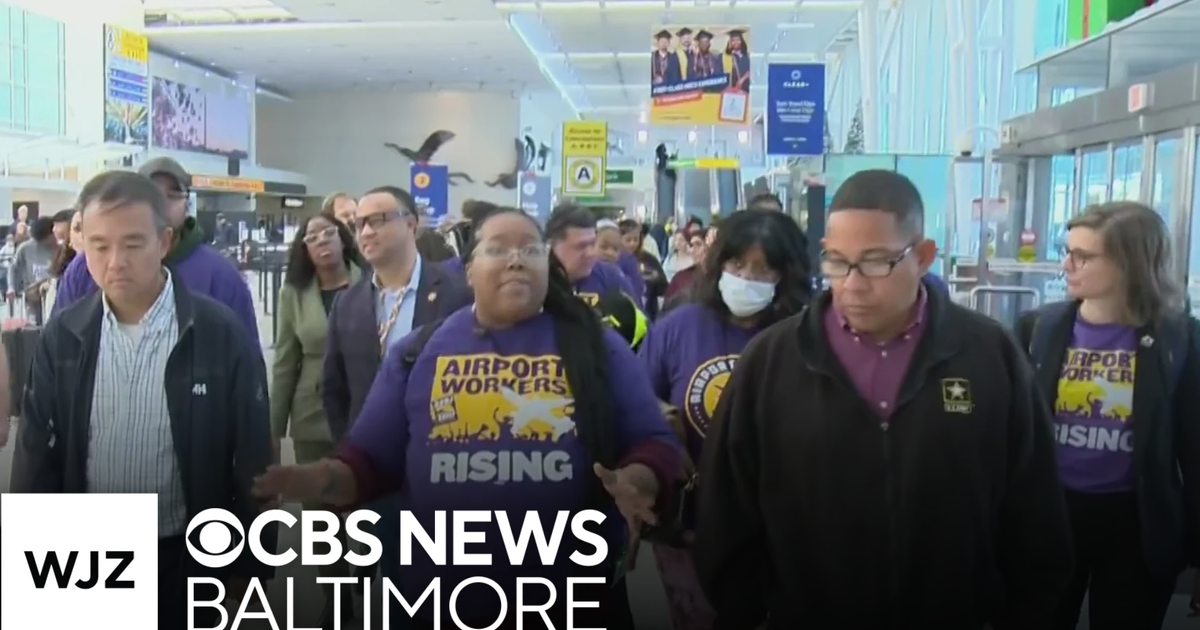
Maryland Lawmakers Tour BWI With Indirect Contract Workers Pushing for Higher Wages, 2027 Legislation
The visit comes as Gov. Wes Moore prepares emergency legislation to raise the minimum wage for indirect contract...