
“We should not allow the third round to take place. I think we must prevent another possible eruption of fighting,” ASEAN Secretary-General Kao Kim Hourn told The Straits Times in an exclusive interview.
Kao warned that the ceasefire between Thailand and Cambodia remains fragile and could collapse into renewed hostilities unless both countries intensify negotiations, as Singapore prepares to assume the ASEAN chairmanship on Jan. 1, 2027.
As ASEAN chair in 2025, Malaysia facilitated peace initiatives, with the Philippines carrying them forward in 2026, yet Kao said “not much is happening” in bilateral talks between the two neighbours despite the breathing space the truce provides, Asia News Network reported.
Thai-Cambodian border
Clashes in July and December 2025 killed at least 150 people and displaced roughly one million along the 800-kilometre border, according to the International Crisis Group. A ceasefire reached Dec. 27, 2025, has largely held, though both sides accuse each other of violations. Singapore will take over leadership of the ASEAN Observer Team monitoring the ceasefire in 2027.
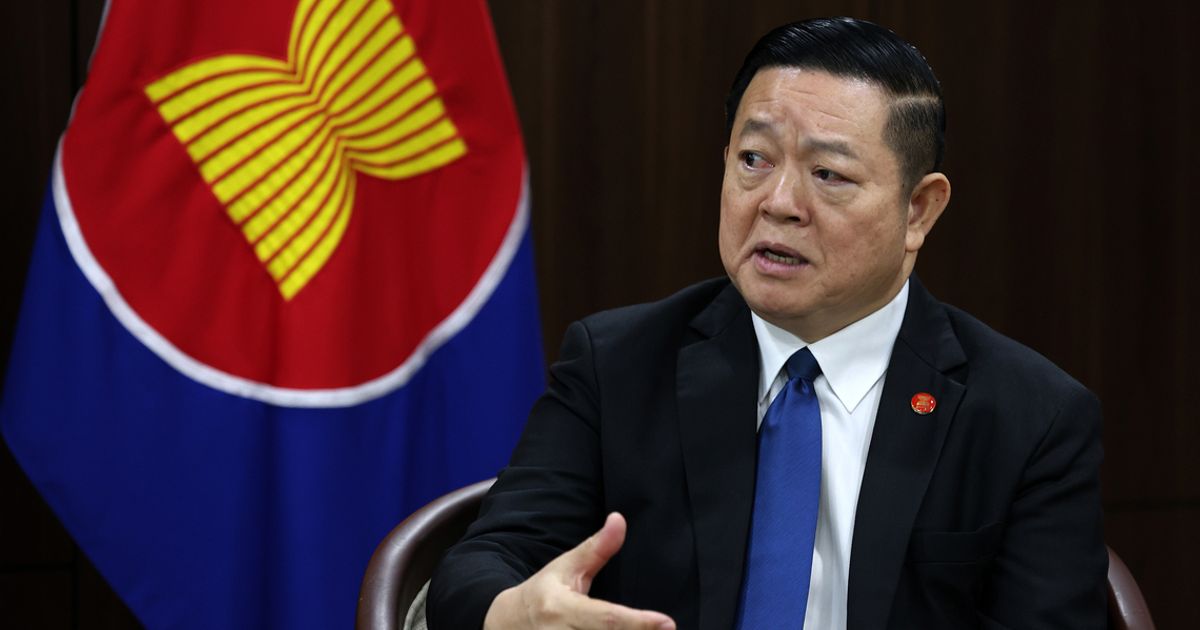
“We have a ceasefire, but the ceasefire remains. I will be very frank – fragile, because since the ceasefire was in place. We have not seen a lot of negotiations yet between the two conflicting parties,” Kao said. He urged both countries to use existing bilateral mechanisms involving their foreign and defence ministries, armed forces and border authorities.
Kao noted ASEAN has dispute-settlement mechanisms under its Charter and the Treaty of Amity and Cooperation, including mediation, arbitration and a High Council that has never been activated. He acknowledged diplomatic support from the United States and China but stressed “peace must be from within.” Kao described Singapore as a “small country, but big diplomacy” and expressed confidence in Foreign Minister Vivian Balakrishnan, calling him “very strategic, very smart.”
South China Sea Code of Conduct
Kao voiced strong optimism that Singapore could conclude the long-running Code of Conduct negotiations between ASEAN and China. “I have every reason to believe that Singapore will lead ASEAN to finalise the COC negotiations,” he said, recalling how Singapore took over the talks from the Philippines and brought them to a conclusion.
Outstanding issues include the agreement’s legal nature and implementation. Kao said unresolved issues could be referred to senior officials and foreign ministers, adding that a breakthrough would require compromise from both sides. “We need to have a code of conduct that is agreeable, workable and acceptable by both sides,” he said.
Myanmar and economic priorities
On Myanmar, Kao called the decision to stay engaged “wise” but stressed Myanmar must demonstrate willingness to work with ASEAN. After taking the presidency in April, Min Aung Hlaing travelled to Laos in July, Thailand in August, Vietnam and Cambodia in September, and Malaysia in October. Kao said that the grouping had yet to reach the stage of resuming normal political engagement.
As Secretary-General of ASEAN since 2023, Kao Kim Hourn holds the bloc’s top diplomatic post, giving him direct authority to monitor the Thai-Cambodia ceasefire and urge both sides toward bilateral negotiations.
His mandate draws on decades of Cambodian statecraft: he served two terms as Secretary of State at the Ministry of Foreign Affairs and International Cooperation (2003–2013) and two terms as Minister Delegate attached to the Prime Minister (2013–2022), roles that placed him at the center of Cambodia’s foreign policy and ASEAN engagement, including the country’s 1999 accession.
That institutional memory informs his assessment that the truce remains fragile and his call to activate ASEAN’s dispute-settlement mechanisms — mediation, arbitration and the never-used High Council under the Charter and the Treaty of Amity and Cooperation.
Singapore’s chairmanship theme is “Deeper Integration, Wider Partnerships,” coinciding with ASEAN’s 60th anniversary. Kao said 2027 should be “a year of peace, stability, cooperation, and a year of a lot of hope for ASEAN and for ASEAN people.”

Kayley Stead Marries Richard Perrott Four Years After Groom Vanished
Kayley Stead walked down the aisle on Friday to applause, four years after her first fiance failed to...

KKV Group Launches MERRY GIFTmas Campaign Across Six Southeast Asian Countries
KKV Group is rolling out its MERRY GIFTmas Christmas campaign across nearly 150 stores in six Southeast Asian...

Melissa McCarthy, Clive Owen Channel Parental Grief in the Murder of JonBenét Ramsey Trailer
Netflix will drop all six episodes of Murder of JonBenét Ramsey on December 10, 2026, just weeks before...

Maidstone Council Investigates Headcorn Traveller Site Over 20 Caravans
Maidstone Borough Council has launched an investigation after aerial photographs showed a traveller site in Headcorn, Kent, now...