Travel writer Dennis Lennox spent four days in Augusta, Georgia, this month and found more church spires and museum curiosities than golf greens.
Lennox skipped the Masters tournament entirely, instead starting on Broad Street where Italianate buildings with arched windows and elaborate cornices line the blocks rebuilt after a 1916 fire gutted 35 blocks, Christian Post reported.
“As one might expect, the Episcopalians have Augusta’s most striking churches, though here I would put the Presbyterians and Methodists in a close tie for second,” Lennox wrote. His frustration: every church, regardless of denomination, was never open outside services.
St. Paul’s Episcopal Church, the original Anglican parish dating to Georgia’s colonial era, sits by the Savannah River with a bell tower rising above a pedimented brick front. “To my eye, this is influenced by the works of Sir Christopher Wren, James Gibbs and Nicholas Hawksmoor in the late 17th and early 18th centuries,” Lennox said.
A short drive toward Augusta University reveals the Church of the Good Shepherd, a Victorian Gothic revival structure Lennox called “Disneyesque.” Downtown, St. John, part of the United Methodists, occupies an antebellum building, while First Presbyterian Church preserves the former manse where President Woodrow Wilson lived from 1860 to 1870 — more years than he spent under any other roof.
Two downtown museums “punch well above their weight,” Lennox wrote. The Augusta Museum of History displays a 1914 steam locomotive and a crown worn by James Brown, who grew up in the city. The Morris Museum of Art on the Riverwalk focuses on Southern art, including regional impressionist works.
Then there is Pexcho’s American Dime Museum on Sixth Street. “I have never seen anything quite like it. My guide told me it is the last of its kind,” Lennox wrote. Think P.T. Barnum: dime museums were the tourist traps of their day, forerunners of sideshow tents and carnival midways.
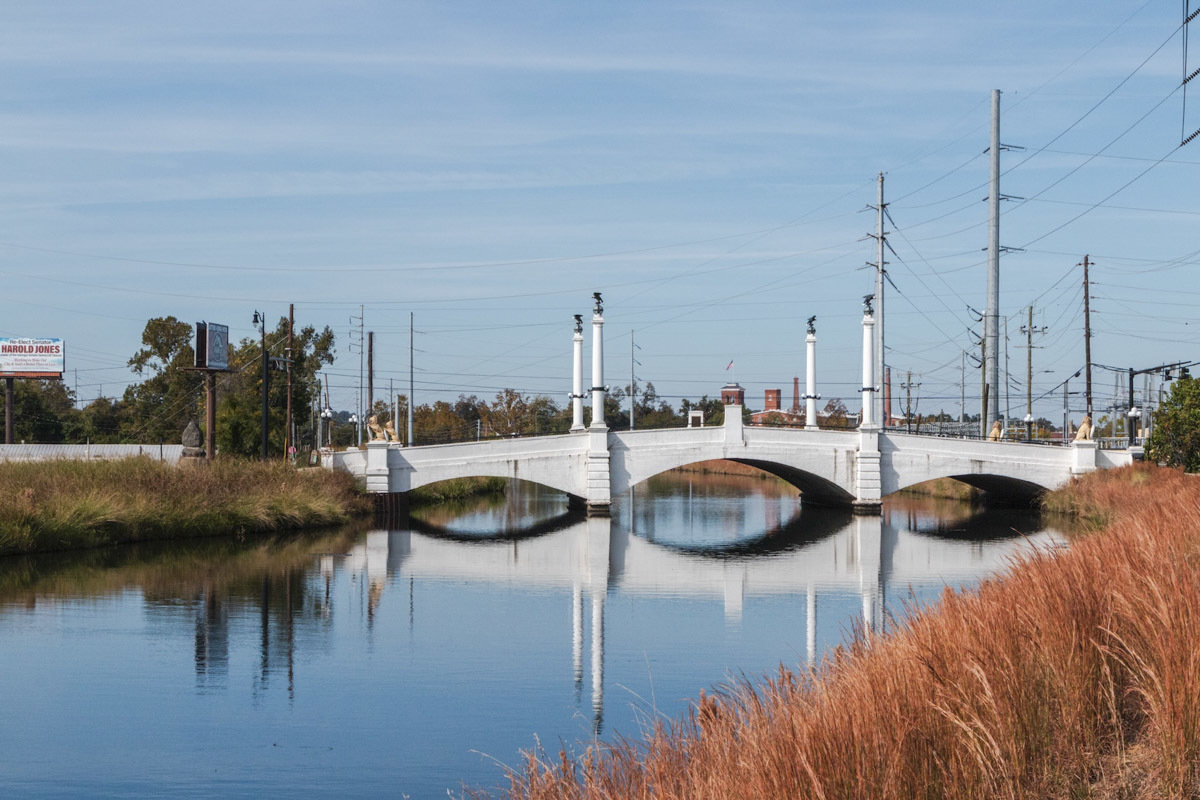
An Augusta Canal tour on an “Indian summer Saturday” passed the surviving chimney of the Confederate Powder Works and the castle-like textile mill behind it. At 15th Street, a bridge honors U.S. Army Major Archibald Butt, an Augusta native and aide to Presidents Theodore Roosevelt and William Howard Taft who died aboard the Titanic in 1912.
Two downtown museums “punch well above their weight,” Lennox wrote, highlighting the Augusta Museum of History for its Transportation Corridor, which showcases regional transit over 150 years with a 1914 steam locomotive and a reconstructed 1930s gas station. The museum also anchors its Godfather of Soul exhibition around James Brown’s 1950s “King of Soul” crown, alongside performance costumes and memorial-service programs that trace his global fame.
If you go, Delta Air Lines serves Augusta Regional Airport via Atlanta. Savannah’s airport, two and a half hours by car, offers better service from more airlines. A rental car is advisable; Uber and other ride-sharing services have limited availability with prolonged wait times.
Lennox recommended the Augusta Marriott on the Savannah River over the nearby Hyatt House. For dining: Trellis for coffee and breakfast, Bodega Ultima for lunch or happy hour, and Calvert’s, Finch & Fifth, or Oliviana for dinner. Trip planning resources are available through Visit Augusta.

Idaho State Beats Idaho 19-5 to Keep Potato State Trophy
Idaho State kept the Potato State Trophy in Pocatello with a 19-5 win over Idaho on Saturday at...
Montana MVD Cuts Waits to One Day, Adds Vehicle Services at Exam Stations
Montana’s Motor Vehicle Division cut the average vehicle transaction from 27 minutes to five to seven minutes and...

United Hospital District Names COO Jeffon Seely as New CEO
The United Hospital District board chair Bill Barke announced in a letter to employees that Jeffon Seely will...

Coastal Storm Tracks East, Spares NYC Heaviest Rain; Long Island Flood Risk Sunday
A coastal storm tracking farther east than forecasters first expected will bring the heaviest rain and strongest winds...