Fine Arts Requirements Could Bridge the Gap Between High School Exploration and Career Stability
In a recent column for The Northern Light, a student writer argues that making fine arts classes a graduation requirement could transform high school from a mere academic hurdle into a critical period of self-discovery. The author suggests that the current elective-based model often leaves students without the opportunity to explore passions that might define their future professional lives, potentially leading to more expensive and time-consuming career changes in college or the workforce.
The argument centers on the idea that high school serves as the final safe harbor for experimentation before the high stakes of adulthood take hold. By making even a small amount of fine arts credit mandatory, schools could ensure that every student is exposed to the creative disciplines, regardless of whether they eventually pursue them as a career. The author notes that while not every student will fall in love with the arts, the exposure provides a unique form of engagement that can serve as a refuge for those who find traditional academic settings difficult.
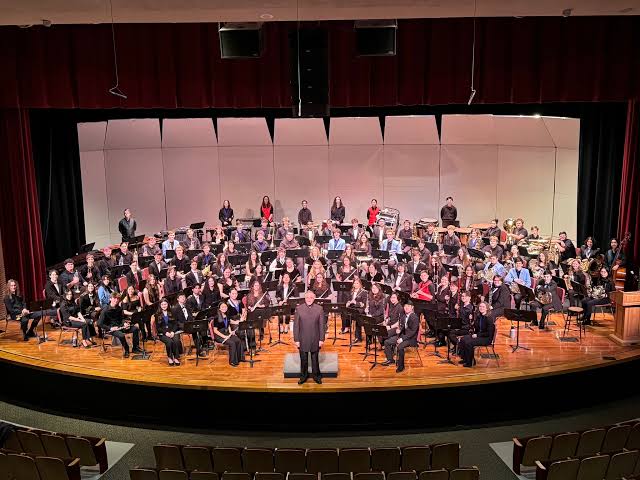
This push for increased arts integration comes at a time when many school districts are facing difficult budgetary decisions that directly impact creative programming. The author cites specific instances of program erosion, noting that Bettye Davis East Anchorage High School was forced to close its band program due to budget cuts within the Anchorage School District. Such closures highlight a growing tension between fiscal austerity and the preservation of holistic education.
The Human and Economic Stakes of Arts Education
The debate over fine arts is often framed as a choice between “core” subjects and “extras,” but the author contends that the arts offer measurable developmental benefits. To support this, the piece references research from the University of Southern California, which found that students participating in multiple forms of music education over extended periods scored higher in measures of competence and hopeful future expectations. Although that specific study focused on middle schoolers, the implication remains that these benefits extend throughout the K-12 spectrum.
Beyond individual development, there is a systemic strain on the educators who keep these programs alive. In the Anchorage School District, the author observes that many music and fine arts teachers are forced to travel between two or three different schools to meet demand. This creates a cycle of hectic schedules and lost instructional time as teachers commute between campuses.
“Requiring teachers to split their time between multiple schools creates hectic schedules and can leave students waiting for instruction while their teacher is commuting.”
The author’s own journey serves as a case study for why these programs matter. Entering high school with zero musical background, the author found a passion for music through a choir class—a discovery catalyzed by a school production of Mean Girls. This experience eventually led to a pursuit of a major in music education, illustrating how a single elective can dictate a student’s entire academic and professional trajectory.
Counterarguments and the Challenge of Implementation
Critics of mandatory arts credits often point to the need for academic rigor in STEM (Science, Technology, Engineering, and Math) and the necessity of keeping graduation requirements streamlined to ensure workforce readiness. From an economic perspective, school boards often view arts programs as discretionary spending that can be trimmed during revenue shortfalls without compromising standardized test scores.
However, the author suggests that making these classes a requirement could actually increase student engagement and retention. By lowering the barrier to entry through beginner-level classes, schools can capture the interest of students who might otherwise feel disconnected from the educational process. The core of the argument is that the cost of missing out on this exploration—manifesting as students choosing the wrong college majors or lacking certain soft skills—may outweigh the immediate savings of cutting these programs.
The survival of these programs often rests on the shoulders of individual educators. The author points to the choir program at Wasilla High School, which narrowly escaped closure thanks to a teacher who was qualified to teach music despite being assigned to a different subject. This reliance on individual heroics rather than systemic support underscores the volatility of arts education in the current climate.
Ultimately, the proposal is not for a heavy or burdensome curriculum, but for a foundational exposure. The author argues that even a half-credit requirement could be enough to introduce a student to a community they might otherwise never encounter, providing a sense of connection and purpose that lasts long after graduation.

Wisconsin voters decide on 79 school referendums on Tuesday ballot
Wisconsin voters face $1.6 billion in school funding decisions On Tuesday's ballot, voters across Wisconsin are deciding the...

Mike Washington leads Raiders rushing in 38-33 win over Jets
Mike Washington assumes lead running role for Las Vegas Raiders Mike Washington carried the offensive load for the...

BGAV proposes $800,000 budget reduction for 2027
The math facing Virginia Baptist congregations is becoming increasingly difficult to ignore. As local churches grapple with rising...

Democrats Projected to Take House Control by 21 Seats in 2026 Midterms
Utah’s 1st District shifts toward a Democratic stronghold “One day in the not too distant future, Republicans will...