
A Wave of Malicious Bomb Hoaxes Disrupts European Aviation
A series of suspected bomb threats targeted at least seven passenger planes across Europe on Tuesday, triggering emergency landings, airport closures, and the deployment of military fighter jets. While the incidents caused significant chaos for travelers, authorities have confirmed that all threats were false alarms and no explosive devices were found during extensive security sweeps, The Irish Times reported.
The disruptions spanned multiple countries, including Italy, Bulgaria, Poland, Spain, and the United Kingdom. Among the most dramatic responses, the Italian Air Force scrambled two Eurofighter jets to escort a civilian aircraft after a potential threat was reported on board. Although the threats caused widespread delays and diverted several flights, security agencies have not yet identified a coordinated link between the various incidents.
Military Jets Intercept Ryanair Flight Over Italy
The scale of the security response was most visible in Italy, where the Italian Air Force’s 4th Wing deployed Eurofighter jets from the Grosseto airbase. According to a statement from the Italian Air Force, the military aircraft intercepted and escorted Ryanair flight FR9611, which was traveling from Dublin to Rome Fiumicino, following a report of a potential threat. The plane landed safely at approximately 10:45 a.m. local time, and security procedures were implemented on the ground for its passengers.
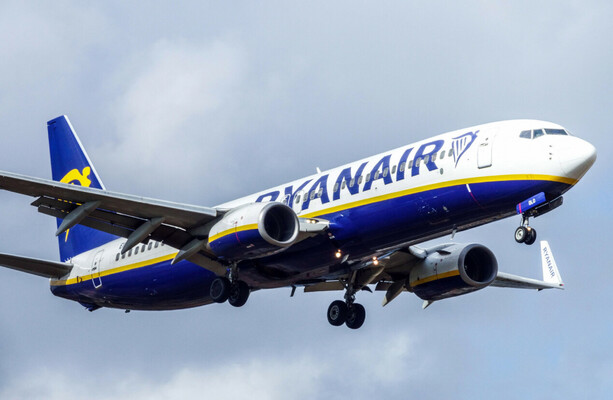
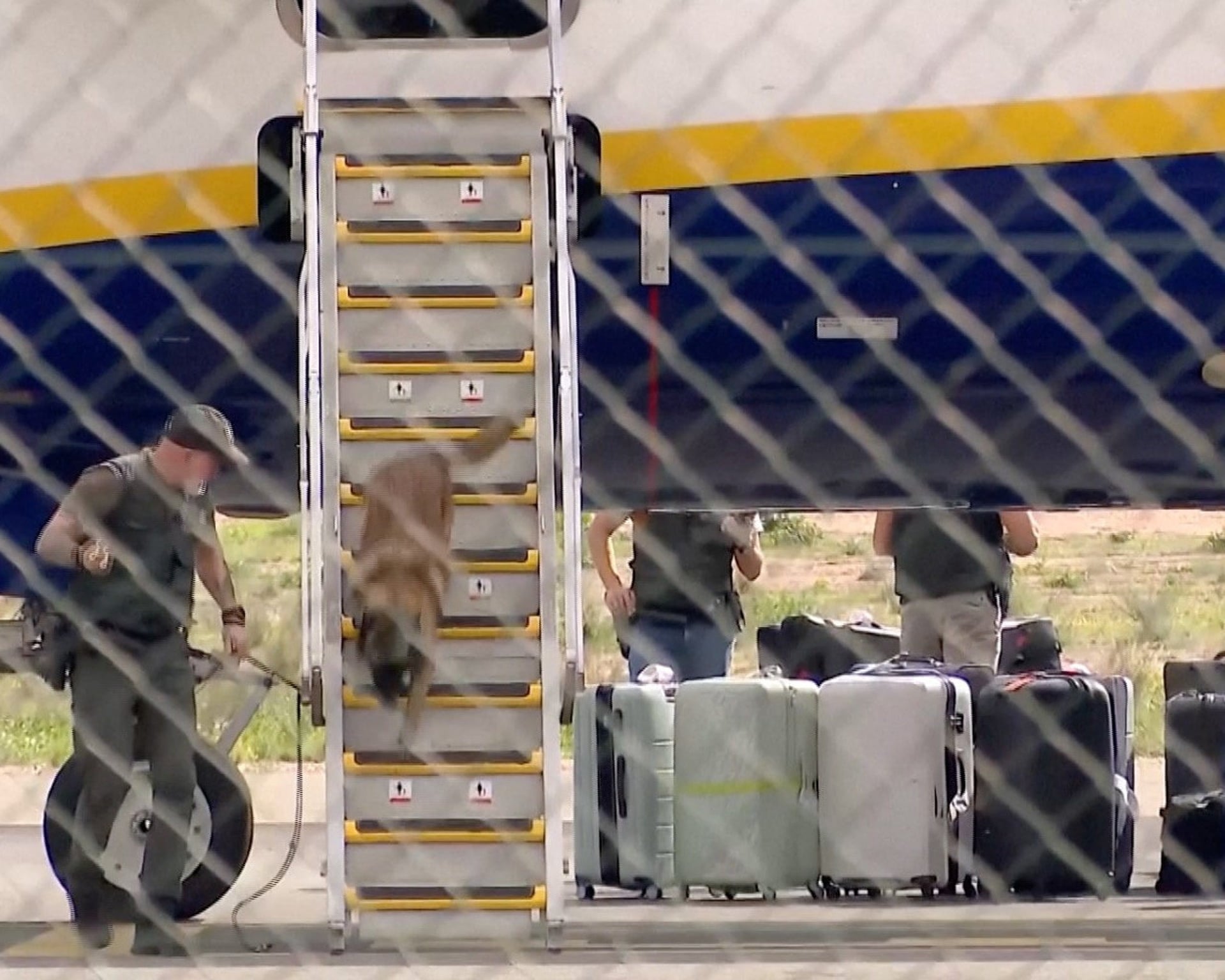
Rome’s Fiumicino airport also dealt with a separate security alert involving a Ryanair flight arriving from Lisbon. The Journal reported that an anonymous tip prompted bomb disposal experts to inspect the aircraft around 9:40 a.m. local time. Airport officials confirmed that checks on passengers, baggage, and the aircraft returned negative results, allowing the alert to be lifted. The Guardian noted that the airport operator, ADR, confirmed both Ryanair flights were subject to these separate alerts.
Widespread Disruptions in Bulgaria and Poland
Bulgaria’s transport ministry reported that two planes arriving in Sofia were the targets of bomb threats. One was a Ryanair flight from Dublin carrying 185 passengers, and the other was a Wizz Air flight from Bergamo, Italy, carrying 176 passengers, according to The Irish Times. Bulgarian transport minister Georgi Peev told reporters that neither flight was diverted, and both landed safely without any explosive devices being discovered.
In Poland, the threats forced a diversion and a temporary airport closure. A LOT flight originating from London Heathrow, carrying 181 passengers, was diverted from Warsaw’s Chopin airport to Warsaw-Modlin airport. The Independent reported that Modlin airport was briefly closed while the aircraft was searched, though it has since reopened for normal operations. Additionally, an SAS Scandinavian Airlines flight from Copenhagen landed at Chopin airport as scheduled; while a landing strip was temporarily closed, the airport remained operational and no devices were found, according to The Journal.
Security Protocols Triggered in Spain and the UK
Spain also experienced significant disruption when a Ryanair flight from Manchester landed at Murcia Airport in the south-east. The Independent reported that parts of the airport were cordoned off following the threat. Francisco Lucas, the Spanish government’s delegate in the Murcia region, confirmed on social media that 114 passengers and seven crew members disembarked for a security check. Lucas later stated that the Guardia Civil had ruled out the presence of explosives and the airport had resumed normal operations.
The United Kingdom was also affected, with The Guardian reporting that departures from both Heathrow and Manchester were among those targeted by what Downing Street described as “malicious hoaxes.” A UK Department for Transport source characterized the threats as “not credible,” noting that while they caused disruption, passengers should not be concerned. UK Counter-Terrorism Policing stated it is aware of the incidents but emphasized there is “no active investigation by CTP into any of these matters.”
The Pattern of Malicious Hoaxes
The sudden surge in threats follows a pattern of recent disruptions. On Monday, Italy dealt with false bomb threats sent to 279 schools, leading to multiple evacuations. Furthermore, The Guardian noted that a Wizz Air flight from London Luton to Sofia was diverted to Budapest on Monday after a bomb threat was received during the flight, requiring an escort by a Hungarian Gripen fighter jet.
Security experts suggest these incidents may not be part of a coordinated terrorist plot. Philip Baum, a visiting professor of aviation security at Coventry University, told The Guardian that many such threats originate from individuals who “think it is funny or want to delay a flight for some reason.”

| Airline | Route | Status | Outcome |
|---|---|---|---|
| Ryanair | Dublin to Rome | Escorted by Fighter Jets | False Alarm |
| Ryanair | Lisbon to Rome | Searched on Arrival | False Alarm |
| Wizz Air | Bergamo to Sofia | Searched on Arrival | False Alarm |
| LOT | London to Warsaw | Diverted to Modlin | False Alarm |
| Ryanair | Manchester to Murcia | Emergency Landing | False Alarm |
While authorities have successfully managed the immediate risks, the ease with which these “malicious hoaxes” can force the deployment of military assets and the closure of international airports remains a point of concern for aviation security. Ryanair has not responded to requests for comment regarding the multiple incidents affecting its fleet.
Whether these incidents are isolated acts of individual disruption or part of a larger, more sophisticated trend of testing aviation response protocols remains an open question for European intelligence agencies.
- Spain’s Transport Minister Resigns After Deadly High-Speed Train Crash Kills 69
- Laudato Si’ Movement Asia-Pacific Leaders Adopt 2030 Ecological Roadmap
- Bomb threats hit seven European flights, no devices found (newsarchyuk.com)
- Trina Thompson's Order Bars DOJ Ballot Threats, Not Subpoenas, to Nov. 16 (daybreakwire.com)

Spain’s Transport Minister Resigns After Deadly High-Speed Train Crash Kills 69
Spain's Transport Minister Resigns Following Deadly High-Speed Rail Collision Spain's Transport Minister Oscar Puente has announced his resignation...

Laudato Si’ Movement Asia-Pacific Leaders Adopt 2030 Ecological Roadmap
Regional Climate Strategy Takes Root in Tagaytay City Environmental leaders from five Asian nations gathered in the Philippines...
Multiple European Flights Targeted by Malicious Bomb Threat Hoaxes
European Aviation Faces Security Surge Following Wave of Bomb Hoaxes A coordinated string of malicious bomb threats targeted...

Dutch Textbooks Underrepresent Caribbean Resistance Figures
Dutch History Textbooks Marginalize Caribbean Resistance Figures Indonesia's independence leader Sukarno appears 27 times in analyzed Dutch teaching...