The Ottawa Budget Trick: How Mark Carney’s Three-Credit Card Spending Plan Adds $40,000 to Every Family’s Tab
In a column that reads like a cautionary tale from a pub in Ottawa, an author has laid out a sharp critique of what he calls a “magic trick” being performed by the Prime Minister’s spending. The piece, which argues that the government is simply moving debt around rather than balancing the budget, points to a new, highly flexible definition of “capital” that allows officials to classify billions in spending as investment, thereby masking the true size of the operating deficit. The author, describing a scenario where one might justify every dinner as an “investment,” directly compares this logic to the government’s approach, concluding that the result is an enormous, hidden debt burden being placed on Canadian families.
The central claim of the analysis is that the current administration’s method of managing the nation’s finances is a form of budgetary sleight of hand. It’s a story of two, or rather, three credit cards. The first card is the public-facing operating budget, which the government claims is in balance. The second is a capital budget, where spending on infrastructure and other “investments” is supposed to be housed. The third, and most troubling, involves spending through Crown corporations, which the author argues is an attempt to make expenditures vanish from federal accounting altogether. This structure, he posits, is designed to create the illusion of fiscal discipline while the national debt skyrockets.
The Unraveling of the Budgetary Illusion
According to the piece, the entire premise rests on a redefinition of what constitutes a “capital” expenditure. The author claims he learned this “trick” from Mark Carney himself, using a simple pub analogy: a steak is spending, but it keeps you productive, so it’s an investment. Coffee is spending, but it keeps you awake, another investment. Dessert and beer are also framed as morale and creativity boosters, thus investments. The author then contrasts this with the government’s logic, suggesting they are applying the same broad, subjective definition to national spending. The problem, he argues, is that this definition is unique and far too expansive, a point the author says was confirmed by the Parliamentary Budget Officer.
The report cites the Parliamentary Budget Officer’s analysis, which found that using a standard definition of capital, approximately $94 billion of the Prime Minister’s spending would have to be moved back from the capital budget into the operating budget. This action, the author states, would reveal that the operating budget remains “firmly in deficit pretty much permanently.” The author’s critique is not just a partisan jab; it is presented as an objective analysis of the numbers, suggesting that the government’s own figures, when examined under conventional accounting principles, tell a very different story of fiscal health.
A Three-Card Monte of National Debt
The author describes the government’s strategy as becoming even more elaborate, evolving from a two-card system to a three-card system. The third card, he explains, involves spending within Crown corporations. To illustrate the point, he uses a vivid metaphor: “It’s like if you set up a company credit card, gambled away all the credit on that card in Vegas, but said there’s no cost to me because it’s just the company credit card.” This maneuver, he argues, allows the government to spend vast sums without the costs appearing on the federal government’s main books, creating a completely separate and hidden line of debt.
Citing figures from the Parliamentary Budget Officer, the author states that the government is set to add a staggering $733 billion in new borrowing over the next five years. He translates this into a figure every Canadian can grasp: “$40,000 for every family.” This figure is presented as a direct result of the spending policies, described as “the biggest flooring binge in history,” one that surpasses even the borrowing peaks seen during the COVID-19 pandemic and under previous administrations.
“This year, taxpayers are projected to spend $59.3 billion just serving the federal government’s debt. The government’s fastest growing item on its budget is interest. Faster than healthcare, military, seniors benefits.”
Interest Payments Strain National Budget
The article then shifts focus to the most immediate and unavoidable consequence of this level of debt: the interest payments. The author highlights that the cost of servicing the national debt is now the fastest-growing item on the government’s budget, outpacing spending on critical areas like healthcare, defense, and seniors’ benefits. He provides a stark breakdown of the cost, noting that this year, interest payments are projected to reach $59.3 billion. For the average family of four, he calculates this translates to about $6,000 annually, a figure projected to climb to $8,000 per year by 2030-31.
The author connects this debt directly to the cost of living for ordinary citizens. He argues that “everything Carney buys on the national credit card bids up your cost of living,” leading to higher inflation today and the certainty of higher taxes tomorrow. The central thesis is that the budgetary shell game has real and tangible effects on household finances. The author dismisses the government’s framing of spending as “economic development,” stating that “the credit card company doesn’t give a damn,” it only wants its payment.
A Counterargument and a Call for Restraint
To provide a balanced perspective, the author naturally presents the counterargument that the spending is necessary for economic growth and development. While not explicitly quoting a proponent of this view, the author frames it as the implicit justification for the government’s actions. The argument is that investment in infrastructure, human capital, and various programs will ultimately pay for itself by stimulating economic activity. However, the author immediately counters this by suggesting the current approach is not investment but “bureaucracy, consultants, foreign aid, handouts to fake and phony refugees, corporate welfare and offshore tax havens.”
The piece concludes not with a summary, but with a direct and pointed alternative proposal. Instead of the complex and costly three-card system, the author advocates for a simpler, more direct approach: “Less spending on bureaucracy, consultants, foreign aid, handouts to fake and phony refugees, corporate welfare and offshore tax havens? Less debt. Less inflation, fewer credit cards. Cheers to that.” It is a final, sharp thought that leaves the reader with a clear understanding of the author’s preferred solution and the stakes involved in the current fiscal debate.
Keep reading

Seton Hall Partners in New Jersey $125M Supercomputer Initiative
New Jersey Supercomputer Initiative Aims to Double Research Power With $125M Investment Eight of the state's top research...

Aaron Ford wins Nevada governorship, making history
One Night, Two Nevadas: Ford’s Elation, Lombardo’s Gloom On a single Tuesday night in 2026, Nevada presented two...

Can Nebraska Basketball Sustain Its Historic Success Under Fred Hoiberg?
Hoiberg's Nebraska Aims to Turn Sweet 16 Run into a Dynasty Nebraska basketball's historic 28-win season, which ended...
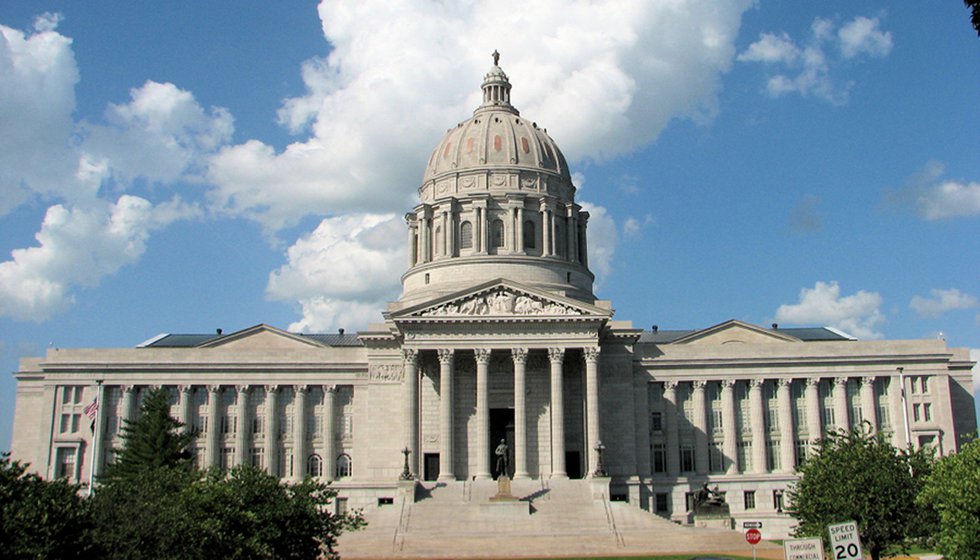
Missouri Democrats Flip 16 House Seats to Break Republican Supermajority
Missouri Democrats Shatter Supermajority in Historic Election Night “People have been noticing over the last five to 10...