
Missouri Democrats Shatter Supermajority in Historic Election Night
“People have been noticing over the last five to 10 years that the Republicans keep pushing bills that are out of step with where the state of Missouri is,” said State Rep. Mark Boyko (D-Kirkwood), summing up the mood that fueled a stunning Democratic victory on Tuesday. His caucus, aiming to flip just enough seats to break Republican control, ended up flipping 16 seats in the Missouri House and two in the Senate, giving Democrats their largest delegation since 2012.
Democrats, led by recruitment efforts from figures like Boyko, who served as his caucus’s recruitment chair, managed to field candidates in all but five of the 163 House districts—a dramatic increase from previous cycles. The contrast was stark. Despite commanding a massive advantage in Jefferson City, Missouri Republicans left nearly 30 seats completely uncontested, a sign of overconfidence that the Democrats walked right through.
A Suburban Surge Fueled by Local Grievances
The heart of this blue wave beat in St. Louis County and its suburbs. In addition to ousting U.S. Rep. Ann Wagner (R-Ballwin) from Congress, Democrats gained seven new seats in the state legislature from the area. State Rep. Brad Christ (R-St. Louis County), the architect of the bill to put St. Louis police under state control, lost his seat. So did Rep. Phil Oehlerking (R-Ballwin), who had narrowly escaped defeat in the last two cycles by less than 200 votes each time. This year, Democrat Mary Ann Perkins beat Oehlerking decisively, 56 to 41 percent, a margin of 2,612 votes.
Take the race in Christ’s district. Matt Vitale, the Democrat who ousted him, hammered his opponent on his lack of support for public school funding and issues of affordability. While Vitale didn’t make a central issue of Christ’s role in the police takeover, it was a powerful motivator for grassroots volunteers.
“I was sad when he moved to the county,” said St. Louis Alderwoman Megan Green, referring to Vitale. “Then when he hit me up and said that he was going to run for state rep, I was so excited for that. Then when he said he wasn’t just running, he was running against Brad Christ, I was like, ‘Oh, this is amazing.’”
Green’s history with Vitale went back to the 2021 fight against the St. Louis “spy plane.” She and other city aldermen, including Michael Browning, Daniela Velazquez, and Alisha Sonnier, hit the streets to campaign for Vitale. Their efforts, channeled through organizations like Our Revolution, provided a critical shot in the arm. The Republicans tried to link Vitale to Green in attack mailers, an attempt to paint him as an out-of-touch city liberal. But in a race defined more by national politics than local city council drama, the tactic fell flat. “People were just kind of laughing, and they’re like, ‘You’re a celebrity down here,’” Green said.
From Superminority to Real Power, Finally
For years, Democrats were a superminority, a group too small to offer any real opposition. Now, they are simply a minority, a distinction that changes everything.
“There’s dozens of bills that passed out of the House just last year by margins of between one and five votes, and we just picked up 16 seats,” Boyko explained. The math is simple. With a smaller majority, Republicans can no longer afford to be dismissive. “I’ve heard from some other representatives that the Republicans would just leave the room if the Democrats enter because they didn’t need any Democratic votes,” said Paul Lentz, who ousted Rep. Ben Keathley (R-Chesterfield). “They didn’t need any input and it just made it very demoralizing for the Democrats. I think we’ll have to work together more now.”
The wins weren’t confined to the liberal suburbs.
Boyko and his team are already looking at the districts that came tantalizingly close. He points to House District 110, covering parts of Wildwood and Eureka, where Democrat Claire Heinrich, after knocking 10,000 doors, came within just 2.2 percentage points of winning—a district that two years ago saw a Democrat lose by 25 points. “That district is now in Boyko’s sights for the next cycle,” he says.
Looking ahead, the focus is on building a sustainable playbook. “A lot of what we’re going to be doing in the next couple months is trying to figure out what exactly were the things that those candidates were able to do, and try to replicate that two years from now,” Boyko stated.
Related reading
- Nasdaq Rebounds as Chip Stocks Recover from AI Regulation and Jobs Data Fears
- Wyoming Digital Government Summit focuses on AI and cybersecurity
- Democrats Debate 2028 Strategy After Midterm Success (world-today-news.com)
- Hinojosa Can Pause Texas Data Center Permits, but Not Repeal the Tax Break (daybreakwire.com)

Nasdaq Rebounds as Chip Stocks Recover from AI Regulation and Jobs Data Fears
Nasdaq Rebounds as Semiconductor Equities Shake Off Correction Fears The Nasdaq Composite staged a recovery on Friday, clawing...

Wyoming Digital Government Summit focuses on AI and cybersecurity
Wyoming’s Digital Shift: Cybersecurity and AI at the Forefront On May 20, 2026, state and local government leaders...
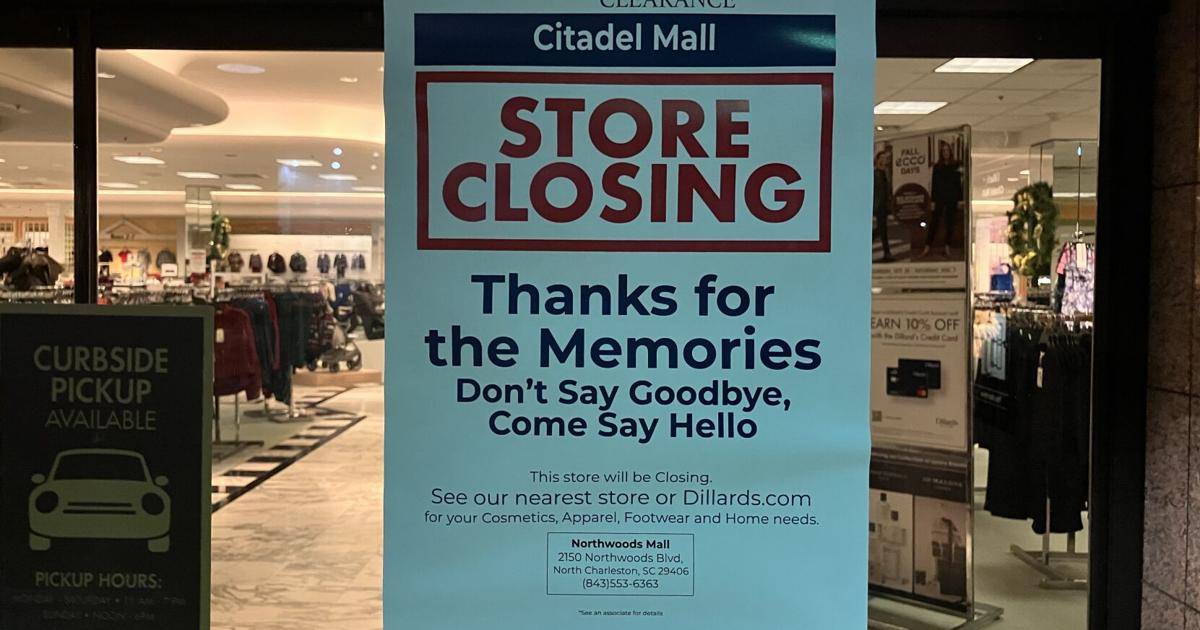
Dillard’s to Close Citadel Mall Location After 34 Years
Dillard’s to Exit Citadel Mall After 34-Year Run The West Ashley retail landscape is losing one of its...

Virginia Beach Launches Military-Themed Gingerbread Holiday Trail
Virginia Beach Expands Holiday Gingerbread Tradition to Military Families The annual gingerbread competition in Virginia Beach is evolving...