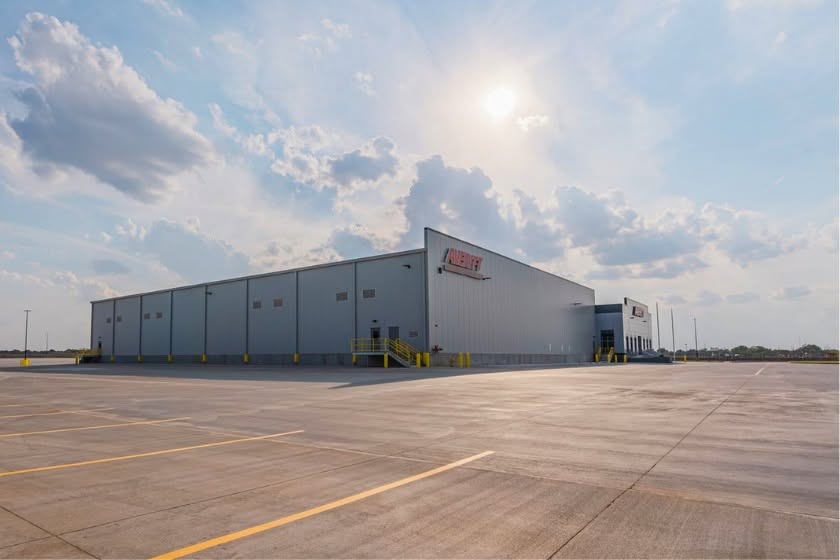
When Averitt throws open the doors to its new Oklahoma City service center on November 13th, it’s more than just a new address on the map.
For decades, the model was fragmented: you shipped your freight with one company, stored your inventory with another, and hoped they played nice together. Averitt’s new facility at 8500 SW 15th Street aims to shatter that old model. The message is simple, yet powerful: you no longer need to be a project manager for your own supply chain.
The new center replaces Averitt’s previous Oklahoma City location, a move that signals a significant investment in a market the company has already served for years. But this isn’t just a bigger building; it’s a smarter one. The facility boasts 47 dock doors and a massive 21,120 square feet of dedicated dock space, designed to handle the high-volume, fast-paced environment of modern freight. Adjacent to that is 35,000 square feet of warehousing, offering businesses a flexible place to store their goods, whether for a few weeks or several months.
A Single Point of Control
For the businesses of Oklahoma City and the surrounding region, this facility represents a new level of operational efficiency. Imagine a manufacturer who needs to store raw materials, manage finished goods inventory, and coordinate daily shipments to customers. Previously, this meant juggling multiple contracts, different invoices, and separate phone calls. Now, Averitt is positioning itself to be the single point of contact for all of it.
“Our goal is to give customers the flexibility to manage more of their supply chain through one partner,” said Barry Blakely, president, COO Averitt. It’s a vision that speaks directly to the pain points of modern business. The new service center will offer a full suite of services, including less-than-truckload (LTL) and full truckload transportation, local customization for last-mile delivery, and a range of short- and long-term storage solutions. The idea is to create a workable workflow where a company’s inventory is just an extension of its transportation network, and vice versa.
“This facility brings together transportation and warehousing capabilities that can adapt to our customers’ needs and support their businesses as they grow.” Barry Blakely
The human and economic stakes here are clear. For small to medium-sized businesses, which often lack the resources to negotiate and manage multiple logistics providers, this consolidation can translate into significant cost savings and reduced administrative overhead. It allows them to redirect capital and personnel away from supply chain management and toward their core competencies.

More Than Just Space
The numbers are impressive, but the real story lies in the flexibility they enable. The 35,000 square feet of warehousing is not just static storage space. It’s a dynamic buffer in a global supply chain that is anything but predictable. In an era where supply chain disruptions—from port congestion to manufacturing slowdowns—can happen with little warning, having a flexible partner like Averitt provides a crucial layer of resilience.
Companies can use the space to build up inventory during periods of low shipping costs or to act as a safety stock during times of uncertainty. This adaptability is a powerful tool for businesses looking to weather the storms of economic volatility. “Through its warehousing capabilities, Averitt can support customers with changing inventory needs while providing access to its broader network of transportation and supply chain services,” the company stated, highlighting this strategic advantage.
Of course, one might argue that this consolidation of services simply creates a new kind of dependency. For businesses that already have established, long-standing relationships with specialized warehousing or trucking companies, the switch to an integrated model like Averitt’s requires a leap of faith. The devil’s advocate would ask: does a single-source provider offer the same level of specialized expertise and competitive pricing as a multi-vendor ecosystem? Averitt is betting that the convenience, efficiency, and cost-effectiveness of a single partner will ultimately win out.
And the timing is everything. Oklahoma City has been steadily growing as a logistics and distribution hub, thanks in part to its central location and strong interstate infrastructure. This new facility from a major player like Averitt is a vote of confidence in the region’s economic future. It’s a physical manifestation of capital investment that will create local jobs, from warehouse operators to logistics coordinators, and will likely spur further development in the surrounding industrial areas.
On November 13th, when the first trucks pull up to the new 47 dock doors, it won’t just be a ribbon-cutting ceremony. It will be the quiet beginning of a new way of doing business for a significant portion of the Oklahoma economy. The story of Averitt’s expansion is less about the bricks and mortar, and more about the invisible threads of commerce it seeks to simplify and strengthen for the businesses that drive this region forward.
Keep reading

Missouri Ranks 9th in Tax Competitiveness for 2027
Missouri Jumps 3 Spots to 9th in National Tax Rankings While many states saw their tax climates slip,...

Montana Grizzlies Montana State Football Watch Guide
Montana is about to experience a football Saturday for the ages, as the state's two top-ranked programs take...

Mavs Face Wolves in NSIC Semifinals After Win Over Huskies
NSIC Semifinal Showdown: No. 2 Mavericks Face Wolves After Offensive Blitz The No. 2 Minnesota State Mavericks (16-1-2)...

Where Did the Millions Go? Achtmeyer Divorce Battle Over Wealth
Over two years following the divorce of Bill and Alli Achtmeyer, he claims he is insolvent—and the figures...