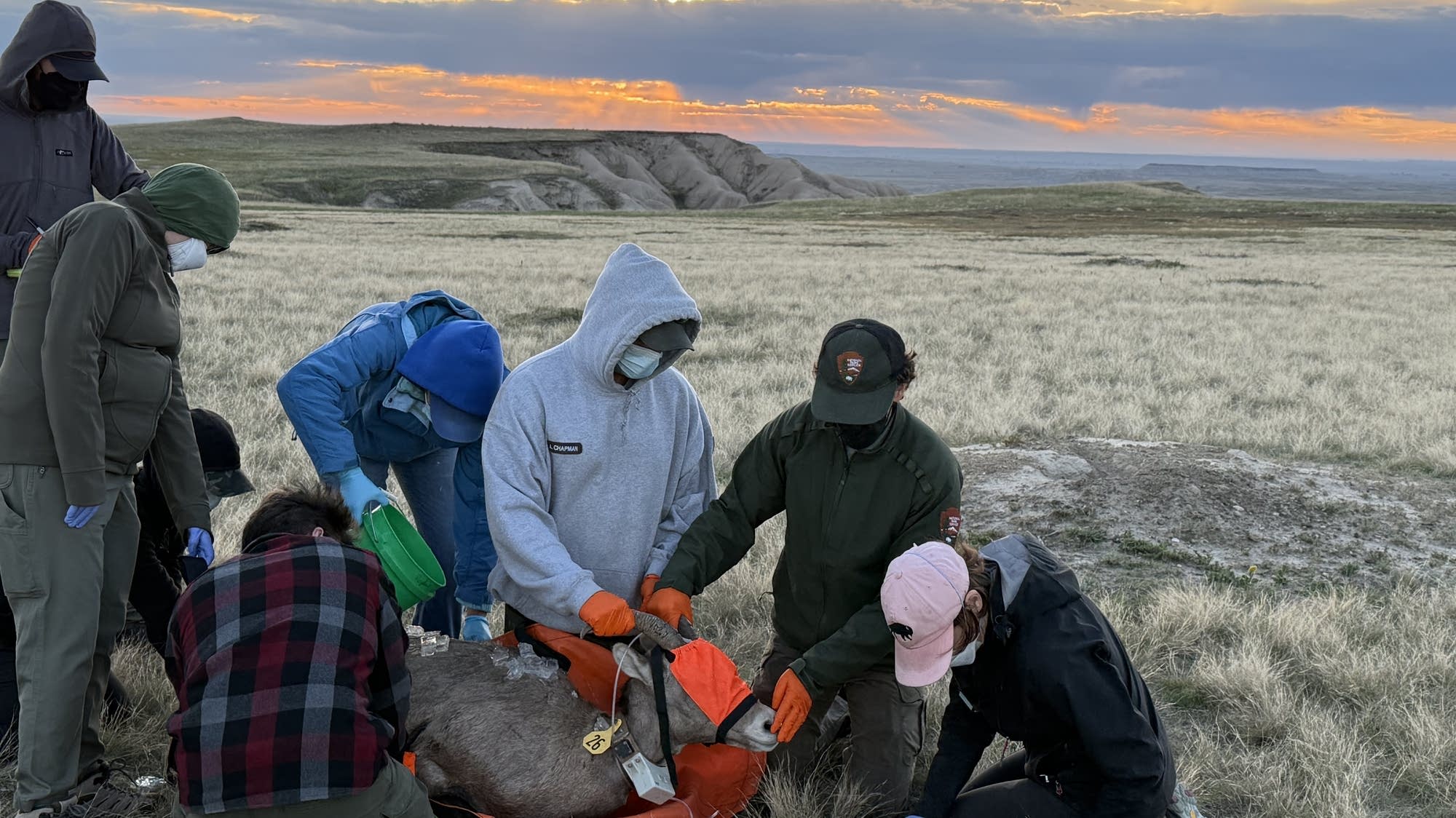
Badlands National Park has removed nearly all chronic shedders of a pneumonia bacterium that killed roughly 85 percent of its bighorn sheep starting in 2021, leaving a remnant herd of just over 50 animals in which every lamb has now survived past 90 days.
How did the outbreak start?
“What often happens is a male during the rut will roam outside the park, find a domestic herd, come in contact with the pathogen, and then come back to the park,” Eddie Childers, wildlife biologist at Badlands National Park, told MPR News.
Some ewes survive the initial infection but become chronic shedders that transmit the disease to newborn lambs for years, driving lamb survival down to 8 percent in infected groups compared with 91 percent in healthy ones, Childers told SDPB.
What has the park done since 2021?
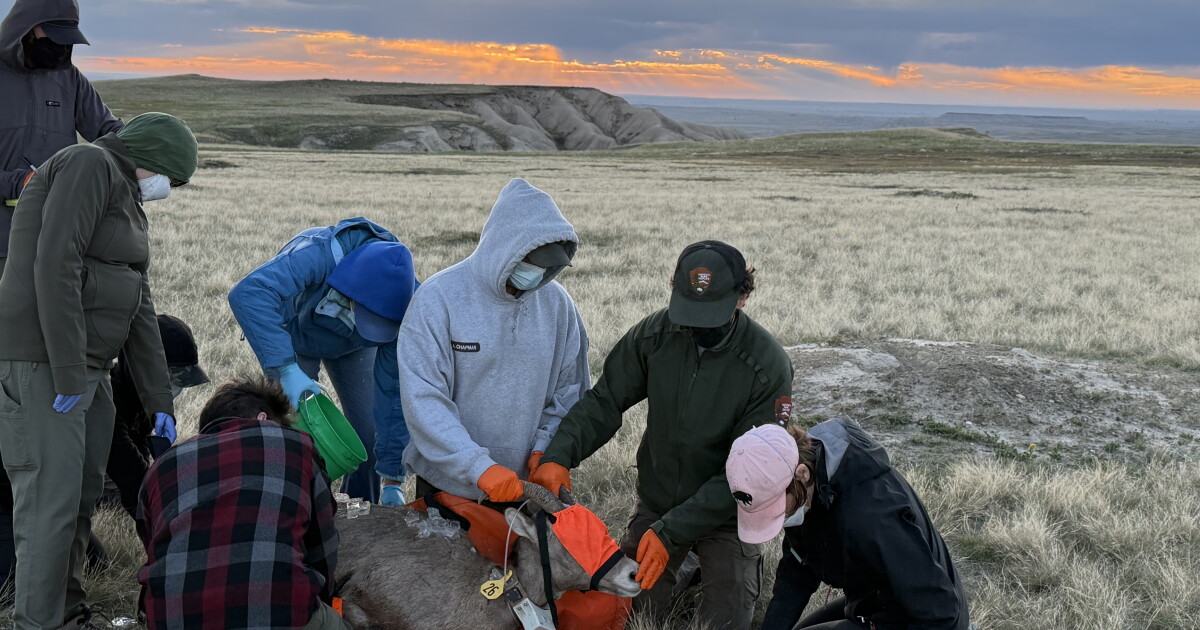
Staff have conducted repeated aerial captures of every remaining bighorn, tested each animal and fitted it with a collar. Animals identified as chronic shedders were removed from the population, a step Childers called a difficult decision but necessary for lamb recruitment, he told MPR News.
Where does the disease stand now?
“We had to make some difficult decisions because if they're chronic shedders, you really need to move them out of the population. And so we did. And right now, as it stands, we have completely eradicated all the chronic shedders, all the diseased sheep that are in the North Unit. And we've eliminated all but three in the South Unit,” Childers told MPR News.
The total population is now a little over 50, down from 350–400 in 2021, yet every lamb born since the intervention has survived past the 90-day mark, he said.
Why does the herd matter beyond the park?
Before the die-off, the expanding population supported a limited hunting season just north of the park where the world-record bighorn was harvested, a record that still stands, Childers told MPR News. The animals also drew photographers and visitors from around the world who could watch large rams clash near the road.
Bighorn sheep were reintroduced to Badlands National Park starting in the 1960s, and the population grew to 350–400 animals by 2021 before a pneumonia outbreak linked to Mycoplasma ovipneumoniae killed roughly 85 percent of the herd.
Since 2021, staff have conducted repeated aerial captures in the North Unit and South Unit, testing and collaring every remaining animal and removing all chronic shedders from the North Unit and all but three in the South Unit.
What happens next?
Childers hopes the park can translocate healthy bighorn from another area of western North America to rebuild the herd, saying he has put his life into keeping the sheep alive and that preserving them for future generations is central to the National Park Service mission, he told MPR News.

Kansas State vs. Iowa State: 110th Farmageddon Rivalry Game on ESPN+
Kansas State and Iowa State will play the 110th edition of their Farmageddon rivalry on Saturday, November 28,...

PA Electric Rate Hikes Tied to Data Centers; Lawmakers Seek Oversight
In a column for the Scranton Times, Chris Kelly argues that the Olyphant Boro Council’s recent $101 million...

The AWS Builder Loft is now open at re:Invent 2026 in Las Vegas
The AWS Builder Loft is now open at re:Invent 2026 in Las Vegas, offering developers a dedicated space...

Chicago Shelter Volunteers Use Menards Black Friday for Animal Donations
Volunteers from Chicago no‑kill shelters returned to Menards in Lincoln Park on Friday to stock up on $1.50...