
Southwest Airlines cut Hawaii seats from San Jose 52% to 306,173 over two years.
“It never performed that well financially, and so there was a concerted effort in the last couple of years to really cut back that franchise,” Brett Snyder, founder of the aviation blog Cranky Flier, said of Southwest Airlines’ Hawaii service from Oakland.
California sends more visitors to Hawaii than any other state, but nonstop flights from most major California airports have shrunk since 2019, leaving residents with fewer and likely more expensive options, The Garden Island reported. The Bay Area has been hit particularly hard, with San Jose International Airport losing roughly half its Hawaii-bound seats in two years.
San Jose loses more than half its seats
Between 2023 and 2024, San Jose’s Hawaii-bound seats fell 30.9%, from 637,643 to 440,757, according to annual visitor reports from the Hawaii Department of Business, Economic Development and Tourism. The decline continued in 2025, when seats dropped another 30.5% to 306,173, a two-year decline of approximately 52%, The Garden Island reported. Nonstop flights to Kona and Honolulu lost 56.7% and 37.1% of available seats respectively in 2025.
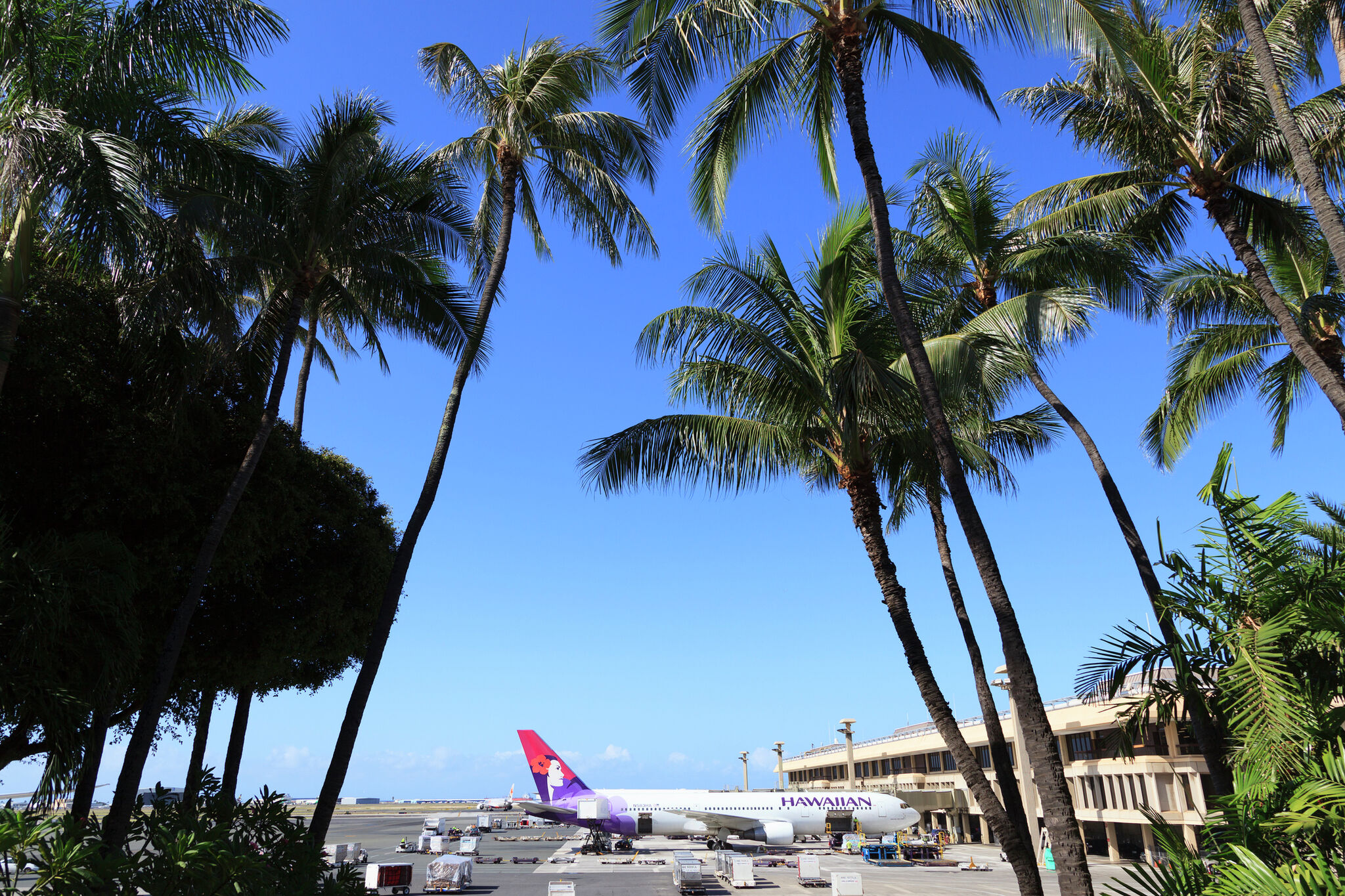
Snyder attributed part of the reduction to the September 2024 merger of Alaska Airlines and Hawaiian Airlines. “Certain markets like San Jose to Honolulu had a flight from each airline before, and they merged, and now there’s just one flight,” he told SFGATE.
Alaska Airlines acknowledged “tactical reductions in Hawaii flying from San Jose and Oakland as we align capacity with demand across the Bay Area,” a spokesperson said in an emailed statement to SFGATE, adding the airline continues daily, year-round flights from both airports to Honolulu and Maui.
Southwest pulls back from Oakland
Oakland International Airport lost 25.6% of its Hawaii-bound seats in 2025, falling from 552,716 to 411,231. Southwest, which launched Hawaii flights from Oakland in 2019, discontinued Oakland-to-Kona service in March 2025 and reduced Honolulu and Maui flights from twice daily to once daily the following month, The Garden Island reported. Snyder said the carrier’s Hawaii franchise “never performed that well financially.”
Southwest spokesperson Chris Perry told SFGATE the airline continually evaluates routes based on customer demand and aircraft availability, noting that “occasionally a route will turn off or frequency will change, only to switch back at a different time of the year.” Southwest currently serves eight California airports with flights to Hawaii and offers year-round service from Oakland to Oahu, Maui and Kauai.
Cuts began before the merger
Reductions predated the Alaska-Hawaiian merger. Alaska cut San Jose-to-Maui service from six weekly flights to one, while Southwest reduced its service from seven to two in early 2024, The Garden Island reported. Those cuts may have stemmed from the August 2023 Lahaina fire, which severely disrupted tourism on Maui. Alaska acknowledged adjusting schedules as demand fell after the disaster.

San Francisco fares better; smaller hubs gain
San Francisco International Airport lost 4.6% of its Hawaii-bound seats in 2025, declining from 1.24 million to 1.18 million, with flights to Maui reduced 19%. However, Alaska and Hawaiian added nonstop service to Kona and Kauai, both of which gained capacity. By 2025, all three Bay Area airports had fewer nonstop seats to Hawaii than in 2019: Oakland down 28.1%, San Jose down 24.5%, and San Francisco down 21.3% — a combined loss of 580,536 seats, The Garden Island reported.
Meanwhile, smaller California airports grew. Sacramento’s Hawaii-bound seats rose 29.2% in 2025, from 288,319 to 372,497, after Southwest began daily flights to Kona and Maui in March 2025. Ontario gained 18.2% and Long Beach 7.6%.
High jet fuel prices force airline route changes
Henry Harteveldt, president of Atmosphere Research Group, told SFGATE that high jet fuel prices caused by the Iran war are forcing airlines to actively manage route networks.
“Airlines are reducing capacity in markets and on routes … that have become less profitable and moving capacity to markets and routes the airlines believe will be more profitable. “We’re seeing this play out on routes between California and Hawaii,” he said in an email. The University of Hawaii Economic Research Organization estimated in May that the fuel-price surge added $120 to $145 in fuel costs per round-trip economy seat between the West Coast and Hawaii.”
Snyder also pointed to severe weather — kona lows in March and back-to-back hurricanes — and the high cost of visiting the islands. “And that has made it tough, and it has suppressed demand,” he said.
For travelers, fewer nonstop flights mean less flexibility, longer travel times, and in some cases driving to another airport or connecting through Honolulu instead of flying nonstop to Maui, Kauai or Hawaii Island. “The current situation is not necessarily going to be the future situation,” Snyder said.
Related reading
- Himalayan Snowcocks Thrive as Last Established U.S. Exotic Game Bird
- Winter Weather Advisory: Heavy Snow Hits Anchorage and Mat-Su Valley During Friday Evening Rush Hour
- Inflation Since October 2024 Adds About $4,720 a Year to Household Costs (daybreakwire.com)
- United Fidelity Bank seized in largest US bank failure since 2024 (newsarchyuk.com)

Himalayan Snowcocks Thrive as Last Established U.S. Exotic Game Bird
Himalayan Snowcocks, introduced to Nevada's Ruby Mountains from Pakistan in the 1960s, have become the last exotic game...

Winter Weather Advisory: Heavy Snow Hits Anchorage and Mat-Su Valley During Friday Evening Rush Hour
Heavy snow fell across Anchorage and the Matanuska-Susitna Valley on Friday evening, arriving during rush hour and leaving...

Wythenshawe Teenager Suffers Life-Changing Injuries in Knife Attack
I heard neighbours shouting, 'call an ambulance he's been stabbed'.
Topeka’s 31st Miracle on Kansas Avenue Parade Returns Dec. 5 With Tree Lighting, Fireworks
Topeka’s 31st annual Miracle on Kansas Avenue parade returns Dec. 5 at 6 p.m., featuring lighted floats, marching...