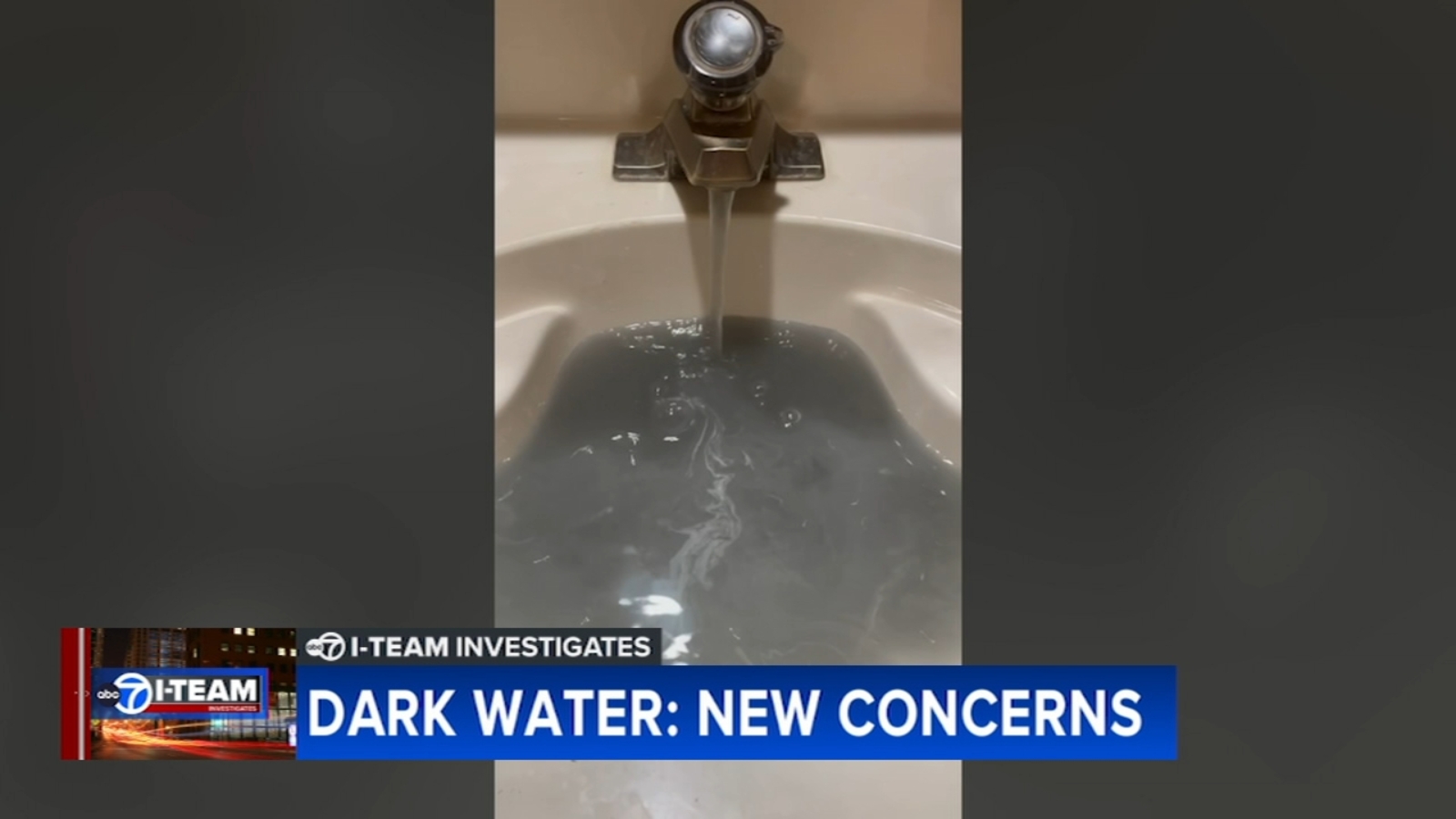
New testing in Beaverville, Illinois, has detected Legionella bacteria in a resident’s plumbing system and revealed no detectable chlorine residual in two homes, adding to water quality complaints reported for more than a year.
The ABC7 Chicago I-Team first reported on complaints about dark, discolored, and smelly water in the village last year. Health experts previously pointed to high manganese and iron levels but said those levels were not considered dangerous.
Recent evaluations at two Beaverville properties revealed issues regarding how the water system is disinfected, according to statements made to ABC7 Chicago by Marc Edwards, a Virginia Tech professor recognized for uncovering the 2015 water crisis in Flint, Michigan.
“We found detectable legionella throughout her plumbing system. We also sampled the neighbor’s house and found there was no chlorine residual going from the main system into either home on that street,” Edwards said.
Testing took place at the home of resident Kathleen Butron and a neighboring residence. Experts say a lack of chlorine can contribute to bacterial growth. Legionella was detected only in Butron’s home. The bacteria can cause Legionnaires’ disease.
“All four of us had gotten sick,” Butron told ABC7 Chicago. She shared medical records that she said showed a “probable Legionella exposure” and said that her mother-in-law died from pneumonia.
“I wanted to cry. I really did,” Butron said.
The I-Team was informed by the Illinois Environmental Protection Agency that a violation notice was sent to the village of Beaverville because of “low chlorine residual reported by the community water system in a sample taken from its distribution system.” That sample was taken in August, the same day Edwards conducted his testing.
Earlier this year, the U.S. Environmental Protection Agency issued 14 violations to the village. Over an 18-month span recently, chlorine measurements dropped underneath the mandated baseline on upwards of 60 occasions.
“Between the EPA statement, the May violations and Butron’s testing, I mean, the chlorine issue is not just an isolated issue. This is a concern,” Edwards said.
Village of Beaverville legal representative Ross Secler said that municipal officials only learned about the test outcomes after the I-Team brought them to their attention. He said the village believes the Legionella finding is isolated to Butron’s residence and said that separate testing at a nearby home found regular chlorine levels.
“It’s something that the village is actively working on for sure. And that’s why we’re continuing to test,” Secler said, noting further that municipal authorities view delivering clean water as a primary duty and maintain ongoing cooperation with federal and state regulators to upgrade the infrastructure.
Improvements to the water network totaling $100,000 have already been completed, according to the village, which added that no recent complaints regarding discolored water have come in. The U.S. EPA said issues related to Legionella should be handled by the state health department. Butron has reported the issue.
Keep reading

Massachusetts Honors Inaugural Class of Women’s Hall of Fame
As the country nears the end of its 250th anniversary celebration, Massachusetts recognized its historical and contemporary leaders...

Dennis C. McCoy, Former Baltimore City Delegate and Lobbyist, Dies at 84
Dennis C. McCoy, a former Maryland delegate, lobbyist, and civic figure who steered policy through Baltimore’s shifting demographics,...

Jordan Poole and Draymond Green Open to Potential Warriors Reunion
Jordan Poole made it clear after a game on Monday night that he would welcome a return to...

Karina LeBlanc Reflects on the Growth of Women’s Sports in Portland
In a column published on LinkedIn, Karina LeBlanc reflected on Epicenter Week and the growth of women's sports...