
An estimated 850,000 Native Americans lost Medicaid coverage during the 2023 unwinding, most of them for paperwork reasons, and tribal leaders say the same administrative confusion is about to repeat itself.
President Donald Trump’s One Big Beautiful Bill Act exempted Native Americans from new Medicaid work requirements, but the Centers for Medicare & Medicaid Services (CMS) issued rules in June without a standardized system for states to identify who qualifies for that carve-out.
KFF Health News reported that states are now building their own verification processes in a vacuum, leaving enrollees to find their way through a patchwork of rules two months before the January 1 federal deadline.
“I’m nervous. I’m extremely nervous,” said James Burns, who oversees the Eastern Band of Cherokee Indians’ Medicaid managed-care program in the Qualla Boundary. “When you look at any state that’s rolled out Medicaid work requirements, the unintended consequences have been vast, and that’s what we don’t want to happen.”
A Carve-Out Without a Map
The legislation excluded American Indians and Alaska Natives from community-engagement mandates, yet the CMS guidance told states simply to use existing data before asking enrollees for additional records. It did not set a standard proof threshold, require data sharing with tribes, or address managed-care plans like the one Burns runs in western North Carolina.
In July, a CMS tribal advisory group recommended allowing self-attestation as the standard proof and requiring states to share eligibility data with tribal health programs. The National Council of Urban Indian Health pushed for similar guidance. CMS has not responded to questions about whether more direction is coming.
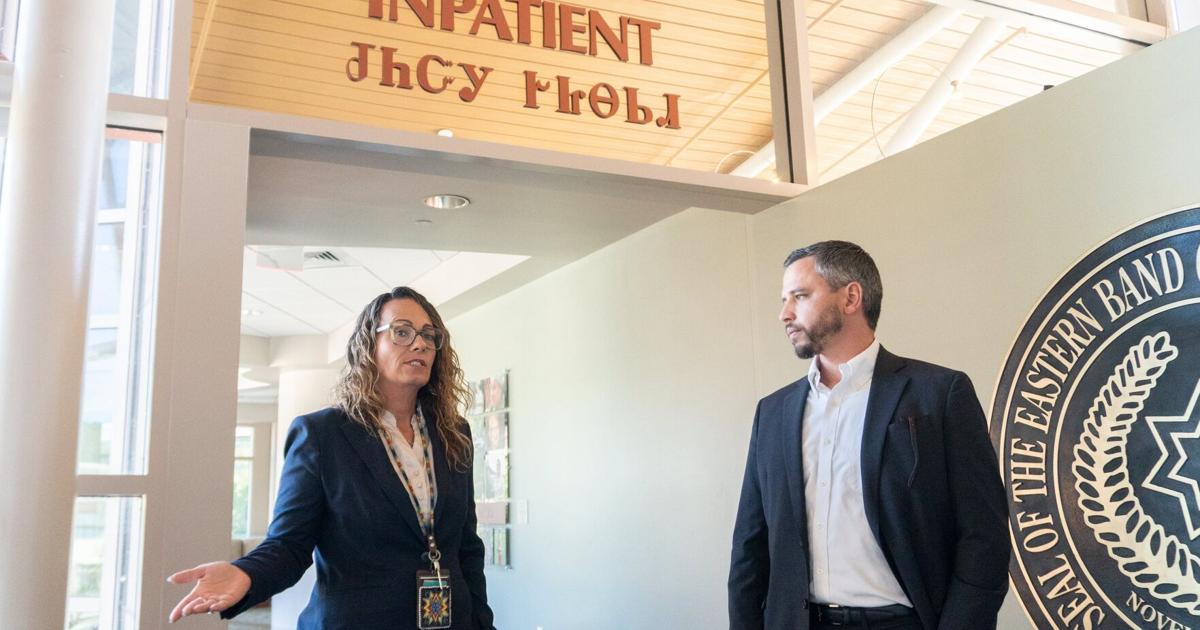
“There’s 30-plus states who are independently repurposing their administrative processes for this, and they really all happen in a vacuum,” said A.C. Locklear, a citizen of the Lumbee Tribe of North Carolina. “That’s why it’s really important for CMS to provide guidance.”
Four States Already Checking
Montana, Nebraska, Arkansas, and Georgia began work-requirement scans ahead of the January 1 deadline; Iowa starts its program on December 1. Montana, which has one of the nation’s highest percentages of American Indian and Alaska Native residents, began checks in July.
Jon Ebelt, a spokesperson for the Montana Department of Public Health and Human Services, said the state allows enrollees to self-declare tribal status without additional proof. But Jason Smith, a citizen of the Confederated Salish and Kootenai Tribes who leads the Montana Consortium for Urban Indian Health, said officials hadn’t clearly communicated how enrollees could prove their status when checks began.
Montana saw one of the sharpest enrollment declines during the 2023 unwinding, with most losses driven by paperwork problems. Clinics are still working to reenroll members who lost coverage then. As of September, the state hadn’t hired the number of workers officials estimated were needed to handle the new workload, and federal data shows long wait times on the state helpline.
“Have they improved their communication and outreach?” Smith said. “Will people be there answering phones? It will take time to see.”
Verification Varies Widely
KFF Health News surveyed 14 states and found divergent approaches. Arizona, Colorado, Montana, Nevada, New Mexico, and Washington plan to let enrollees identify tribal status on application forms. South Dakota links its claims system to Indian Health Service records. Oklahoma relies on a 2022 data-sharing agreement with tribes. North Carolina requires a tribal enrollment card, a tribal census record, or confirmation from the Eastern Band’s Tribal Option managed-care program.
In North Carolina, 3,400 Native Medicaid enrollees are verified as exempt and will be automatically excluded, but the state doesn’t know how many more might qualify through tribal citizenship. About 87% of Native people live outside tribal statistical areas such as reservations, according to 2020 Census data, meaning a Navajo Nation citizen in Connecticut may be invisible to a state without a working relationship with that tribe.
“There’s still going to be folks that fall through the cracks,” Locklear said.
The Eastern Band’s Model
The Eastern Band of Cherokee Indians spent five years building the nation’s only tribal-run Medicaid managed-care program. Gwynneth Wildcatt, a director with the Cherokee Indian Hospital Authority and a tribal citizen, said all enrollees in that tribe who need exemptions have them because the program is already integrated into the state Medicaid system.
That close connection made verifying citizens for work-requirement exemptions simple, Wildcatt said. But most tribes lack that infrastructure, and the CMS rule did not require states to coordinate with tribal providers or managed-care plans.
Native Hawaiians were also left out of the legislative carve-out entirely.
Keep reading

Fed Governor Lisa Cook to Boycott White House Hearing Unless Hassett Removed and Rules Overhauled
Federal Reserve Governor Lisa Cook will boycott a White House hearing scheduled for Dec. 14 unless the administration...

Bell Textron Finishes MV-75 Cheyenne Fuselage in Wichita, Ships for Wing Mating and Structural Testing
Bell Textron announced Tuesday it has finished the first fuselage for the MV-75 Cheyenne, the tiltrotor the U.S....

Obituary: Madeline Maddie Zahn of Madison Dies at 16
Madeline “Maddie” Zahn died at 16 on Friday in Madison, her family surrounding her. She was born March...

“Barbara Ferrell Was Entrusted With Managing Benefits Meant to Support a Member of Her Own Family
"Barbara Ferrell was entrusted with managing benefits meant to support a member of her own family. Instead, she...