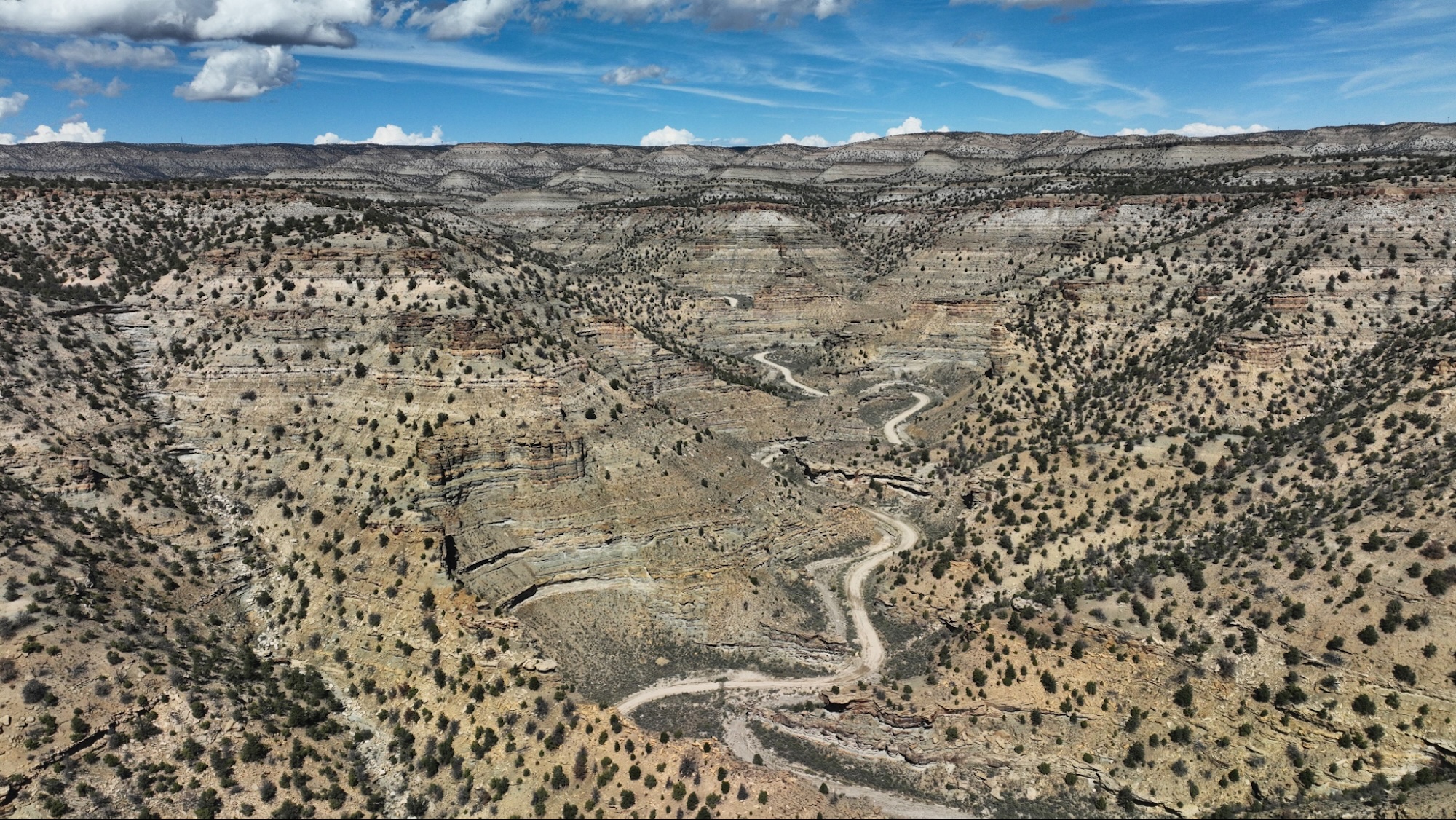
“It’s like constructing a highway through the Louvre Museum,” said J. Michael Hansen, president of the Nine Mile Canyon Coalition.
The Trump administration approved plans this spring to blast a “hydrocarbon highway” through Gate Canyon, a tributary of Utah’s Nine Mile Canyon, connecting oil fields in the Uinta Basin to rail-loading facilities in Carbon County, Grist reported. Environmental and historic preservation groups sued last month in Utah’s U.S. District Court to stop the project, arguing the Bureau of Land Management bypassed required public comment and ecological review.
The canyon, which federal land managers call “the world’s longest art gallery,” stretches roughly 46 miles and holds ancient petroglyphs, Native American panels, and pioneer-era inscriptions written in axle grease.
Gate Canyon alone contains 47 historic sites, 43 of them eligible for the National Register of Historic Places, according to BLM documentation from 2015. The proposed 5.3-mile highway would cut through land managed by both the BLM and Utah’s Trust Lands Administration, straightening switchbacks that sit mostly on state land.
A decade of stops and starts
The BLM began considering a realignment of the winding dirt Wells Draw Road in 2015 after Duchesne County sought a more direct route for energy development. In 2016, the agency received nearly 700 public comments raising concerns about impacts from increased traffic.
The BLM paused its environmental assessment, then solicited comments again in 2023 on an amended right-of-way covering 2.8 miles of federal land. Opposition forced the plan to be scrapped, with the agency citing the need for further cultural surveys.
But a Duchesne County special service district submitted a new development plan in September 2025, finalized it on April 13, and the BLM approved it on April 28 after determining the highway “will not significantly affect” the environment, recreation, wildlife, or quality of life. A BLM spokesperson declined to comment on the lawsuit.
The lawsuit’s core allegations
The Nine Mile Canyon Coalition, the Southern Utah Wilderness Alliance, and the Center for Biological Diversity filed their complaint against the Department of Interior and the BLM. They argue the agency violated the Endangered Species Act, the National Environmental Policy Act, the Federal Land Policy and Management Act, and the National Historic Preservation Act.
“The road construction will facilitate increased traffic through Gate Canyon and the adjoining Nine Mile Canyon, threatening some of the state’s most important cultural and scenic values in the larger Nine Mile Canyon region,”
Plaintiffs say the BLM signed off without identifying historical or archaeological resources, despite its own 2015 draft assessment identifying dozens of sites eligible for the National Register, including 11 “within feet” of the existing dirt road.
The project area also potentially includes habitat for the threatened Mexican spotted owl, according to that 2015 draft. The groups say they requested public comment periods and participation in the NEPA process after learning of the new plan in March, but the BLM either did not respond or denied those requests.

“This lawsuit challenges the Trump administration’s disgraceful plan to transform a quiet backcountry road into a highway clogged with speeding oil tanker trucks,”
“We’re going to court to protect this irreplaceable cultural treasure and the animals calling it home,” Seed said.
The county’s case
Duchesne County argues that straightening the old county road would provide for safer travel. The project could bring up to 500 heavy trucks through Nine Mile Canyon per day, moving crude from the Uinta Basin to rail terminals. The county needs federal approval because part of Gate Canyon lies on BLM land.
The federal government has not yet filed a response in Utah District Court.

Things to Do in Huntsville This Weekend: Music, Theater, and Holiday Events
Downtown Huntsville reclaims its winter rhythm Friday as Skating in the Park opens for a 15th season behind...

Duffy Blames L3Harris for Slow Router Isolation in Longest Ground Stop Since 9/11
Transportation Secretary Sean Duffy blamed contractor L3Harris on Wednesday for failing to isolate a malfunctioning router quickly enough,...

Virginia Women’s Basketball Hosts James Madison in Rivalry Renewal Thursday at JPJ Arena
Virginia women's basketball (5-0) hosts James Madison (3-2) Thursday at 6 p.m. in a rivalry renewal at John...

Magnolia Plantation Winter Wildlife Guide: When and Where to See Alligators and Birds
Magnolia Plantation & Gardens in Charleston, South Carolina, opens its gates at 9:00 AM daily, offering peak winter...