The Bureau of Land Management has authorized a permanent 630-acre right-of-way for the State Route 361 Realignment Project, clearing a major hurdle for a highway project designed to support military expansion at Naval Air Station Fallon, the agency announced from Carson City.
This isn’t a temporary construction easement that expires when the asphalt cures. The BLM’s Stillwater Field Office has issued a right-of-way to the Federal Highway Administration and the Nevada Department of Transportation under the Mineral Leasing Act of 1920, creating a permanent encumbrance on 630 acres of public land. Once granted, this designation fundamentally changes what those acres can be used for in perpetuity, locking them into transportation infrastructure rather than other potential uses like grazing, recreation, or mineral development.
Six hundred thirty acres represents a substantial commitment of public land. The permanent encumbrance means these acres will be managed as a transportation corridor for as long as the highway exists, effectively removing them from the pool of land available for other federal uses. The Mineral Leasing Act authority ensures that no future mining claims, grazing permits, or recreational developments can conflict with the road’s operation.
The choice of the Mineral Leasing Act of 1920 as the authorizing statute places this transportation project under the same legal framework historically used to permit mining and drilling on federal lands. Rather than a standard highway easement, the right-of-way carries the weight of a century-old law, granting FHWA and the Nevada Department of Transportation durable rights to occupy the 630 acres for the life of the road. That legal mechanism ensures the highway corridor remains protected from conflicting uses indefinitely.
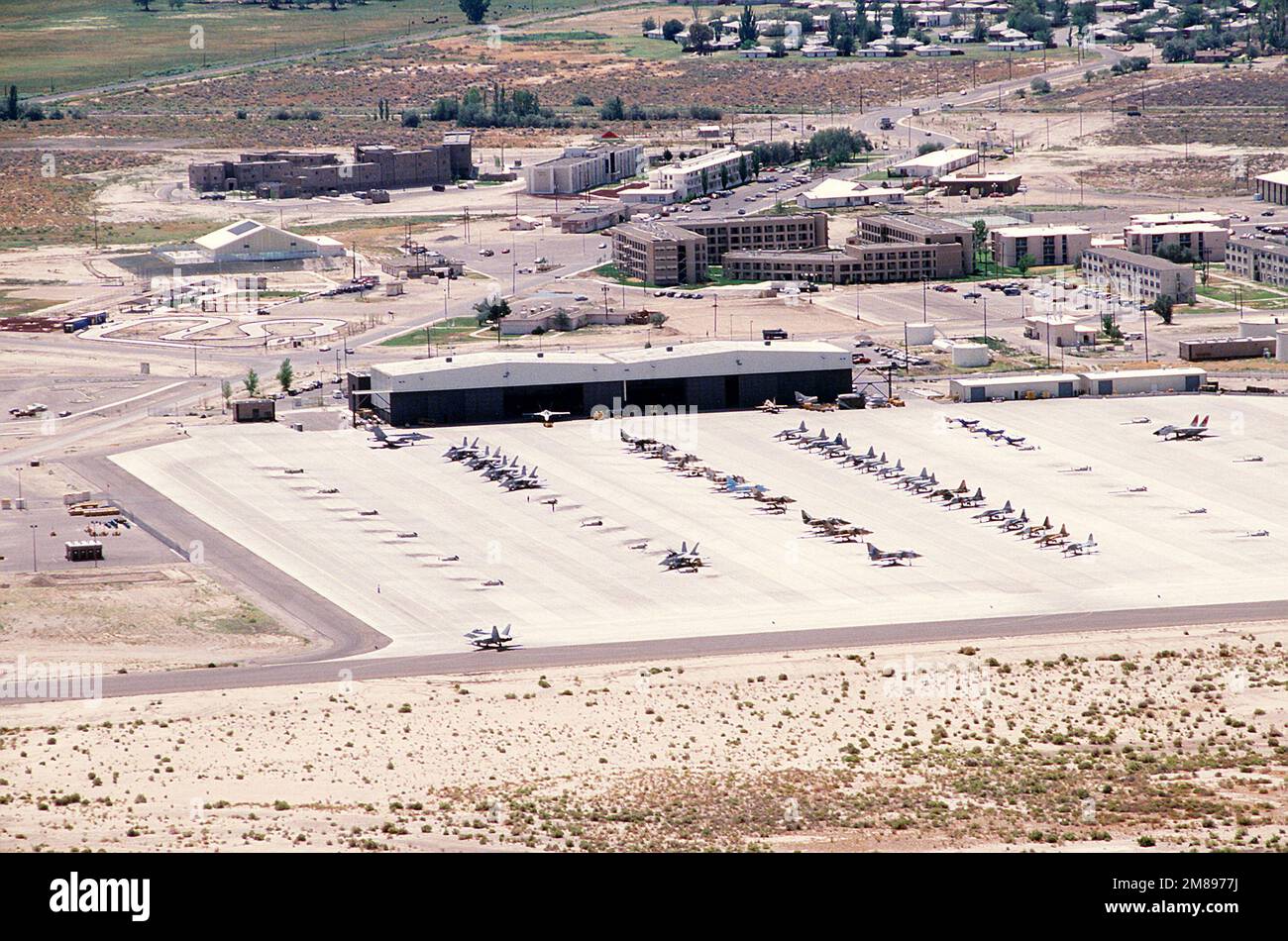
The road realignment exists to serve a specific defense mandate written into federal law. Congress directed the project through the Fiscal Year 2022 National Defense Authorization Act as part of the Fallon Range Training Complex Modernization at Naval Air Station Fallon. The Fiscal Year 2022 National Defense Authorization Act specifically identified this infrastructure need, making the highway realignment a congressionally mandated component of the broader modernization effort. The Fallon Range Training Complex serves as one of the Navy’s premier aviation training facilities, and its modernization reflects broader efforts to upgrade military infrastructure. In practical terms, moving State Route 361 accommodates expanded military training operations in northern Nevada’s desert landscape, ensuring the Navy can conduct its missions without the highway bisecting critical training zones.
The project stretches across three counties—Churchill, Mineral, and Nye—meaning the land-use shift affects a broad swath of rural Nevada. Each acre within that 630-acre footprint moves from general public land management into dedicated transportation infrastructure, spanning a geographic area large enough to encompass diverse terrain and ecosystems across the three jurisdictions.
Federal environmental review for the project was conducted through the Federal Highway Administration’s Environmental Assessment, designated FHWA-NV-EA-25-03. The BLM formally adopted that assessment along with the resulting Finding of No Significance, signaling that officials determined the realignment would not significantly impact the surrounding environment under the National Environmental Policy Act. The Finding of No Significance means the project can proceed without a full Environmental Impact Statement, a more lengthy review process. By adopting the FHWA’s document rather than preparing a separate BLM analysis, the agency streamlined the review while still satisfying federal environmental requirements, confirming the project meets the agency’s environmental standards.
The decision also fits within longer-term land management frameworks that predate this specific project by decades. The action conforms to the Carson City Field Office Consolidated Resource Management Plan adopted in May 2001—a planning document that has guided the field office’s decisions for twenty-five years and remains the foundational blueprint for how public lands in the region are managed. That conformity shows this highway project aligns with land-use designations established a quarter-century ago, demonstrating it isn’t an ad-hoc departure from established policy.

Construction cannot begin immediately, however. The BLM will require a Notice to Proceed before any ground-disturbing activities commence, adding a final administrative checkpoint to ensure all conditions and stipulations are met before heavy equipment arrives on site. That Notice to Proceed requirement serves as a critical safeguard, ensuring that before any soil is turned or vegetation cleared, the BLM has verified that all environmental mitigation measures and construction plans meet federal standards. Only after that notice is issued can FHWA and the Nevada Department of Transportation mobilize their contractors.
For residents, landowners, and stakeholders seeking the technical details, project documents and the full environmental analysis are available through the BLM National NEPA Register. Those needing direct information can contact BLM Project Manager Melanie Hornsby at [email protected] or 775-885-6000.
Related reading
- WVU Medicine LUCAS Mobile Unit to Offer Lung Cancer Screenings in West Virginia
- Oklahoma House Democrats Secure Biggest Caucus Gains in Over 20 Years
- Democrats make sweeping gains in state legislatures amid midterm elections (newsarchyuk.com)
- Nîmes: Route and banned sectors for November 5 mobilization announced (world-today-news.com)

WVU Medicine LUCAS Mobile Unit to Offer Lung Cancer Screenings in West Virginia
LUCAS Brings Mobile Lung Cancer Screening to Salem, Jane Lew, Franklin and Buckhannon in December In West Virginia,...

Oklahoma House Democrats Secure Biggest Caucus Gains in Over 20 Years
Six seats. That is the number that has Oklahoma House Democrats celebrating after an election night that delivered...

Mallorie Benhart earns second consecutive Summit League Goalkeeper of the Year award
South Dakota State's Mallorie Benhart earned her second consecutive Summit League Goalkeeper of the Year award on Wednesday,...

Diana Lynn Fowler, 61, Dies in Columbus on Oct 27, 2026
Diana Lynn Fowler, 61, of Columbus, Ohio, died Tuesday, October 27, 2026, in her beloved home — the...