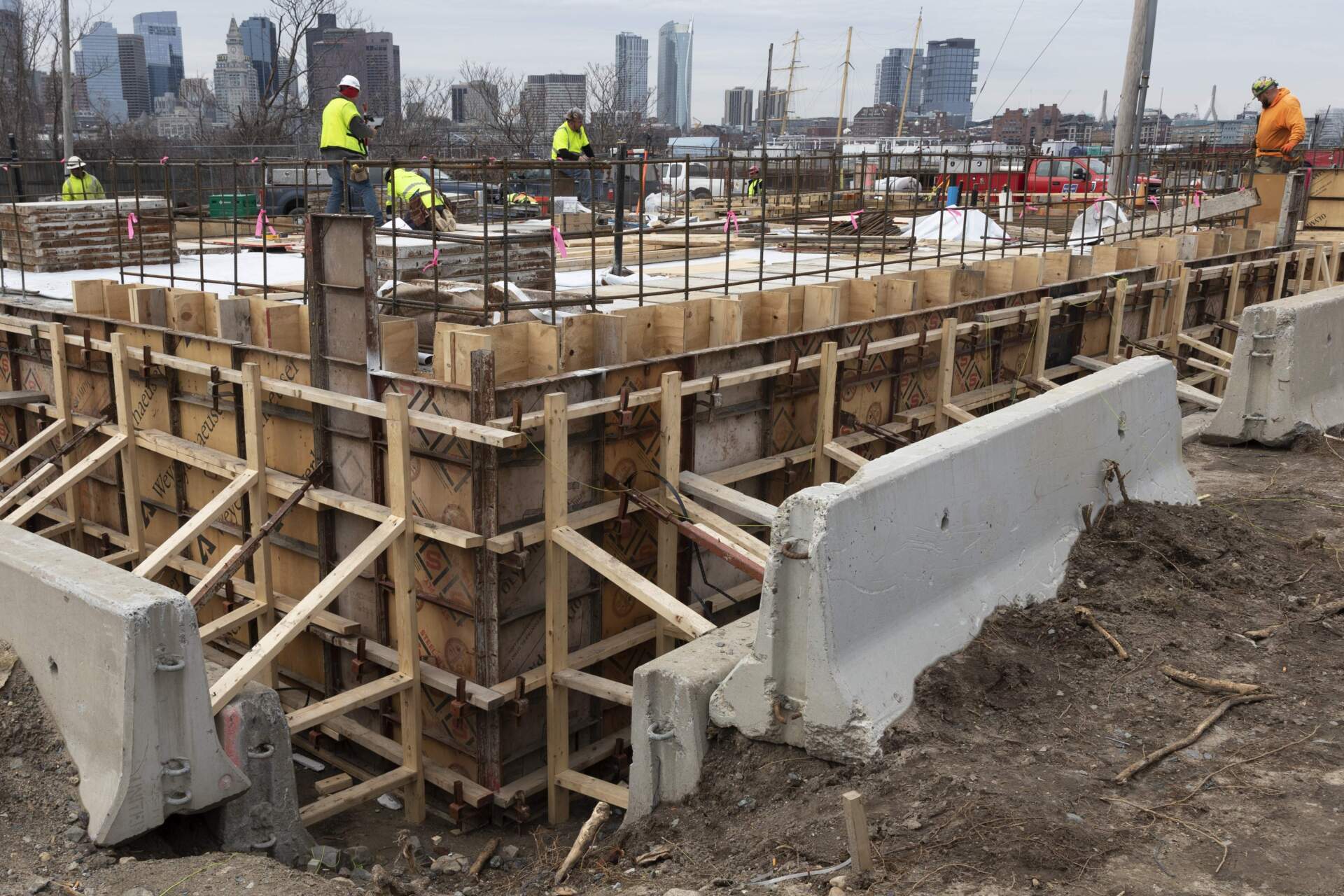
Boston city councilors voted 9-4 on Nov. 18 to scrap a mandate that new housing developments include off-street parking spaces.
- The proposal now goes to the Zoning Commission for final approval before reaching the mayor’s desk.
- Building a single garage space can cost up to $50,000, and UCLA research finds it adds 17% to rent.
- Charlestown, East Boston, and Mattapan are temporarily exempt until early 2029.
- More than 120 U.S. cities have eliminated parking minimums, including Austin, where rents fell 7% in 2023–24.
Parking mandates inflate housing costs
Parking requirements have long driven up construction costs. The Greater Boston Real Estate Board puts above-ground spaces at roughly $40,000 and underground spaces at $100,000, masslive.com reported. A 2016 UCLA study found garage parking adds the equivalent of 17% to a unit’s rent — a substantial burden in a city where median rents exceed $3,000 a month and median home prices top $700,000, WBUR News reported.
“More and more people are recognizing that parking mandates needlessly add costs and contribute to a car culture,” said Sara Bronin, a law professor at George Washington University and founder of the National Zoning Atlas. “Contemporary thinking about parking mandates points to much higher negative impacts than positive,” she told The Christian Science Monitor.
Councilor Sharon Durkan, the measure’s lead sponsor, cited a Metropolitan Area Planning Council study showing roughly one-third of residential parking spaces in the Boston area sit empty overnight. “Most of Boston’s housing was built before parking minimums were established in the 1950s under the misguided assumption that parking would reduce congestion,” Durkan said at the Nov. 18 meeting.
“Instead, these mandates have made it harder to build housing and forced developers to build more parking than we actually need.”
The Greater Boston Housing Report Card found home construction fell by 14,000 units between the 2024–25 and 2025–26 periods. October Zillow data pegged Boston rents as the fifth highest nationally, with roughly half of renters spending more than 30% of their income on housing, The Christian Science Monitor reported.
Three neighborhoods win temporary exemption
The current mandate ranges from 0.5 to two spaces per unit depending on the neighborhood, WBUR News reported. The approved proposal temporarily exempts Charlestown, East Boston, and Mattapan — areas recently rezoned with relaxed parking rules — until early 2029.
Opposition centered on residents who rely on cars. “For many residents, driving remains a necessity, not a luxury,” said Councilor at Large Erin Murphy during the Nov. 18 debate. “We cannot make public policy based solely on our own lifestyles, or an idealized vision of how people should live. Boston will never be a city without cars.”
Erin Murphy said South Boston families often refuse to leave their neighborhood after 4 or 5 p.m. for fear of losing a parking spot, WHDH.com reported.
Councilors John FitzGerald, Ed Flynn, Erin Murphy, and Brian Worrell voted against the measure.
Councilor Julia Mejia initially voted present but later changed her vote to support the change, WBUR News reported. Mejia warned that without adequate protections, “we shift the burden from the developers to the residents in the surrounding areas.”
Precedents in other cities
Seattle lowered parking minimums in 2012 and subsequently permitted more than 35,000 new homes that used the reduced requirements, according to a 2023 Sightline Institute report cited by The Christian Science Monitor. Almost 60% of those homes would have been illegal under the old rules. About 70% of developments without parking requirements still included some parking, a 2020 Land Use Policy study found. Austin, Texas, eliminated its off-street parking requirements in 2023, the largest city in the country to do so, and has since seen average rent prices decrease, defying national trends.
Cambridge became the first Massachusetts city to eliminate requirements in 2022, followed by Somerville. The proposal now moves to the Boston Zoning Commission for final approval. A spokesperson for Mayor Michelle Wu’s office said the administration would “evaluate the implications of eliminating parking minimums citywide” and praised the city’s “neighborhood by neighborhood approach,” The Christian Science Monitor reported.
More on East Boston
Related reading

Wright State Improves to 6-0; RMU, Purdue Fort Wayne, NIU Earn Wins
Wright State improved to 6-0 on Monday with a 66-64 win over Akron, the only Horizon League team...

Rob Lowe Documentary Links 1988 Scandal To MAGA Film
Rob Lowe's new Netflix documentary revisits the 1988 sex tape scandal that derailed his rising political profile and...

Granite City Lumberjacks fall 5-4 in OT to Minnesota Vulcans
The Granite City Lumberjacks lost their first game of the season Friday, falling 5-4 in overtime to the...

Topeka Turkey Trot Returns to Forbes Field Thanksgiving With Charity Partnership
The second annual Topeka Turkey Trot will take place Thanksgiving morning, Nov. 26, at Forbes Field, moving from...