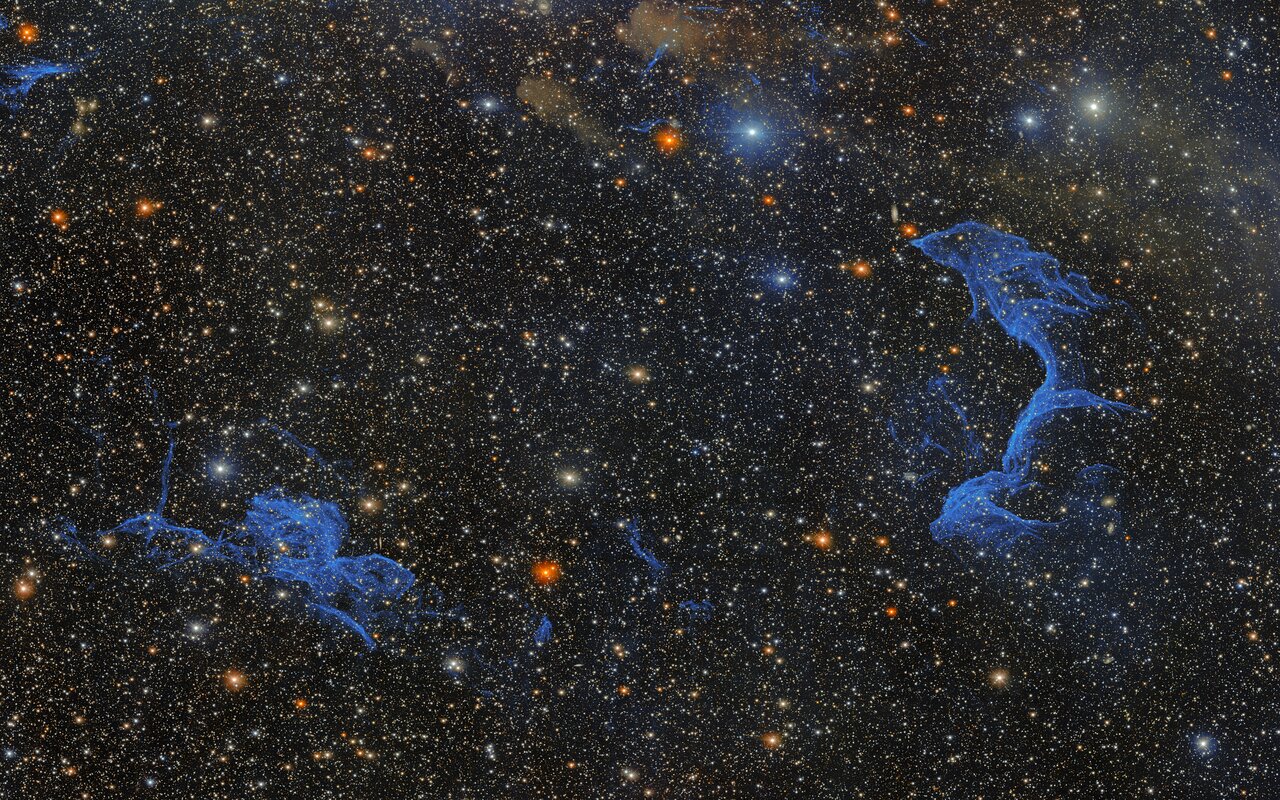
NSF NOIRLab released the most detailed view yet of supernova remnant SNR G295.5+09.7 on Monday captured by the 570-megapixel Dark Energy Camera on the Víctor M. Blanco 4-meter Telescope in Chile.
The image reveals blue ribbons of glowing gas about 6,800 light-years away in the constellation Centaurus, a structure nicknamed the Betta Fish Nebula for its resemblance to the flowing fins of the aquarium fish. NOIRLab says the nebula may not have been imaged by a professional observatory before, which would make this the first portrait of its kind.
The remnant sits in the Carina–Sagittarius arm of the Milky Way. Thousands of stars from that arm fill the background, and galaxies outside our own are hidden among them. Hazy brown patches mark diffuse interstellar clouds within the Milky Way, similar to nebulae but far more spread out.
- Image released November 23, 2026 by NSF NOIRLab using the Dark Energy Camera in Chile.
- Shows supernova remnant SNR G295.5+09.7, nicknamed the Betta Fish Nebula, about 6,800 light-years away.
- May be the first professional observatory image of this object; a neutron star sits at its center.
- Part of the NOIRLab Legacy Imaging Program, continuing a public-outreach effort begun in 2002.
How the Nebula Formed
A massive star exploded between 7,000 and 10,000 years ago, blasting its outer layers into space. That material slammed into the surrounding interstellar medium, heating the gas and creating the blue filaments visible today.
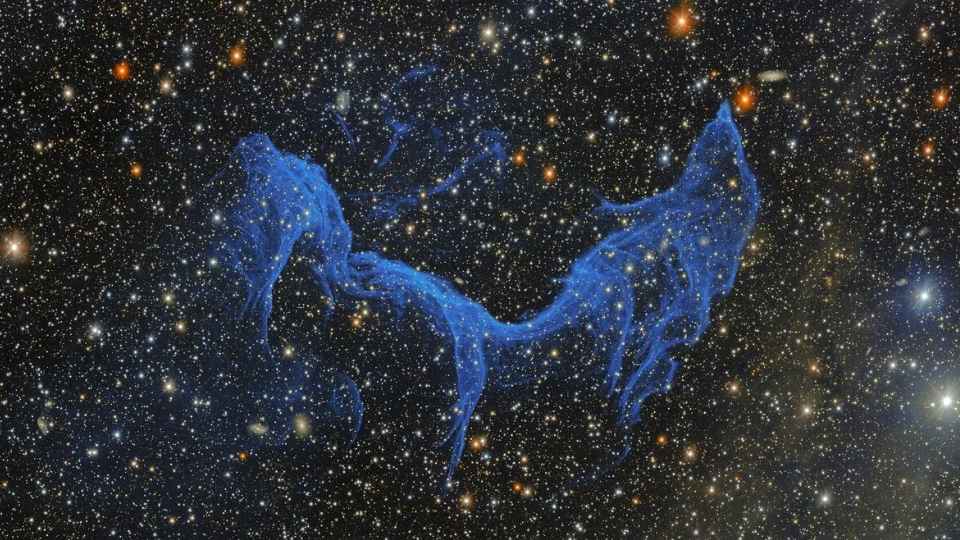
The star’s core collapsed under its own gravity but stopped short of forming a black hole. It left a neutron star about 20 kilometers (12 miles) across that packs roughly 1.4 times the mass of the Sun.
The neutron star is a pulsar rotating roughly twice per second. It is radio-quiet and detectable only in X-rays, lacking a pulsar wind nebula. Those unusual properties lead some researchers to suggest it may be a low-mass bare strange star, according to a 2024 study in Monthly Notices of the Royal Astronomical Society.
Dark Energy Camera Captures Wide Nebulae
The Dark Energy Camera was built for the Dark Energy Survey, funded by the U.S. Department of Energy and tested at Fermilab. Its wide-field view makes it unusually suited for capturing large nebulae and their cosmic surroundings in a single frame.
NOIRLab occasionally diverts the instrument from its primary cosmology mission to produce color images for public outreach under the Legacy Imaging Program, a continuation of the Gemini Legacy Imaging Program that began in 2002.
An earlier, two-color portrait of the same remnant appeared on NASA’s Astronomy Picture of the Day on June 11, 2026, under the name Mermaid Nebula. That version mapped doubly ionized oxygen in blue and hydrogen in deep red. The November release adds finer detail and a wider field, letting viewers zoom from the nebula’s blue shell to background galaxies.
Astronomers Describe Nebula and Galactic Setting
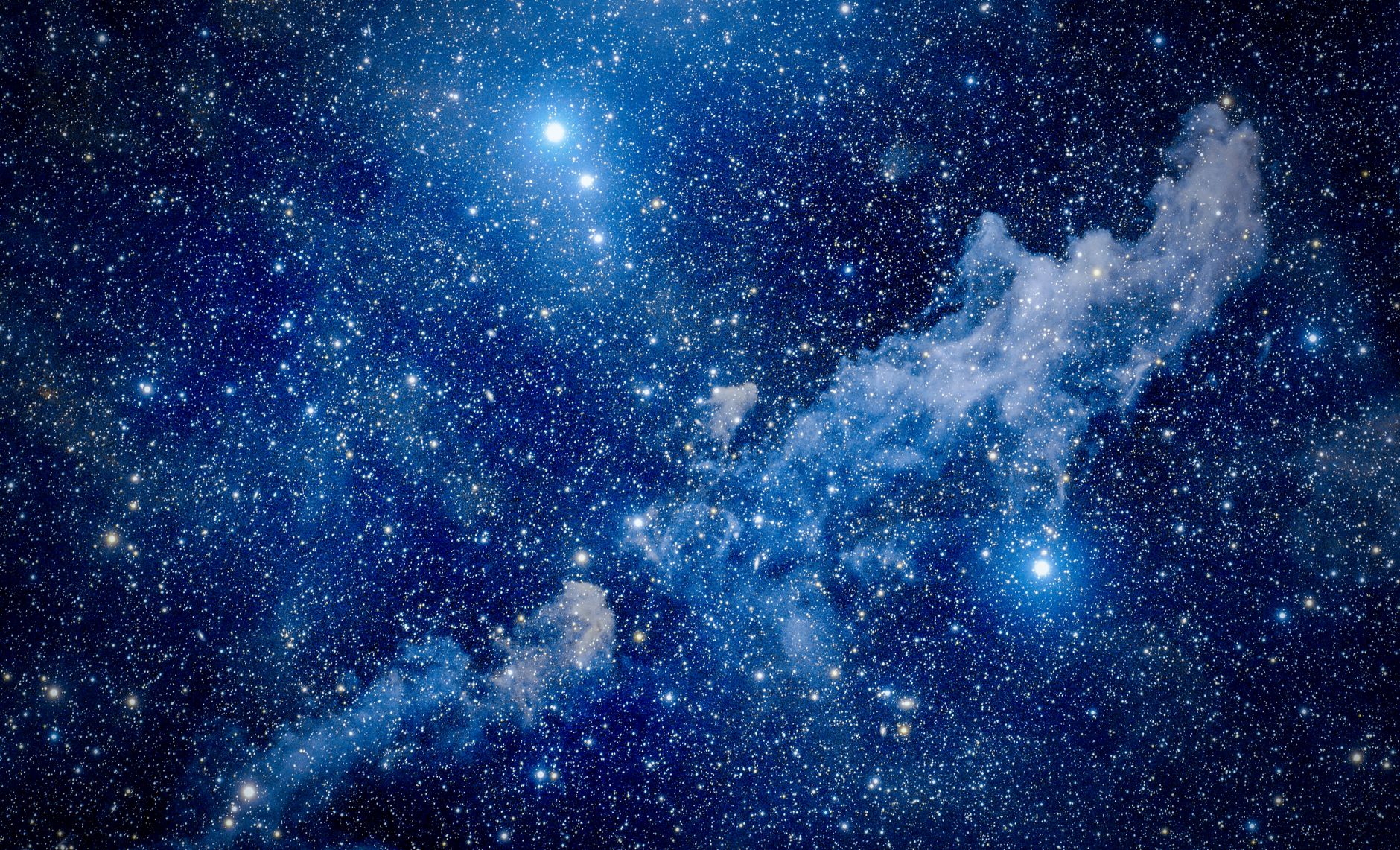
Astronomers said in a statement that a nebula is a cloud of luminescent material formed from gas, dust, and stellar material suspended in the interstellar medium. They added that the nebula may never have been imaged by a professional observatory before, making this the first image of its kind.
The scientists said thousands of stars from the Carina–Sagittarius arm rest in the background of the nebula. They also said galaxies outside our own are hidden among the stars. NOIRLab notes that the Solar System sits inside a similar diffuse structure known as the Local Interstellar Cloud.
Earlier Portrait and Cultural Acknowledgment
That version mapped doubly ionized oxygen in blue and hydrogen in deep red, while the November release adds finer detail and a wider field. NOIRLab recognizes the significant cultural role of I’oligam Du’ag to the Tohono O’odham Nation and Maunakea to the Kanaka Maoli community.
Chalmers Team Finds Magnetic Loop Drives Star’s Stellar Wind
That changes a fundamental part of the origin story of the atoms we ourselves are made of, said...
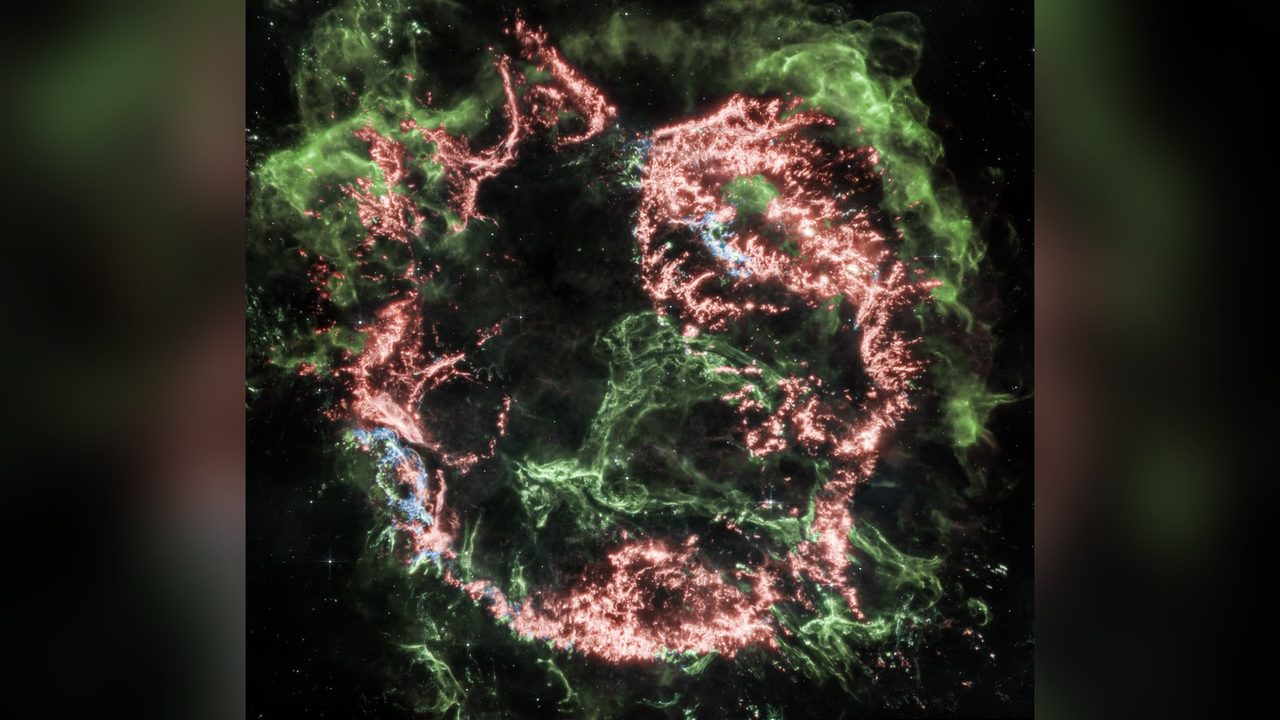
NASA Webb Maps Cas A Dust, Finds Shells Merged Hours Before Blast
NASA's James Webb Space Telescope has mapped the dust inside Cassiopeia A and found evidence that the star's...

Mars Express Releases Tharsis Tholus Images Showing Double Caldera
Mars Express orbiter has released new images of Tharsis Tholus, an 8-kilometre-high volcano whose summit collapsed twice, leaving...
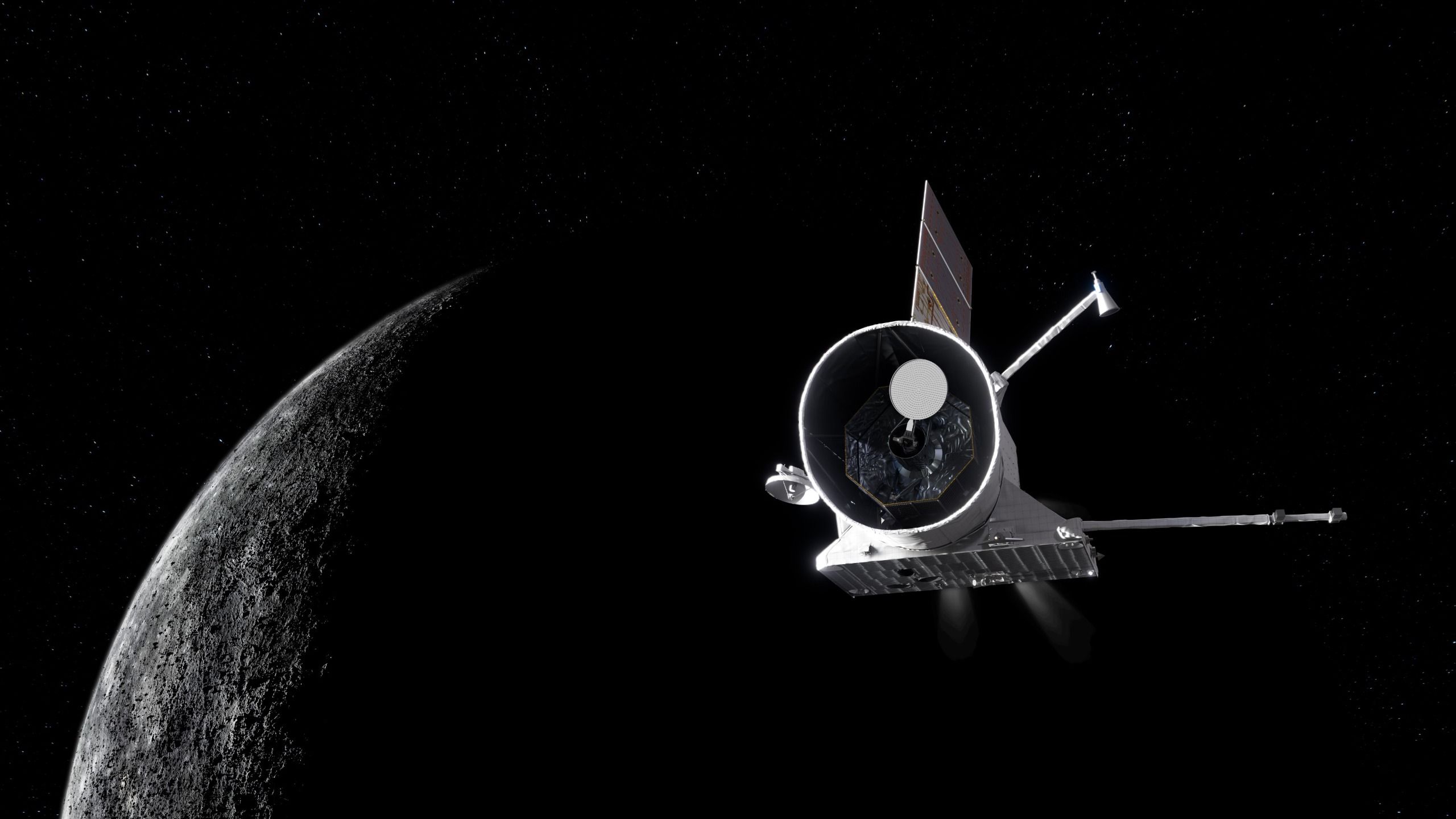
Japan-Europe BepiColombo Enters Mercury Orbit After 10-Billion-Km Journey
BepiColombo slipped into orbit around Mercury on Saturday after an eight-year, 10-billion-kilometer cruise, becoming only the second spacecraft...