
Phil Eng skips subpoenaed hearing on Blue Hill Avenue transit project
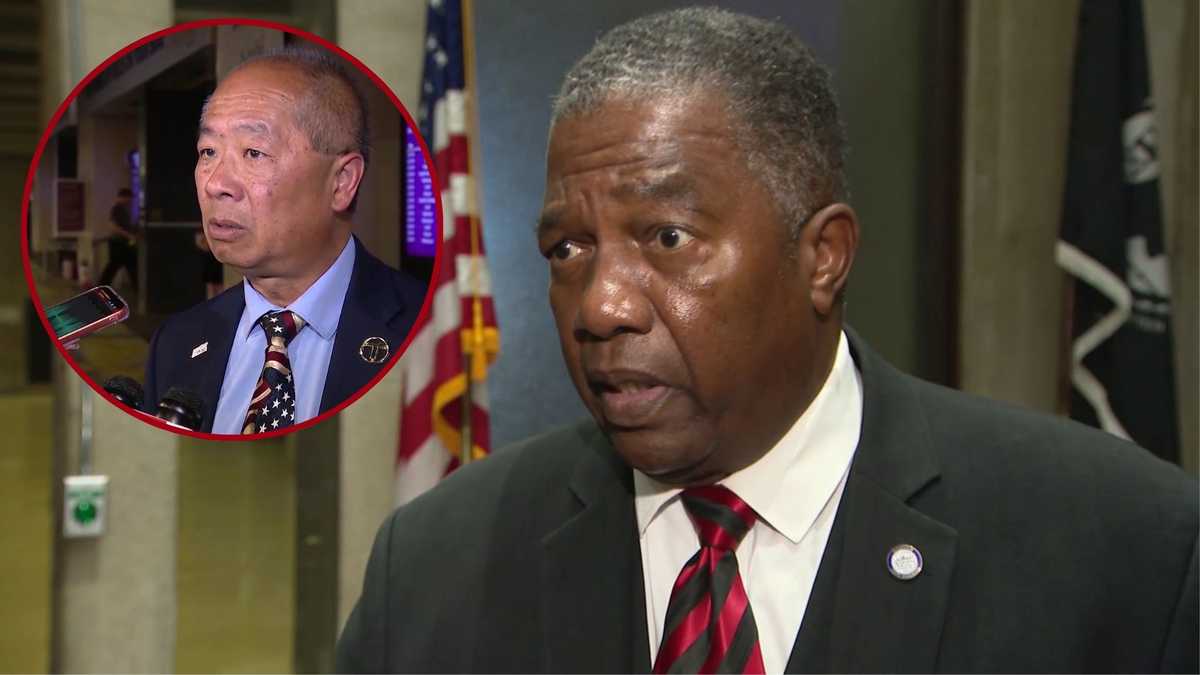
Boston City Councilor Miniard Culpepper is preparing to take the leader of the MBTA to court after the agency’s general manager failed to appear at a scheduled hearing, despite being served with a subpoena. The absence, which occurred during a hearing regarding the controversial Blue Hill Avenue redevelopment project, has prompted Culpepper to seek legal enforcement of the Council’s summons.
The hearing, co-sponsored by Councilors Culpepper and Brian Worrell, was intended to address transportation equity and civil rights, specifically regarding the possibility of extending the Orange Line to Blue Hill Avenue. According to a report from WBUR, Culpepper ended the meeting just thirty minutes after its scheduled start time on Friday because Phil Eng, the MBTA general manager and interim transportation secretary, did not attend.
An MBTA spokesperson told WBUR that Eng was unable to attend “due to a previously planned vacation with his family.” While the MBTA expressed a willingness to participate in community meetings or meet directly with city councilors to discuss the project, Culpepper has rejected those alternatives. He stated he has no interest in “closed door rooms” and insisted that the testimony must happen in a public forum where Eng can be placed under oath.
The fight over Blue Hill Avenue transit equity
At the heart of this confrontation is a $163 million plan proposed by Mayor Michelle Wu to implement center-running bus lanes along a three-mile corridor on Blue Hill Avenue. The city and MBTA officials argue the project will modernize the roadway with new sidewalks, protected bike lanes, and improved pedestrian crossings, potentially shortening Route 28 trips between Mattapan and Grove Hall by 10 to 15 minutes during rush hour.
However, the plan faces significant local pushback. WCVB reported that some residents, such as Roxbury resident Connie Smith, expressed concerns that the center-running bus lanes could actually increase traffic congestion in the area. Beyond traffic flow, the debate is deeply rooted in historical disinvestment.

Culpepper, who is also an attorney, views the current proposal through the lens of civil rights. He argued that when the Orange Line was originally removed from the area, there was a commitment to provide comparable transportation—a promise he says has not been fulfilled for 40 years. He pointed to billions of dollars in recent transit investments for the Green, Orange, and Red Lines as evidence of a “disparate impact” on the Black communities of Roxbury, Dorchester, and Mattapan.
“We had planned to put Mr. Eng under oath,” Culpepper told WBUR. “We had planned to have councilors make opening statements. We had planned to have the public here to testify. All of that was based on Philip Eng showing up to testify at this hearing.”
A clash of authority and governance
The standoff highlights a growing tension between the City Council’s oversight powers and state-run agencies. While the City Council has the authority to issue subpoenas under the Boston City Charter and state law, the effectiveness of that power varies depending on the target.
The Boston Herald noted that this is not the first time the Council has faced defiance. In October 2024, the Council issued a “rare” subpoena to a local postmaster regarding mail delays, but the U.S. Postal Service refused to comply, citing federal preemption over local authority. Culpepper, however, believes the legal landscape is different here. Because the MBTA is a state agency rather than a federal one, he maintains the Council has the necessary leverage to enforce the subpoena through the court system.
Mayor Michelle Wu has taken a different stance, suggesting that legal escalations may damage working relationships. Speaking at an unrelated event on Friday, Wu noted that the MBTA and Eng have a history of collaborating with the city through briefings and community meetings.
“There was a scheduling conflict,” Wu told reporters, adding that she does not believe subpoenas are a “productive way to engage with the partners who are working alongside us every day.”
Legal next steps for the City Council
Before the Council can move to court to compel Eng’s testimony, they must first hold a formal vote to enforce the subpoena. Culpepper confirmed that preparing for court is the immediate next step. If the council moves forward, the matter will transition from a legislative hearing to a judicial enforcement action.
The outcome of this legal battle will likely determine how future transit projects in Boston are vetted by local officials. If the Council successfully enforces the subpoena, it establishes a precedent for how much control city leaders can exert over state transportation officials. If they fail, it may signal a limit to the Council’s ability to demand transparency from the agencies managing the city’s infrastructure.
The debate over Blue Hill Avenue remains unresolved, with the community divided between those seeking immediate improvements via bus lanes and those demanding the long-term stability of a rail extension.
Keep reading

OKC Thunder face Memphis Grizzlies in NBA Cup opener
Oklahoma City Thunder Tip Off NBA Cup Campaign Against Memphis The Oklahoma City Thunder take their show on...

How the North Dakota State Historical Society Selects Donations
Every year, the State Historical Society of North Dakota sifts through a steady stream of physical memories—items ranging...

NYC Council to hold oversight hearing on lithium-ion battery fires
City Council Targets Escalating Lithium-Ion Battery Fires New York City is bracing for a significant shift in fire...

New Jersey industrial deliveries drop 58% as scarcity tightens market
New Jersey industrial deliveries drop 58% as scarcity tightens the market New Jersey is shifting toward a landlord's...