

A young boy presenting with a mysterious abdominal rash and suspected liver injury was ultimately diagnosed with erythema ab igne, or toasted skin syndrome. Doctors linked the condition to his daily routine of resting a charging laptop on his abdomen for up to eight hours during home-schooling sessions.
Emergency Room Mystery and the Suspected Liver Injury
When the young patient first arrived at the emergency department, his doctors were entirely stumped by the unusual markings on his skin. Neither the boy nor his parents could explain how the lesions had formed, and initial medical tests yielded clear results. Because an X-ray revealed nothing and the boy mentioned being pushed into a chair during play-fighting with his brother, medical staff initially suspected a form of liver injury. However, subsequent CT imaging showed no underlying physical trauma to explain the strange skin changes.
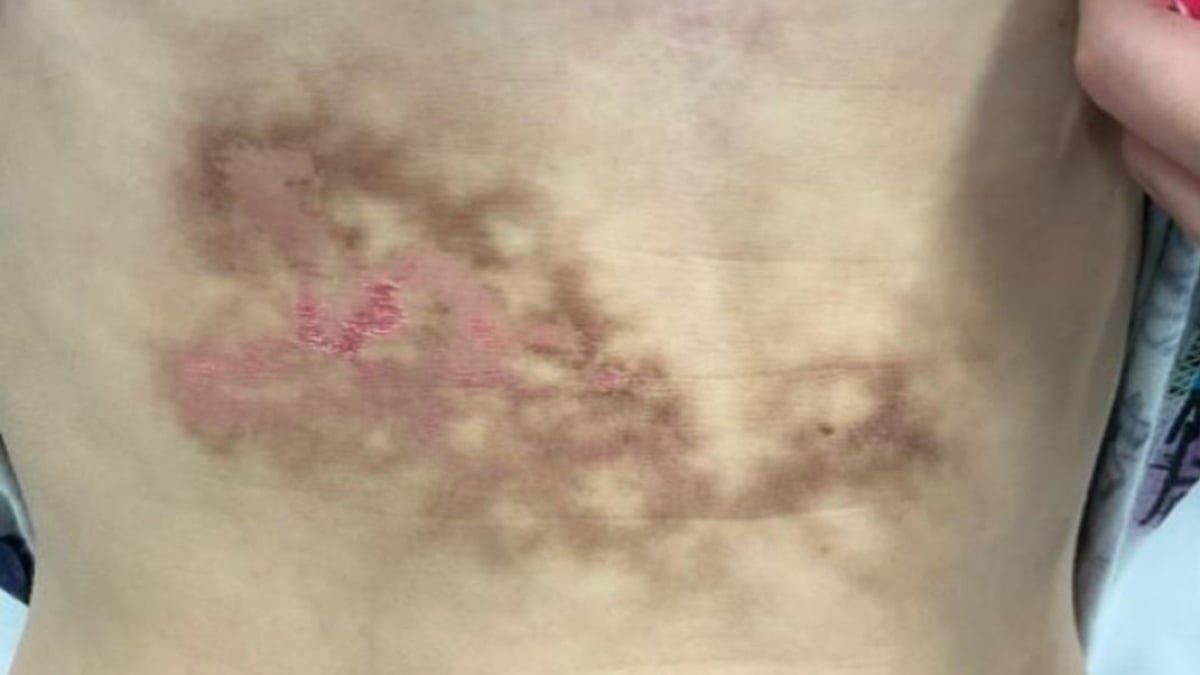
The first presentation featured a non-itchy, non-tender patch with interlacing lines forming irregular circles and a lace-like morphology.
With no clear diagnosis, the boy was discharged without a definitive answer. Several weeks later, however, the lesions returned significantly worse, covering a larger area of his abdomen with darkened brown and pink patches that caused more pain when touched.
Uncovering the Laptop Habit Behind Erythema Ab Igne
It took a second round of questioning to uncover the true origin of the skin damage. When pressed about his daily routines, the patient revealed details about his school schedule and computer use. The boy was home-schooled and spent up to eight hours a day resting a laptop directly on his abdomen while it charged.
This prolonged exposure to low-grade heat triggered erythema ab igne, commonly known as toasted skin syndrome. The condition occurs when skin is exposed to temperatures below the threshold required to cause immediate thermal burns, meaning individuals often fail to notice any sharp pain while the damage is accumulating. While most laptop-induced cases traditionally appear on the thighs, resting the device directly against the torso created an unusual abdominal presentation.
Broader Pediatric Risks in the Work-From-Home Era
Medical professionals warn that this case highlights an under-recognized issue in younger populations. Researchers noted that the greater and sometimes inappropriate use of technological devices
among children and adolescents makes toasted skin syndrome an increasingly likely occurrence. The shift toward remote work and home education since the COVID-19 pandemic has normalized resting electronics on couches, beds, and laps for extended stretches.
Because patients and practitioners rarely suspect consumer electronics of causing thermal skin damage, initial diagnoses are frequently missed. Dermatologists note that while the condition often resolves on its own once the heat source is removed, chronic exposure carries potential long-term risks, with emerging evidence linking persistent erythema ab igne to various skin cancers.
Broader Context of Skin Inflammations and Rashes
Skin rashes take many forms and arise from vastly different biological triggers, ranging from physical heat sources to immune-mediated conditions. Dermatitis, a broad term encompassing red and inflamed skin, serves as the body’s protective response to external and internal threats. According to the sources, skin acts as an active barrier filled with immune cells that neutralize foreign invaders.
Common inflammatory skin diseases include atopic dermatitis, or eczema, which affects up to 30% of people and often begins in childhood. Unlike physical heat rashes caused by laptops, conditions like eczema and psoriasis stem from complex interactions involving the immune system and environmental allergens.
Prognosis and Recovery
For the young boy diagnosed with laptop-induced toasted skin syndrome, the resolution was straightforward once the heat source was identified. Medical staff advised the family to eliminate direct heat exposure from the computer. Over time, the reddish-brown reticulated patches gradually faded until the injury disappeared entirely.

Local Consolidative Therapy Fails to Improve Survival in LONESTAR Trial
Adding local consolidative therapy after induction dual checkpoint blockade in metastatic non-small cell lung cancer was feasible, but...
WHO Prequalifies Multi-Dose RSVpreF Vaccine Vial to Protect Infants
The World Health Organization has prequalified a multi-dose vial of the maternal respiratory syncytial virus vaccine, RSVpreF, sold...

NIH Integrates Patient Feedback Into AI Use via Bio Genesis Mission
The National Institutes of Health is opening new avenues for patient and clinician feedback as it scales artificial...
Climate Change Expands Geographic Range of Vector-Borne Illnesses
As global temperatures rise, climate change is expanding the geographic range of vector-borne illnesses, and accelerating the evolution...