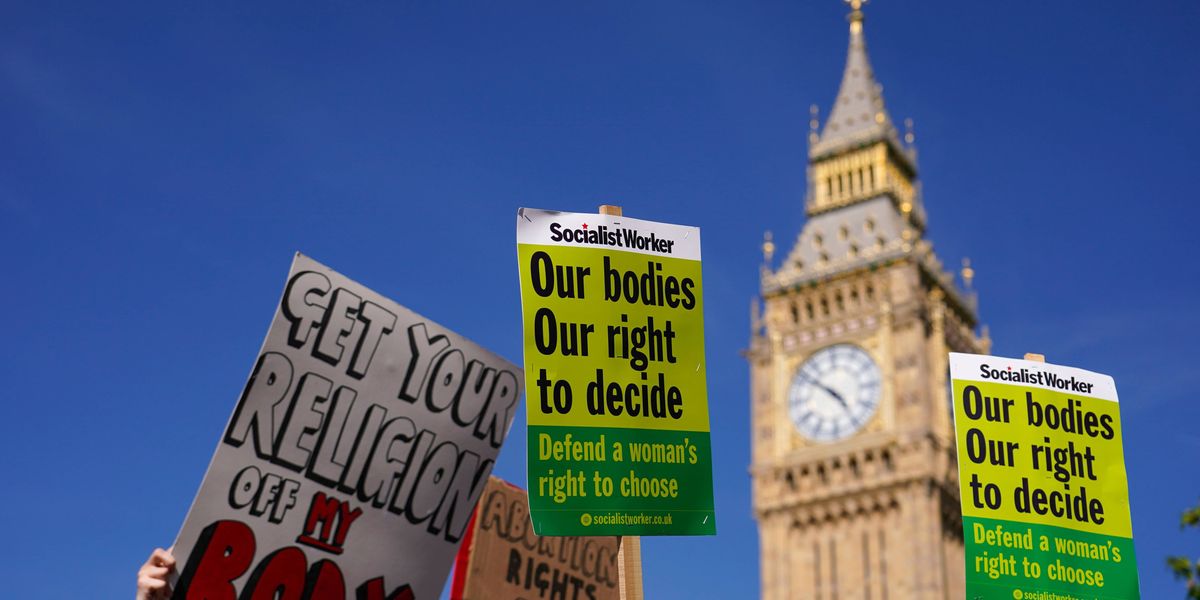
British women convicted under a Victorian-era law for illegally terminating their pregnancies will receive automatic pardons on Monday, the government announced.
This measure comes after Parliament voted historically last year to legalize abortion by striking down a clause within the 1861 Offences Against the Person Act. Women who received a police caution will also be pardoned, and those arrested or investigated for ending their own pregnancy will have those details removed from their criminal records. They will not have to submit applications for the pardons, and some will be issued posthumously.
“For too long, women have faced the devastating consequences of outdated abortion laws,” Heidi Stewart, chief executive of the British Pregnancy Advisory Service, said.
“While no pardon can undo the distress and trauma these women have experienced, this historic change in the law recognizes the profound harm caused by their criminalization and represents a meaningful step towards justice.” Heidi Stewart
The government did not provide a total count of the women affected. However, Tonia Antoniazzi, the Labour member of Parliament behind the decriminalization amendment, said that law enforcement examined upwards of 100 cases involving women suspected of unlawful terminations over the five years leading up to last year’s vote. That total included individuals who suffered natural miscarriages and stillbirths.
Antoniazzi described instances where women suspected of illegally aborting a fetus were “dragged from hospital beds to police cells” and interrogated when they should have been cared for.
“This trauma cannot be erased, but I hope that this offers some alleviation of the pain these women have endured, enabling them to participate fully in society again, living their lives to the full, working the jobs they’ve always wanted to,” she said.
At present, medical professionals in England, Scotland, and Wales can lawfully perform abortions up to the 24th week of pregnancy, and past that point only under exceptional circumstances, such as a direct threat to the mother’s life. Abortion in Northern Ireland was decriminalized in 2019.
The Crime and Policing Act took effect this spring, ensuring that women who terminate a pregnancy at any stage will not face criminal charges. Anti-abortion groups opposed the measure, arguing that the legislative shift would open the door to abortion on demand at any stage of pregnancy.
Lawmakers changed the statute following high-profile prosecutions, including the jailing of a mother of three that sparked outcry from abortion rights supporters. In 2023, a court handed Carla Foster a prison term exceeding two years for using medication to induce an abortion around the eighth month of her pregnancy. An appeals court freed her a month later, saying the case called for “compassion, not punishment.”
Separately, Nicola Packer was cleared of accusations that she unlawfully self-administered a noxious substance or poison with the intent of causing a miscarriage. Packer, who took abortion medication at approximately 26 weeks of pregnancy, stated during proceedings that she was unaware she had been pregnant for more than 10 weeks.
Related reading

UW-La Crosse Advances To NCAA Women’s Soccer Third Round
University of Wisconsin-La Crosse advanced to the third round of the NCAA Division III Women’s Soccer Championship with...

West Virginia Invests $40 Million in Industrial Site Development
Forty million dollars in public financing aims to transform industrial development across four West Virginia counties through a...

Elk Reduction Program Begins in Grand Teton National Park – East Idaho News
Grand Teton National Park announced that its annual elk reduction program will run from November 14 through December...

WNO Makes the Best of a Problematic Venue With a Starry and Lean “Nixon in China
Washington National Opera launched its first grand operas since splitting from the Kennedy Center, staging John Adams' Nixon...