Burlington Stores guided holiday-quarter profit below last year after comparable sales barely moved and inventory piled up.
The off-price chain reported third-quarter results on Monday that beat its own earnings target but showed a 1% comparable sales gain against a 10% rise in comparable store inventory.
Net sales rose 8.4% to $2.93 billion in the quarter ended Nov 24, driven by 119 net new stores over the past year. Comparable store sales were flat versus the same 1% gain a year earlier, leaving a two-year stack of about 2%. Gross margin fell 50 basis points to 43.7%, and adjusted EBIT margin dropped 60 basis points to 5.6%.
Adjusted EPS came in at $1.73, above the company’s guidance. GAAP diluted EPS rose 2.5% to $1.67. The difference reflects expenses tied to leases Burlington took over from bankrupt retailers. Diluted shares fell to 63.5 million from 64.1 million as the company repurchased $81 million of stock.
Management blamed warm weather for cutting roughly 300 basis points from the third-quarter comparable sales figure. Comps have decelerated sharply from the 6% pace reported in the first quarter of fiscal 2026.
Burlington received $55 million of tariff refunds in the second quarter and said it is reinvesting the money in merchandise during the third and fourth quarters. On the earnings call, management said third-quarter operating margin would have risen 10 basis points without the reinvestment, and adjusted EPS would have been 8% higher than last year.
The company kept its fourth-quarter comparable sales guidance at 1% to 3%. Adjusted EPS is projected at $4.85 to $4.95, compared with $4.99 a year earlier — a decline of 0.8% to 2.8%. The range includes $0.20 a share of extra fuel and freight costs.
Adding that back yields a range of $5.05 to $5.15, or growth of about 1.2% to 3.2%, well below the double-digit EPS growth streak Burlington highlighted through 15 straight quarters. Full-year fiscal 2026 adjusted EPS guidance stands at $11.70 to $11.80, implying growth of at least 15%. Nearly all of that growth has already been booked: through nine months, GAAP diluted EPS reached $6.34, up from $4.68 a year earlier.
Merchandise inventory ended the quarter at $1.93 billion, up 16% year over year. Comparable store inventory rose 10% while comparable sales rose 1%, meaning stores entered the holiday season with significantly more goods per location.
Reserve inventory remained 35% of total inventory, unchanged from a year ago.
Net property and equipment rose 25.7% to $3.70 billion, reflecting the store buildout. Liquidity was about $1.3 billion at quarter-end: $395 million in cash and $943 million available on an undrawn asset-based credit line.
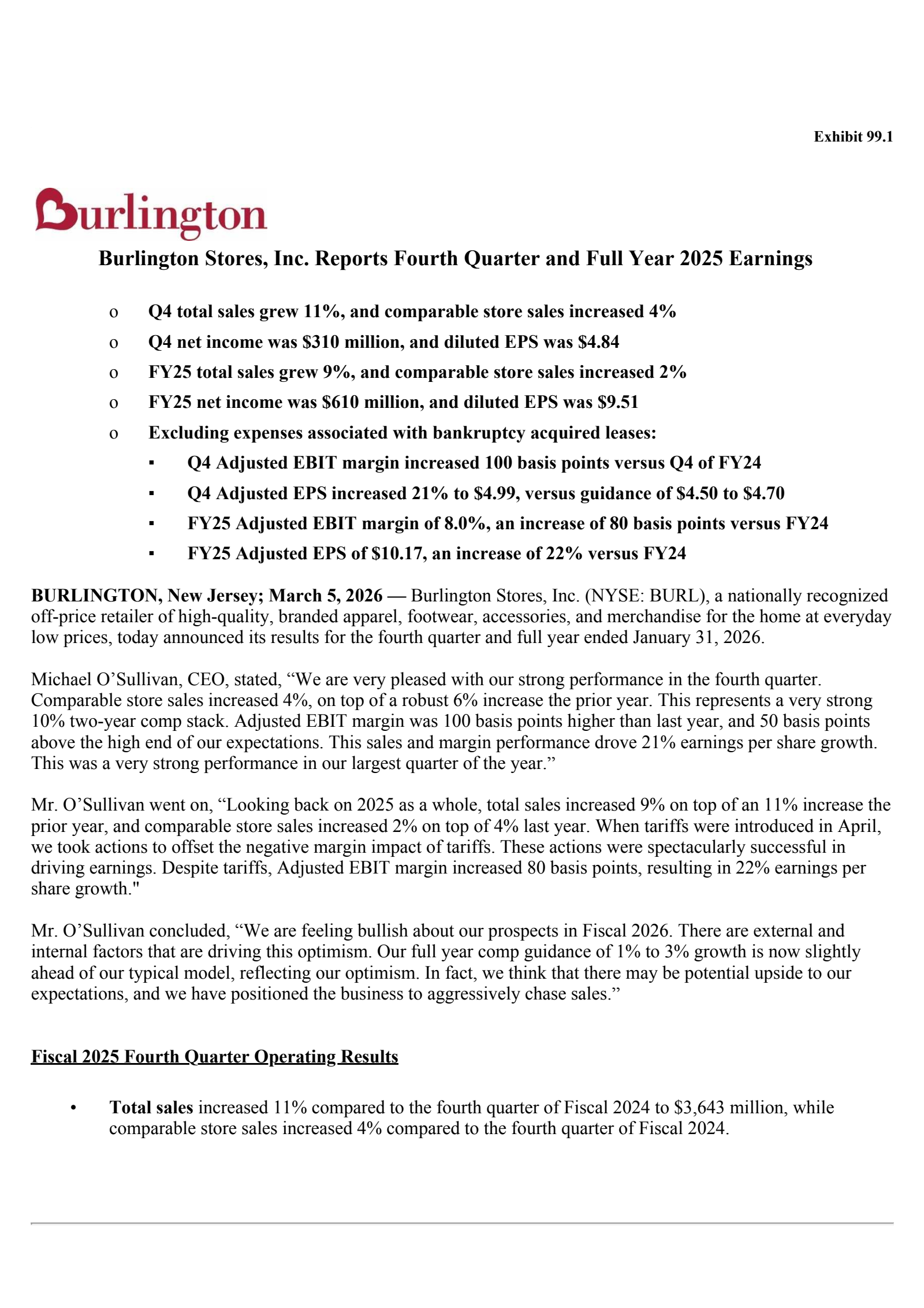
Shares rose 8.25% to $254.56 in premarket trading, Investing.com reported. That gain stands out against recent reactions: on Aug 27, the stock fell 7.6% after second-quarter results while the S&P 500 ETF rose 0.7%, and on Nov 13 it dropped 3.6% after a Gordon Haskett downgrade.
By comparison, Best Buy reported 6.1% comparable sales growth on the same morning and raised its fiscal 2027 guidance.
Burlington’s reported revenue of $2.93 billion fell short of the $2.98 billion consensus cited by Investing.com, though the company emphasized beating its own EPS guidance.
The open question is whether the inventory position forces heavier clearance if holiday comparable sales land near the low end of the 1% to 3% range.
Burlington Stores, $BURL, Q3-26. Weak comps and rising freight costs pressure holiday guidance. 🔴 Revenue: $2.94B vs $2.97B est. ⚪ Adj. EPS: $1.73 | In line 📉 Q4 EPS guidance cut by $0.20 💰 New $750M buyback authorization pic.twitter.com/94ZCH2LcXK
Related reading
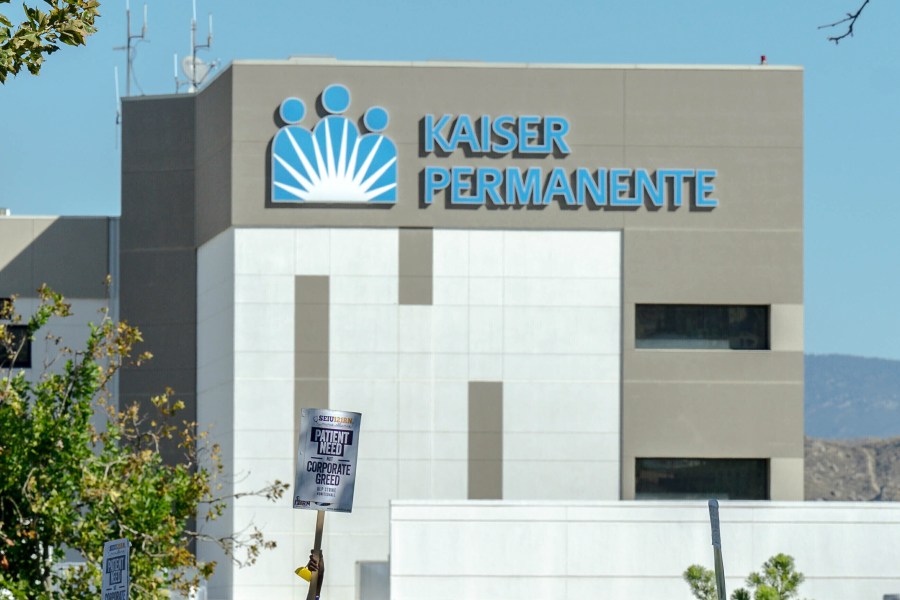
Oregon Union Seeks Federal Injunction to Block Kaiser’s Plan to Cut 50 Jobs
The Oregon Federation of Nurses and Health Professionals asked a federal court on Friday to block Kaiser Permanente...

Colts Host Kicking The Stigma Game Sunday, Raise $33M for Mental Health
The Indianapolis Colts will host their annual "Kicking The Stigma" game Sunday against the New York Giants at...

Mizzou Faces Oklahoma With 8th Win on Line, but Bowl Gap Minimal
Missouri faces Oklahoma on Saturday with the program's fourth consecutive eight-win season on the line, but the practical...
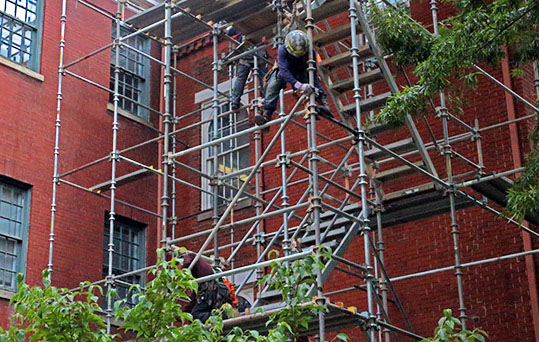
Chesterfield County Issued a Permit for a $3,407,041 Warehouse on Public Works Road
Chesterfield County issued a permit for a $3,407,041 warehouse on Public Works Road, leading a batch of commercial...