California awarded $750 million on Nov. 10 to The Portal, the project extending Caltrain about two miles from Fourth and King streets into the underground train box beneath Salesforce Transit Center, the governor’s office announced.
The Transbay Joint Powers Authority (TJPA) will receive $100 million now for preconstruction work to make the project “one of the most shovel-ready transit projects in the United States,” with $650 million committed over several years for construction, Railway Age reported. The state funding is intended to help draw on $3.38 billion already committed through the Federal Transit Administration's Capital Investment Grants program.
Funding gap persists
The award does not close the project’s financing gap. TJPA’s September status report, current as of July, shows a $587 million shortfall against a $7.57 billion cost estimate, the San Francisco Inquirer reported. The plan already counted the $750 million state award as “planned” money, alongside $553 million in Cap-and-Invest funds passed through the High-Speed Rail Authority.
Federal Capital Investment Grant: $3.38 billion, still requiring a Full Funding Grant Agreement targeted for July 2027. Committed local and regional funds total $1.3 billion, including $577 million from Transbay district impact fees, $325 million from Regional Measure 3 bridge tolls, and $321 million from San Francisco’s transportation sales tax. The 2010 investment in the train box accounts for $729 million. Other planned or potential sources, including a South of Market tax district, add $265 million.
High-speed rail share unsettled
The High-Speed Rail Authority’s funding commitment is not settled. Because of recent changes to the authority’s business plan, TJPA “will need to recommence conversations” with it about its funding commitment, the September report states.
Transit connections multiply at new station
The completed extension would link Caltrain and future high-speed rail with eight other transit operators, Railway Age reported, citing the Transbay Joint Powers Authority. Embarcadero BART station sits one block from the underground train box beneath Salesforce Transit Center.
The authority projects average daily ridership of 90,000 once the line opens, according to Railway Age. No revised opening date was provided in the governor’s announcement.
Tunnel design mixes mined and cut-and-cover methods
About 1.05 kilometers of the roughly two-mile alignment would be excavated as mined tunnel, the San Francisco Inquirer reported, citing the Tunnelling Journal. The remainder would be built using cut-and-cover construction under Townsend and Second streets.
The route runs from Caltrain’s existing terminal at Fourth and King streets into the finished concrete box at the transit center’s lowest level, which has sat empty for eight years, the Inquirer noted.
Metrolink receives $20M to prevent service cuts
Other investments include a second main track through Fremont and Newark for Altamont Corridor Express, infrastructure for passenger service to Salinas, Caltrain’s battery-electric train pilot between San Jose and Gilroy, modernization of California’s double-deck intercity fleet, signaling improvements near Davis on the Capitol Corridor, and signaling and communications upgrades on the Oceanside–Escondido Sprinter line.
The underground train box beneath Salesforce Transit Center is a belowground shell built during the 2010 first-phase construction by the Transbay Joint Powers Authority (TJPA), designed as a two-level underground train station with three island platforms serving six tracks for Caltrain and California High-Speed Rail.
“California is turning big transit ideas into everyday trips,” said Toks Omishakin, state transportation secretary, in the governor’s announcement.
Keep reading

Oro Mobility Hires Part-Time Drivers in Newark, CA at $19.61/Hour with Vehicle Provided
Oro Mobility is hiring part-time drivers in Newark, California, at an hourly rate of $19.61 plus tips, with...

Pitino Frustrated After St. John’s Win; Louisville Also Advances
The Red Storm advanced with a 90-79 win over Oregon on Tuesday, though Pitino was visibly frustrated after...
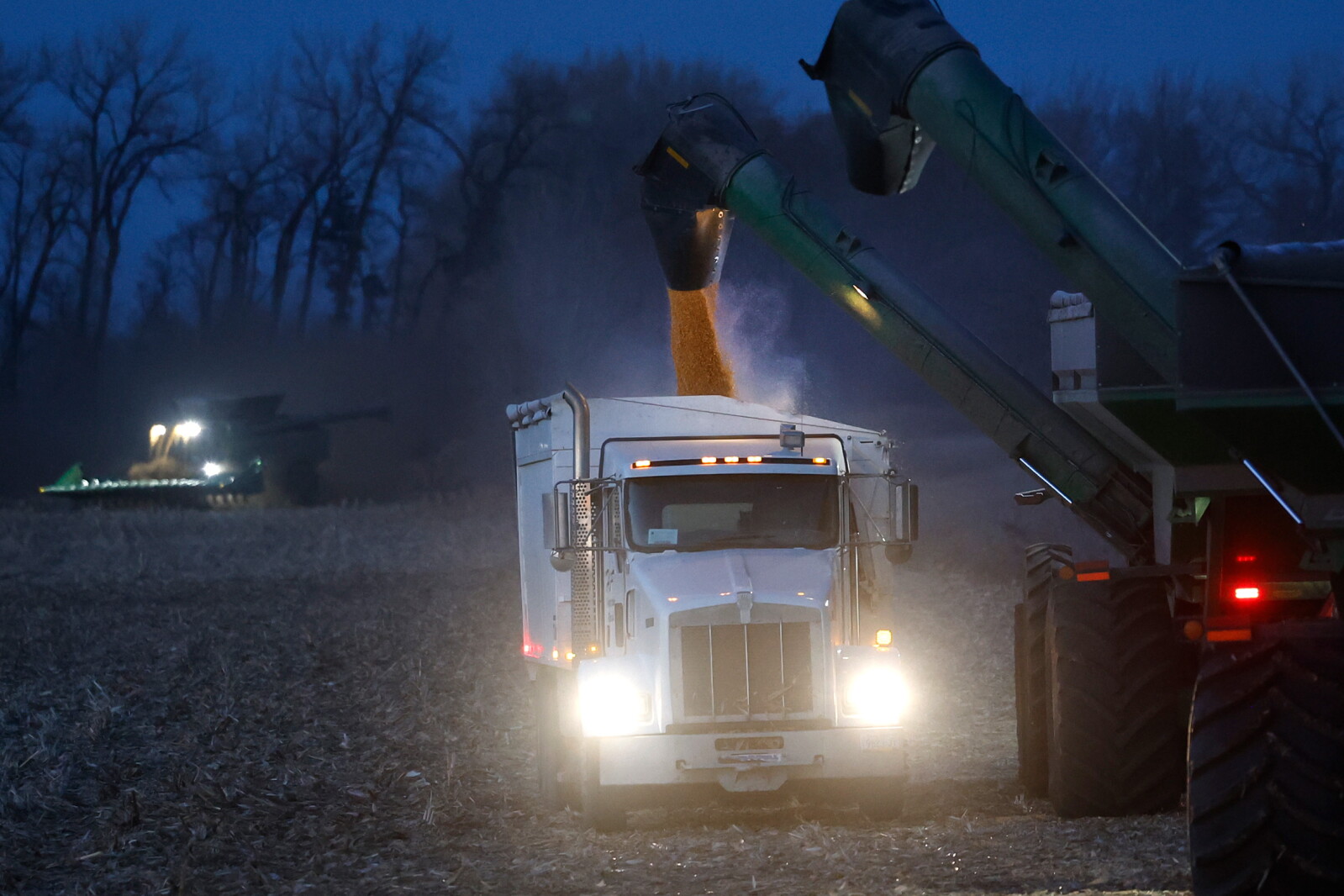
Northeast North Dakota Corn Yields Disappoint After Summer Drought, Agweek Reports
Northeast North Dakota corn growers are harvesting a disappointing 2026 crop after a wet spring gave way to...

Well-Capitalized Life Insurer Seeks CAO to Build Finance Function
A well-capitalized life and annuity insurer in Des Moines is hiring a chief accounting officer to build its...