Democrats expanded their California legislative supermajority to its largest margin in 150 years this month, flipping nine Republican seats and leaving the GOP with 12 Assembly members and no power over tax or urgency measures.
- Democrats won every statewide office and flipped nine GOP legislative seats.
- Republicans fell to 12 Assembly members, losing ability to block tax or urgency bills.
- State GOP chair Corrin Rankin will not seek re‑election after her term is up in February.
- Assembly Speaker Robert Rivas’s spokesperson declined to discuss how 12 Republicans will fill 32 committee vice‑chair slots.
Blue tsunami reshapes the Capitol
In the San Joaquin Valley, a 28‑year‑old Democrat with a thin campaign résumé unseated the Republican Assembly leader. In the Palm Springs area, a first‑time candidate defeated a well‑financed, two‑term Republican incumbent.
And in once‑reliably Republican Orange County, a candidate with an “enthusiastic” recommendation from the Democratic Socialists of America leads in an uncalled race, while a Democratic DEI‑consulting business owner beat the Vietnamese Republican incumbent who represents Little Saigon.
National mood, local fracture
GOP strategist Duane Dichiara said the losses stemmed from the “nationalization” of down‑ballot races: “It was about voters sending Republicans a message.” Eric McGhee of the Public Policy Institute of California agreed: “Voters are responding more to how they’re feeling about the broad parties nationally, and not to how the parties are delivering locally.”
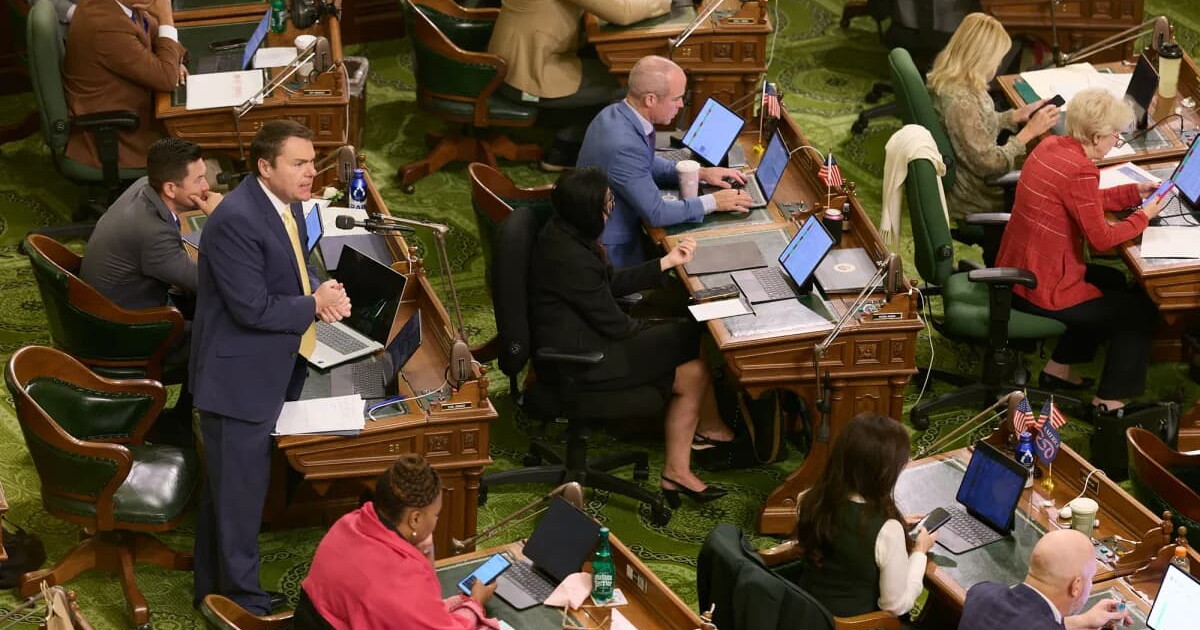
Internal divisions compounded the drift. Months after Corrin Rankin became state party chair in March 2025, legislative leaders broke a joint fundraising agreement and directed lobbyists to a separate Legislative Action PAC. San Diego Assemblymember Carl DeMaio’s Reform California operation also siphoned small‑donor dollars.
“The California Republican Party has been a complete dumpster fire for a long time now,” DeMaio said. Filings show the state party spent less than half of what the Legislative Action PAC spent between January and mid‑October.
Rankin out, Strickland favored
Tony Strickland, a Huntington Beach Republican who lost his state Senate re‑election bid, is favored among several candidates to succeed her.
Committee roles uncertain
With only 12 Republicans in the Assembly, it is unclear how they will be distributed across 32 standing committees that have traditionally included a Republican vice chair. Assembly Speaker Robert Rivas’s spokesperson Nick Miller declined to discuss the matter: “Voters just elected the largest and most diverse Assembly Democratic Caucus in California history, and under Speaker Rivas’ leadership, it will deliver.”
Policy influence shrinks
Former Republican Assemblymember Tom Lackey, a former California Highway Patrol officer, said he was painted as “hateful” for pushing back on Democratic proposals in the public safety committee.
“The left perspective focuses so much on rehabilitation that it dismisses the impact to victims,” he said. “Victims become ghosts.” Committee chair Nick Schultz, a Burbank Democrat, said Lackey was a “value‑add” but stressed that moderate and progressive Democrats diverge widely on public safety.
Republicans plot 2028
DeMaio proposes unwinding alternative fundraising, restructuring party leadership, and creating a “shadow caucus” of candidates who engage constituents early. “We have to act like a larger opposition party, and that’s how we’re going to grow our ranks,” he said.
Senate Republican leader Roger Niello, who became leader on Nov. 5, said the focus will be on quality candidates and contrasting their image with Democrats. UC Berkeley professor Paul Pierson said the path depends on “how the Republican Party nationally evolves.”
Related reading
- No. 7 UCLA Moves to 6-0 Behind Filip Jović’s 17 Points in Season Debut, 85-48 Win Over Delaware
- Michigan State Football Finding Future in DT Derrick Simmons, Young QBs After Oregon Loss
- Democrats win largest House majority since 1992 with North Carolina seat (newsarchyuk.com)
- Real Rates, Not Inflation Bets, Drove the 10-Year Yield to a 2002 High (daybreakwire.com)

No. 7 UCLA Moves to 6-0 Behind Filip Jović’s 17 Points in Season Debut, 85-48 Win Over Delaware
No. 7 UCLA moved to 6-0 for the first time since 2016-17 with an 85-48 dismantling of Delaware...

Michigan State Football Finding Future in DT Derrick Simmons, Young QBs After Oregon Loss
Michigan State fell 45-7 to No. 14 Oregon on Friday, Nov. 20, a loss that clarified the program’s...

Wembanyama Scores 50, Says Gomez Presence Made Him Elevate Play
Victor Wembanyama scored 50 points Saturday as the San Antonio Spurs routed the New Orleans Pelicans 114-91 at...
Lanxess Charleston Plant Faces Federal, State Investigations Over Air Permit Violations
South Carolina’s Department of Environmental Services filed a separate enforcement action in October 2025 after reviewing records from...