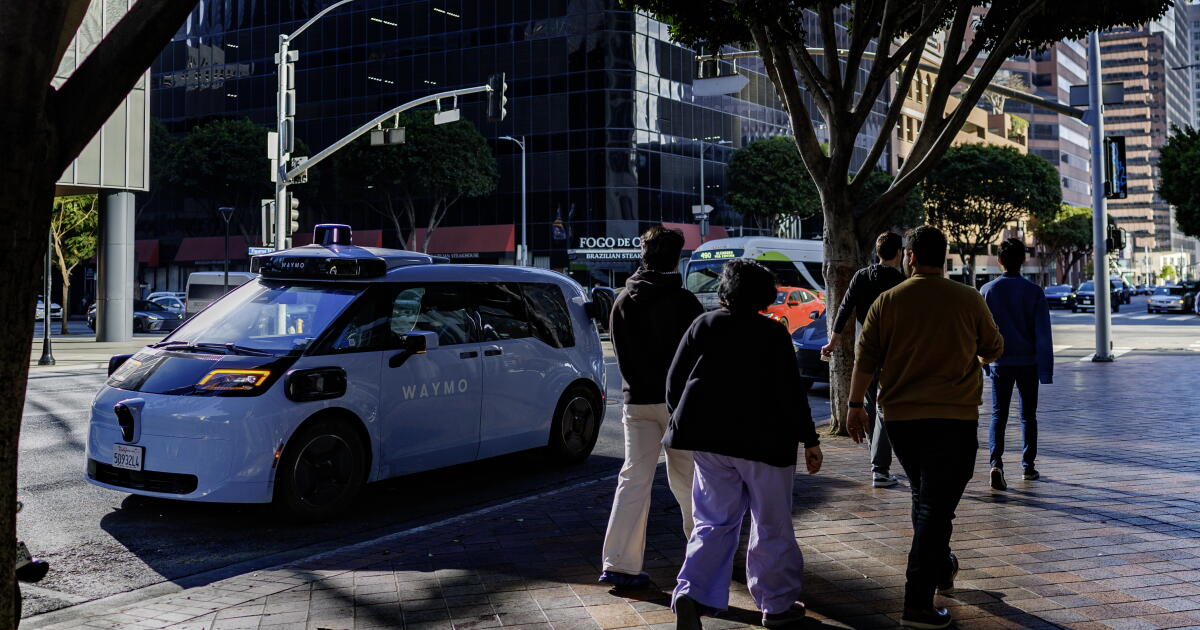
Three driverless Waymo taxis drove into a closed construction zone on U.S. 101 near Burlingame on Nov. 5.
The next day, a fourth tried to bypass California Highway Patrol cruisers running a traffic break on Highway 280 in San Francisco.
The California Department of Motor Vehicles banned Waymo’s autonomous vehicles from all state freeways last Wednesday, saying the cars pose an “imminent hazard” until the company proves they can handle construction zones and emergency vehicles safely. The Los Angeles Times reported the restriction took effect immediately and covers both commercial rides and testing.
Recurring incursions
“The Department determined that Waymo’s driverless freeway operations pose an imminent hazard to public safety due to recurring incursions by its vehicles into active construction zones where construction workers, vehicles and equipment are present,” DMV spokesperson Jonathan Groveman said. He added that “similar incidents” occurred on May 18, prompting the first freeway pause.
Waymo suspended freeway service nationwide the same day. “Following recent freeway construction zone encounters on U.S. 101 in California that did not involve any injuries or collisions, the California DMV has implemented an operating restriction on freeway operations,” spokesperson Dana Gallagher said. The company continues to run more than 1,000 robotaxis on surface streets in Los Angeles alone, plus fleets in San Diego, Phoenix, Miami, Austin and other cities.
Leader hits a wall
The order is a sharp speed bump for Alphabet’s Waymo, the virtually undisputed leader in the commercial robotaxi race. Its vehicles had been cleared for freeway trips in the Bay Area, Los Angeles and Phoenix only last year. A Times analysis of federal data shows the crash rate per million miles is falling, yet the raw number of crashes in Los Angeles tripled last year as the fleet expanded.

California remains the primary proving ground for autonomous vehicles. Amazon’s Zoox and Elon Musk’s Tesla are also putting self-driving cars on public roads, but neither has matched Waymo’s scale. The DMV said the restrictions will stay in place until Waymo “demonstrates to the Department that it has taken effective corrective actions to address the deficiencies that precipitated the restrictions,” Groveman told the Associated Press.
Video of the Highway 280 episode circulated widely on social media last week, showing a Waymo inching past patrol cars with lights flashing. No injuries were reported in either November incident, but the construction-zone intrusion put workers and equipment at direct risk, the DMV emphasized.
Waymo said it is “working with the California DMV and other state officials diligently and responsibly to resume freeway operations.” The company is still running freeway tests with trained specialists behind the wheel.
More on Waymo
The California DMV has ordered Waymo to stop operating its autonomous vehicles on California freeways, citing concerns that the vehicles pose an imminent public safety hazard. Waymo said: "We are working with the California DMV and other state officials diligently and…”
The California DMV has ordered Waymo to stop operating its autonomous vehicles on state freeways, citing concerns that the vehicles pose an imminent public safety hazard. The DMV specifically cited two Bay Area incidents, one where a Waymo was seen attempting to pass a CHP patrol… pic.twitter.com/M3TKffa5WJ
#Breaking: Waymo removed from California freeways. The state DMV ordered Waymo to stop operating its autonomous vehicles on state freeways, citing “an imminent hazard to public safety.” pic.twitter.com/mF3KWn2xGP
The California DMV has ordered Waymo to stop operating its autonomous vehicles on state freeways, citing concerns that the vehicles pose an imminent public safety hazard. Read more: https://t.co/6185UeTl5H pic.twitter.com/hXMJlli4SP
Related reading
New Orleans City Council Is Scheduled to Adopt the City’s 2027 Budget on Thursday
New Orleans City Council is scheduled to adopt the City’s 2027 budget on Thursday. The spending plan lands...
No. 23 Louisville Hosts Pitt in ACC Home Finale
Louisville enters its Atlantic Coast Conference home finale Saturday ranked No. 23 after a fifth straight win pushed...

Dwayne Martin, Topeka Resident and USD 501 Retiree, Dies at 94
Dwayne Luck Martin, a Topeka resident who spent three decades moving supplies for the city's public schools after...

Jacob Jeffery Dayton, Iowa State Industrial Design Grad, Dies at 23
Jacob Jeffery Dayton died November 14 at age 23, leaving behind a newly minted career in fire-protection engineering...