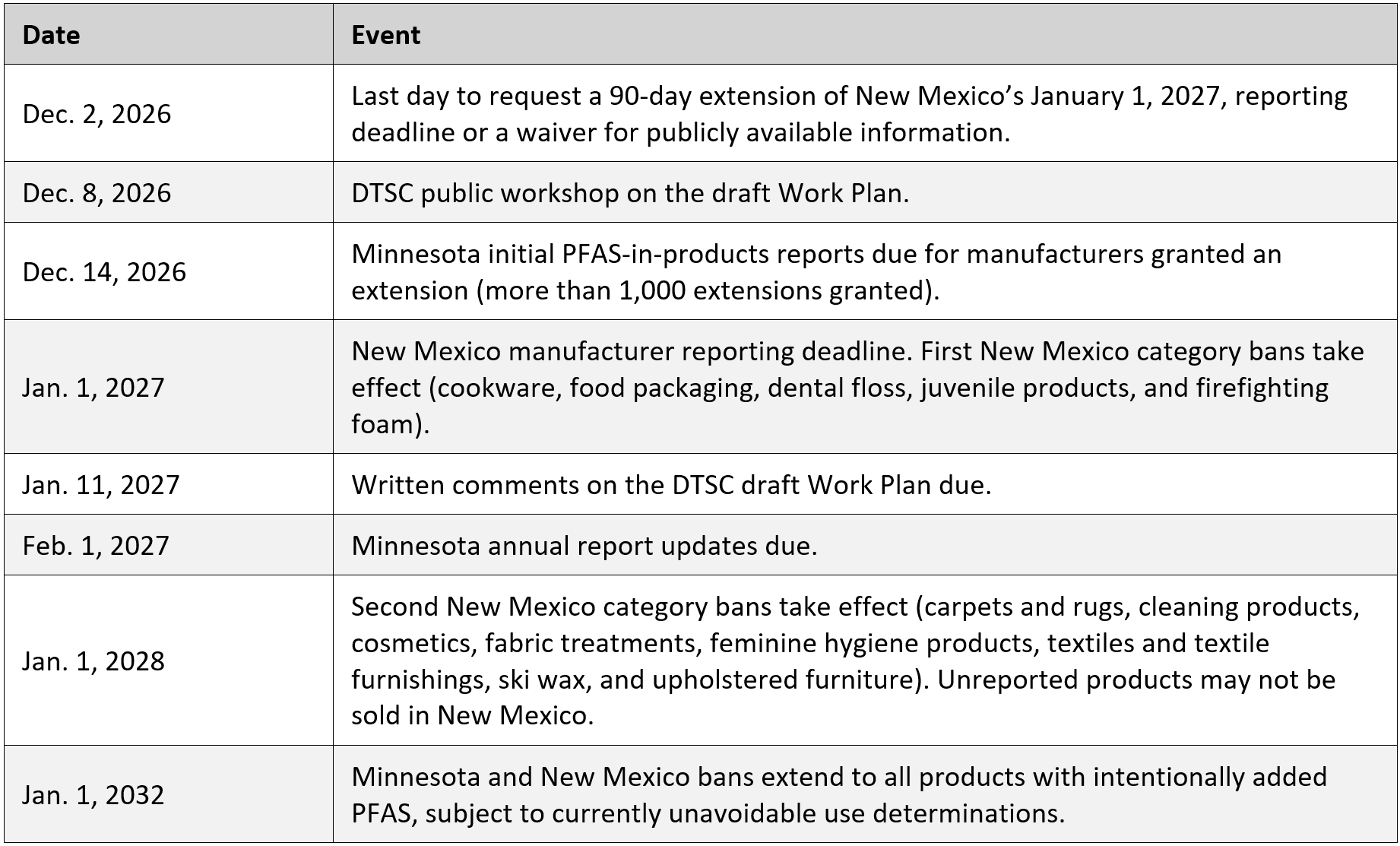
California manufacturers face a converging compliance problem as three states reach regulatory milestones within roughly sixty days, Law Offices of Snell & Wilmer reported.
The Work Plan is not a disclosure rule or ban. It identifies product categories DTSC intends to evaluate and signals potential future Priority Products.
DTSC states it may require manufacturers to disclose information under Health and Safety Code section 25253.7, and intends to request information in a targeted manner. This differs from the broad, upfront product reporting required in Minnesota and New Mexico.
The PFAS items in the draft include floor maintenance products containing PFAS slated for rulemaking to list as a Priority Product; anti-fog products, hard-surface sealers, and ski waxes containing PFAS slated for draft Product-Chemical Profiles and rulemaking; textile and leather treatments containing PFAS slated for a compliance report; and artificial turf, where DTSC will conduct additional information gathering and product testing to confirm whether PFAS have been removed.
DTSC paused its artificial turf work in February 2026 to confirm whether a “pre-regulatory market shift” had occurred. Manufacturers reformulated rather than notify DTSC of continued use, driving a market shift without any alternatives analysis being required.
California restricts PFAS in consumer products through two paths. These listings are not bans; manufacturers must notify DTSC and then remove or replace the PFAS, withdraw the product, or prepare an alternatives analysis.
The cosmetics ban prohibits any intentionally added PFAS and builds on a 2020 law that banned thirteen specified PFAS in cosmetics, also effective January 1, 2025.
Legislation can displace a pending listing.
The Work Plan is a discussion draft and its contents may change before it is finalized.
Related reading

Arizona AG Mayes Joins 21 States, Pa. Gov. in Lawsuit to Block HUD Rule Cutting Mixed-Status Housing Aid
Arizona Attorney General Kris Mayes joined 21 other attorneys general and Pennsylvania Gov. Josh Shapiro in filing a...

Nebraska Beats No. 14 Ohio State 31-28, Snaps 32-Game Ranked Skid
Nebraska beat No. 14 Ohio State 31-28 at Memorial Stadium on Saturday, snapping a 32-game winless streak against...

Daniel Jones Clears Waivers, Becomes Free Agent After Colts Release
Daniel Jones cleared waivers Monday and became an unrestricted free agent, NBC Sports reported. The Colts released the...

Missouri State Extends Baseball, Men’s Soccer Coaches Through 2029-30
Missouri State Director of Athletics Patrick Ransdell announced contract extensions for baseball head coach Joey Hawkins and men's...