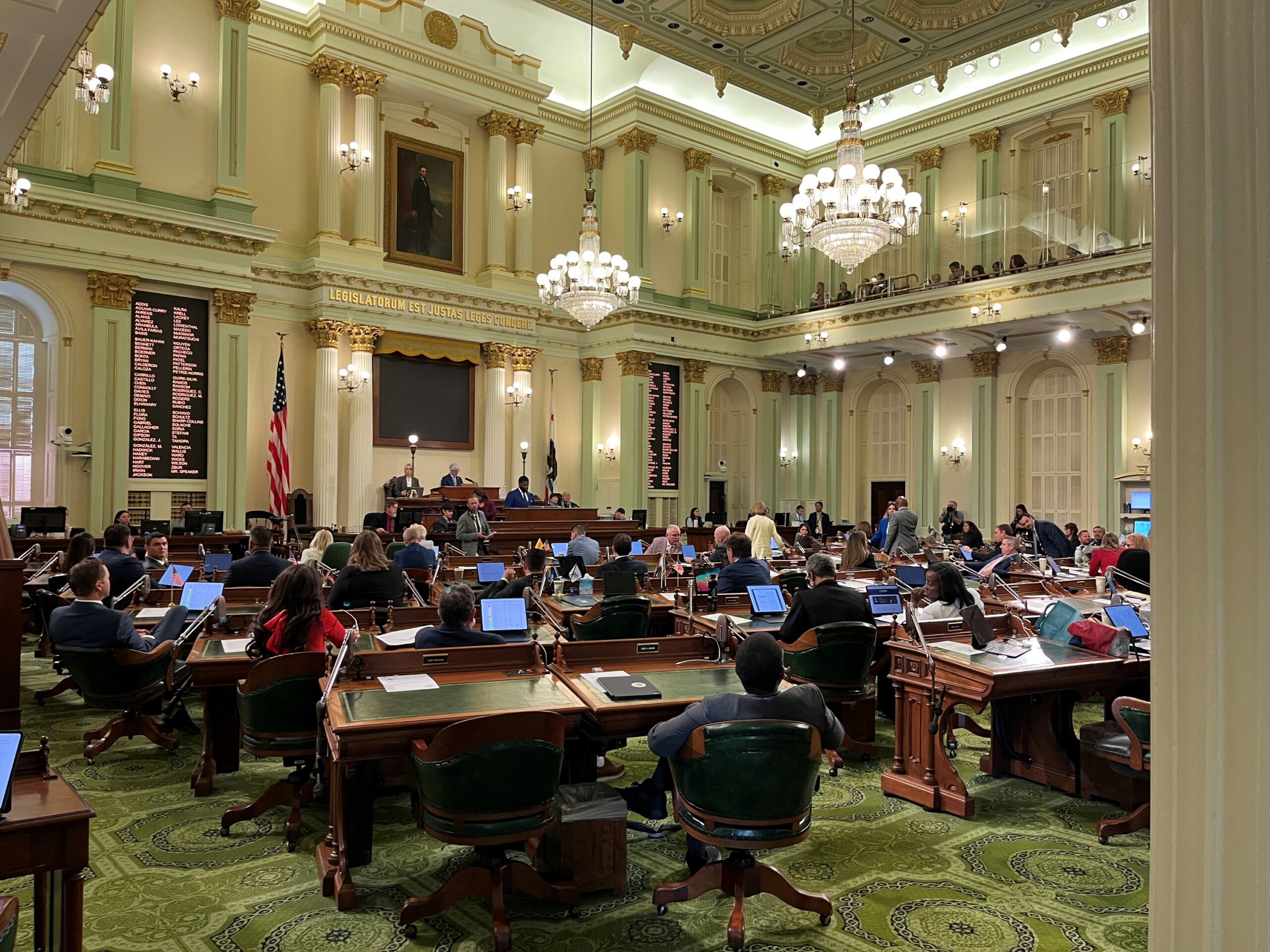
Twenty-seven new legislators will be sworn into the California Legislature at noon on Monday, December 7, 2026. Capitol Weekly published a primer outlining the rules, pay, ethics requirements, and legislative mechanics those incoming Assembly members and Senators will face.
California's legislature swore in 27 new members, joining a body where urgency clauses and General Fund appropriations require a two-thirds supermajority.
The swearing-in ceremony follows a set script: the Chief Clerk calls the Assembly to order with a roll call alphabetically by county, while the Lieutenant Governor convenes the Senate with a roll call by district. Members-elect present certificates of election from the Secretary of State and take the constitutional oath of office, Capitol Weekly reported.
Pay and benefits set for 2026
Base annual compensation is $134,694, with higher rates for leadership roles. While in Sacramento, lawmakers collect a $236 daily per diem — $150 for lodging and $86 for meals and incidentals. They may also hold outside professional work, typically part-time or project-based.
Health coverage mirrors state manager plans: a $968 monthly employer contribution for single coverage and $2,417 for family coverage in 2026, plus dental and vision options. Legislators do not qualify for state pensions or long-term care coverage.

Legislators face 35-bill introduction limit
Each member is expected to face the same 35-bill introduction limit per two-year session used in the last session. Ideas originate from legislators, constituents, or organizations and are drafted by the Office of Legislative Counsel before introduction at the Assembly or Senate Desk.
Bills clear a 30-day waiting period after introduction and a four-day Daily File notice before reaching policy committees. Roughly 75 to 80 percent of bills are referred to fiscal committees — the Appropriations Committees — for cost review. Floor passage typically requires a majority vote: 21 in the Senate and 41 in the Assembly. Urgency clauses and General Fund appropriations need a two-thirds supermajority (27 in the Senate, 54 in the Assembly).
Once both houses pass a bill, the Governor has 12 days to sign, allow it to become law without a signature, or veto it. A veto override requires a two-thirds vote in each house. At session’s end, when about 90 percent of bills reach the Governor’s desk, the review period extends to 30 days. Resolutions and constitutional amendments do not go to the Governor.
New members file economic interest statements
New members must file a Statement of Economic Interest (Form 700) upon assuming office, annually while serving, and upon leaving. They must complete a state-approved ethics course developed by the Attorney General’s Office and the Fair Political Practices Commission within six months of taking office and once every two years thereafter.
Lawmakers cannot accept honoraria or earn income from lobbyists. Gifts from lobbyists or lobbying firms are capped at $10 per month; gifts from other single sources face strict annual limits. Members may not introduce or vote on legislation that would financially benefit them personally. A post-service “revolving door” cooling-off period bars former legislators from lobbying the Legislature for compensation.
Committee influence and district work
Standing committees vet bills within their jurisdiction and conduct executive branch oversight to ensure agencies implement laws as intended, as detailed in the Assembly Legislative Oversight Handbook. Personal staff in district offices handle constituent casework — often helping residents deal with the EDD, DMV, or Medi-Cal — which sometimes uncovers systemic issues that lead to new legislation or oversight hearings.
Vote thresholds for major fiscal measures
| Measure | Vote required | Additional step |
|---|---|---|
| Annual Budget Act, trailer bills, fee changes | Simple majority | — |
| Tax increases, general obligation bonds, constitutional amendments | Two-thirds supermajority in both houses | Bonds and constitutional amendments also require voter approval at the next statewide election |

Pierre-Emerick Aubameyang Unharmed After Ferrari Collision Driving to Deportivo Training
Former Arsenal and Barcelona striker Pierre-Emerick Aubameyang was unharmed after his Ferrari collided with a BMW on a...

St. Louis Records 7.3 Inches of Snow; Minneapolis, Chicago, Detroit at Zero
St. Louis has recorded 7.3 inches of snow since July 1 while Minneapolis, Chicago and Detroit remain at...

Purdue Needs Ryan Browne, Trick Plays to Upset No. 14 Indiana in Old Oaken Bucket
Indiana enters Saturday's Old Oaken Bucket game as a 22.5-point favorite over a Purdue team it has outscored...

Chiefs Fall to Bills 13-10 as Allen Throws Two Red-Zone Interceptions
Alohi Gilman intercepted Josh Allen in the end zone as the Kansas City Chiefs fell 13-10 to the...