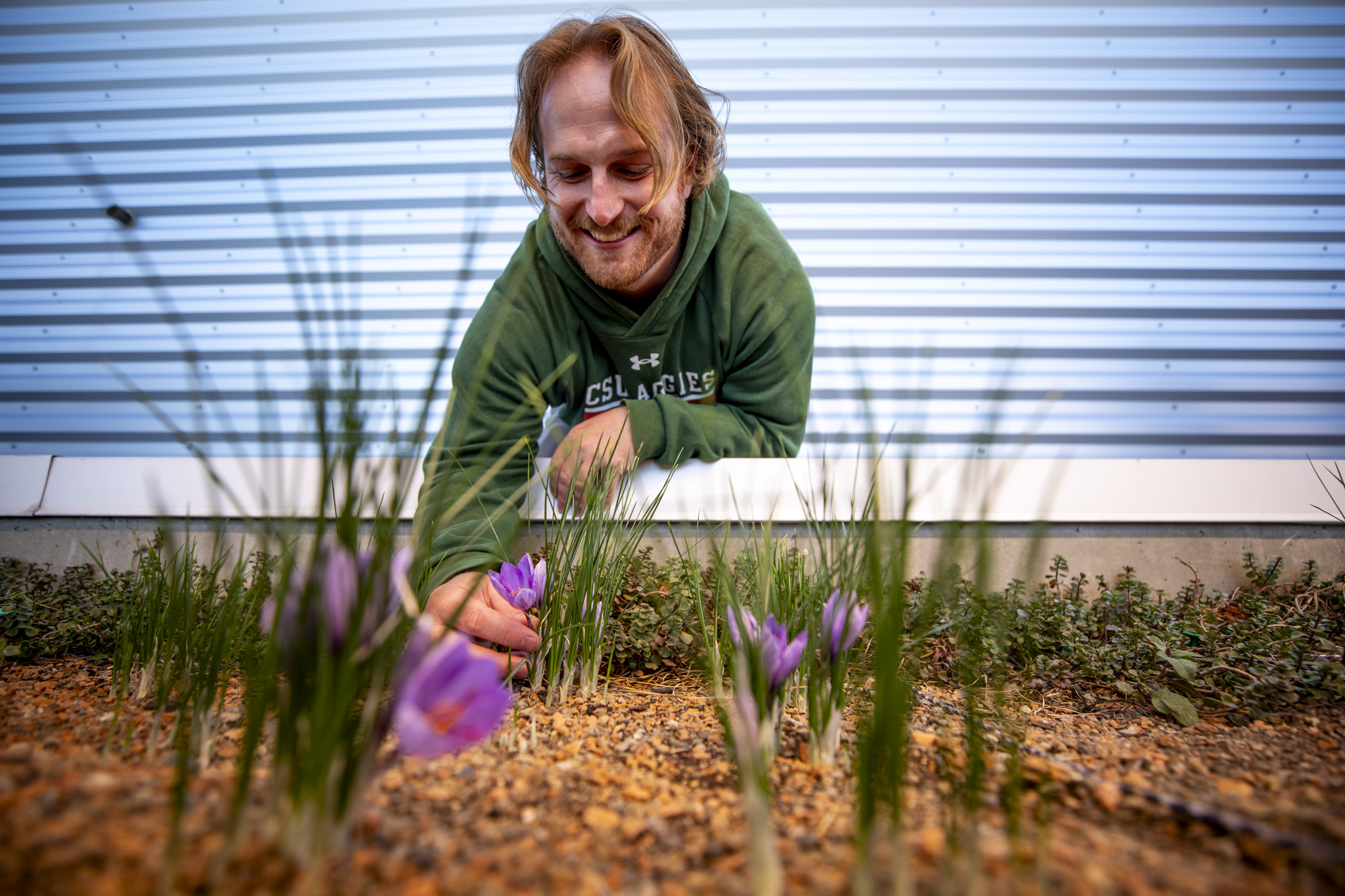
Colorado State University graduate student Reece Bailey is testing whether saffron could become a lucrative new crop for the state’s farmers.
The experiment is currently underway in rooftop garden beds at the CSU Spur in North Denver, a campus dedicated to teaching the public about crops, livestock, and water. By growing the world’s most expensive spice in an urban setting, Bailey aims to determine if the plant can thrive in the unique environmental conditions of the Rocky Mountain region.
Saffron, often referred to as “red gold,” can cost upwards of $50 an ounce. This high market value provides a strong economic incentive for farmers looking to diversify their output, provided the crop can survive the local climate.
Colorado climates parallel traditional saffron growing regions
The decision to test saffron in Colorado is based on geographic similarities to the spice’s traditional growing regions. Saffron originated in Greece and spread to countries such as Iran and Afghanistan, according to Bailey.
“If we look at their climates and Colorado’s climates, they closely parallel each other,” Bailey said. “Dry, high, sunny. Not a lot of moisture in your soils, not a lot of nutrients in your soils.”
Part of the research involves observing how the plants handle drought conditions. To maximize the value of the harvest, the process requires precision; the stigma must be removed from the flower and dried on a sheet at 210 degrees Fahrenheit for 8 to 10 minutes. This specific temperature helps lock in the molecules—crocin, picrocrocin, and safranal—that provide the spice’s signature aroma, color, and flavor.
Dual rewards from solar energy
The rooftop setup at the CSU Spur utilizes solar panels to cover the garden beds, a method that Bailey suggests could offer a double benefit to growers.
“You’re growing a high-value crop in saffron and combining it with a high-value commodity in electricity,” Bailey said. He said that the panels provide the specific balance of shade and sunlight required for the plants while generating power for nearby homes, businesses, or factories.
While the Denver experiment focuses on urban agriculture, the potential extends to the state’s agricultural heartland. Bailey believes the eastern plains could host saffron at a scale large enough to change traditional farming economics.
CSU has already begun expanding the reach of the research by sending 250 corms—the bulb-like stems of the saffron plant—to three different farms located in Montrose, Pueblo, and Paonia. While farmers have expressed a willingness to try the crop, Bailey noted they remain hesitant to commit significant capital until the feasibility of the crop is fully proven.

Researchers study saffron for anti-inflammatory properties
Beyond its culinary uses in Mediterranean and Middle Eastern dishes like Spanish paella, saffron is being studied for its potential health benefits. Researchers are looking into the effects of the molecules found in the stigmas, specifically regarding anti-inflammatory properties.
“All three of them have different effects on the body, but they’re all kind of being looked at for anti-inflammatory effects… whether that be a whole body anti-inflammatory effect or more a neuroprotective anti-inflammatory effect,” Bailey said. The spice is also being studied for its potential as an anti-depressant.
For farmers already managing seasonal rotations, saffron could serve as a secondary harvest rather than a replacement for existing crops. Because the harvest typically runs from October through November, it fits into a window after traditional crops have been cleared.
The resilience of the plant has already surprised researchers; Bailey said that they have even seen flowers blooming on their Denver rooftop as late as January.
Related reading

San Diego Women’s Basketball Hosts Portland State in Home Opener
The University of San Diego women's basketball team hosts Portland State at the Jenny Craig Pavilion on Tuesday...

Trey Kaufman-Renn Helps Kansas Defeat Kentucky 89-69
Trey Kaufman-Renn scored 12 points on 4-of-5 shooting to help Kansas defeat Kentucky 89-69 on Tuesday night at...

Daniel Jones Unhappy as Colts Trade Away Starters in Roster Purge
Colts quarterback Daniel Jones expressed dissatisfaction with his team's recent decision to trade away four starters for future...

Rep. Jonathan Jackson Admits Mistake After Missing Hegseth Impeachment Vote
U.S. Rep. Jonathan Jackson missed a critical procedural vote on the impeachment of Defense Secretary Pete Hegseth on...