A 35-year ecological study in New York’s Hudson Valley shows acorn production — not deer numbers — drives the boom-and-bust cycles of Lyme disease risk, and researchers predict 2027 will be a lower-than-average year for infected ticks.
The finding upends the common assumption that white-tailed deer, the namesake host of the “deer tick,” control Lyme risk. Instead, the chain runs from oak trees to white-footed mice to the nymphal black-legged ticks that bite people. The research, published in August in the Proceedings of the National Academy of Sciences, analyzed more than three decades of data from the Cary Institute of Ecosystem Studies in Millbrook, N.Y.
How the Acorn-Mouse-Tick Cycle Works
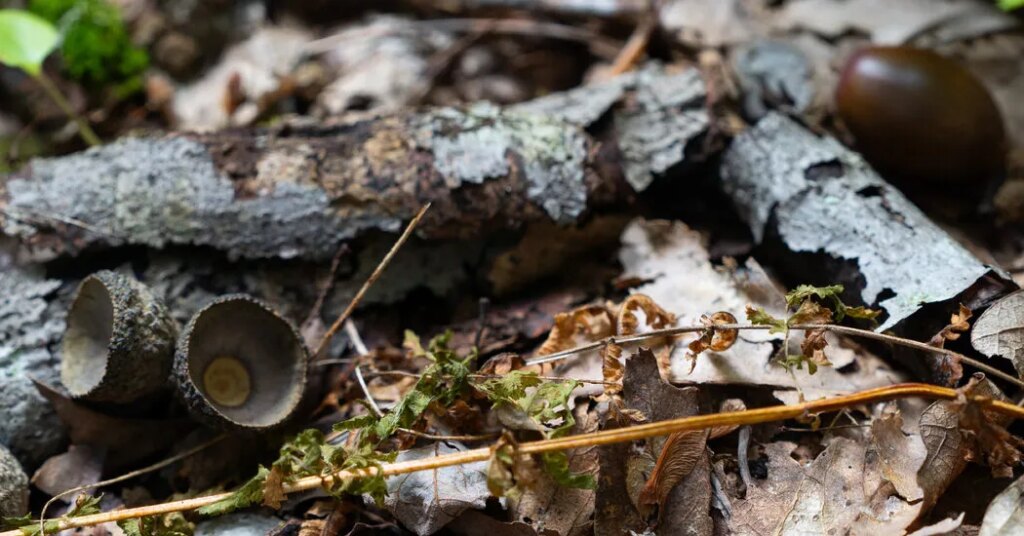
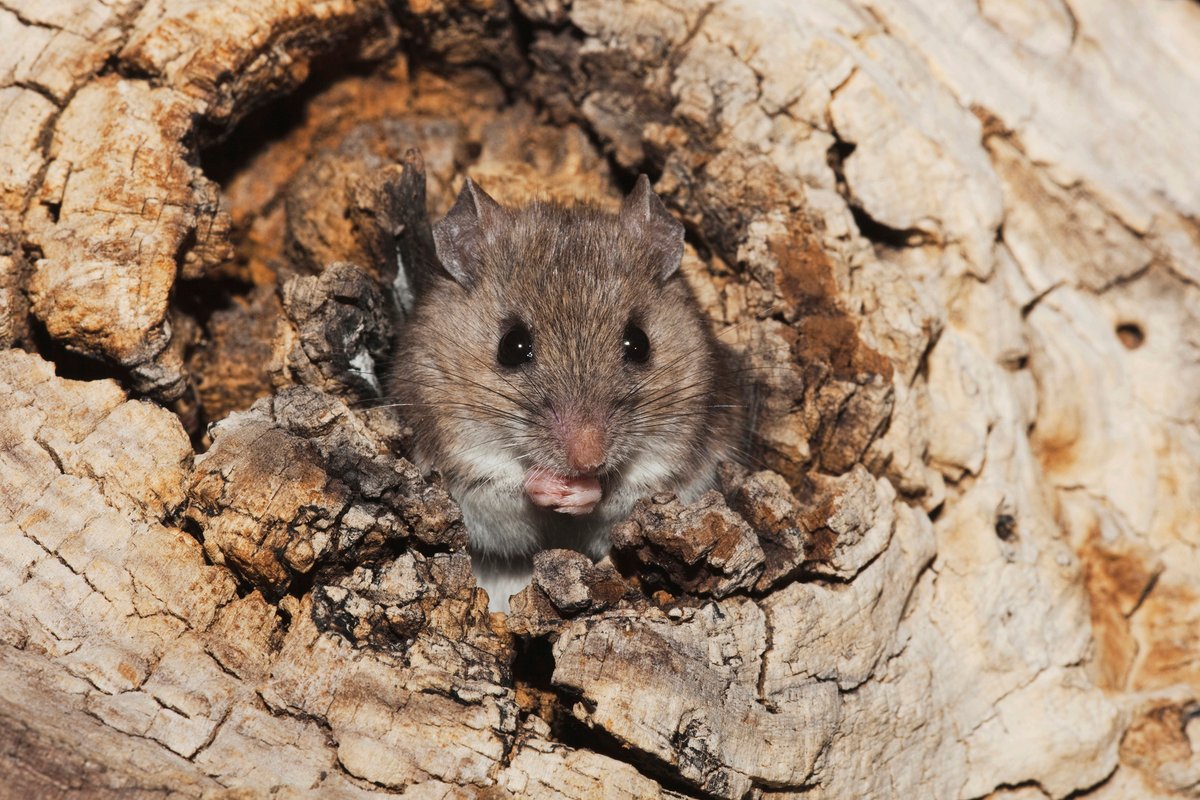
When red oaks produce a bumper crop of acorns in the fall — a phenomenon called masting — white-footed mice survive the winter in higher numbers. Their population explodes the following spring and summer, providing abundant hosts for larval ticks. Those larvae feed on the mice, which efficiently transmit the Lyme bacterium, and molt into infected nymphs the next spring. The full cycle takes 18 months from acorn drop to dangerous nymphs.
Contrary to conventional wisdom, the study authors wrote, nymphal tick abundance showed no correlation with deer abundance, prior larval tick numbers, or seasonal temperature extremes. Instead, it tracked prior mouse abundance, which tracked acorn production. In years with especially large mouse populations, tick populations ran as much as 40 percent larger.
The study evaluated a conceptual model of the Lyme disease system using long-term monitoring spanning more than 30 years at sites within an endemic region of New York State, United States. Institutions involved included the Cary Institute of Ecosystem Studies and Bard College, Program in Biology. The authors were Richard S. Ostfeld, Shannon L. LaDeau, Kelly Oggenfuss, and four additional co-authors.
Why 2027 Looks Quieter
Oak trees in the study sites produced fewer acorns than usual in fall 2025. That pointed to a modest mouse population in 2026, which meant fewer larval ticks survived to become infected nymphs. Richard Ostfeld, the Cary Institute disease ecologist who led the research, told DNYUZ that “we expect 2027 to be a lower-than-average year” for ticks.
The ticks didn’t have many mice to feed on and didn’t survive very well and didn’t get infected at a high rate, and that will result in lower-than-normal numbers of infected nymphs next year.
Richard Ostfeld, Cary Institute of Ecosystem Studies
Even so, Ostfeld cautioned against complacency: “Everyone still needs to do tick checks and repellent.”
Where Deer Still Matter
Maria Diuk-Wasser, a Columbia University disease ecologist who was not involved in the study, praised the 35-year dataset as “really incredible” but questioned whether the paper downplayed deer too much. Adult ticks feed and mate on deer before laying eggs, so “you can't have ticks without deer,” she told Scientific American.
Where deer are abundant, as in this study, adding or losing a few animals doesn’t shift tick numbers. But reducing deer to very low levels does limit ticks, earlier research shows.
Maria Diuk-Wasser, a professor at Columbia University, said that deer are fundamental for Lyme disease because adult ticks feed on deer blood before laying eggs. Ostfeld did not write off deer completely, acknowledging their role in tick reproduction.
A Wrinkle on Climate
The study also found that warmer weather increased mouse numbers but decreased nymphal ticks — a counterintuitive result. Diuk-Wasser speculated that in warmer winters, ticks might stay active and burn through their lipid reserves instead of hibernating, dying before summer. Ostfeld said climate warming allows ticks to expand into new areas, but once established, warming might not cause populations to grow. The net effect on Lyme risk remains unclear.
The Cary Institute of Ecosystem Studies, an independent nonprofit research organization headquartered on a 2,000-acre campus in Millbrook, New York, has maintained its grounds as a hub for long-term tick-borne disease ecology studies for nearly 30 years.
Its scientists co-lead two National Science Foundation Long Term Ecological Research Network sites — the Baltimore Ecosystem Study and the Hubbard Brook Ecosystem Study — and the institute continues to steward the longest continuous data set on acid rain, a discovery its founder Gene E. Likens made in the 1960s that helped shape the 1990 Clean Air Act amendments.
More than 450,000 Lyme disease cases are reported in the United States each year. “We can predict which years will be really bad [for Lyme infections] almost two years in advance based on acorn production,” Richard Ostfeld, lead study author and a senior scientist at the Cary Institute of Ecosystem Studies, said.
Related reading

Fantasy Waiver Wire Week 6: Brook Lopez, Klay Thompson Lead Category & Points League Targets
The fantasy waiver wire for Week 6 is defined by a 38-year-old center shooting 55.3 percent from the...

Ireland’s Nations Championship Final Hopes Rest on Triple-Bank Shot: Beat South Africa, Need England and France to Lose
Ireland’s path to the inaugural Nations Championship final at Twickenham on November 29 hinges on a triple-bank shot:...

Maple Leafs Blow 3-0 Lead, Lose to Kings in Shootout for 8th Straight Winless Game
Auston Matthews, John Tavares and Dakota Joshua staked Toronto to a 3-0 lead before Alex Turcotte, Alex Laferriere...

NBA Cup Moving Day: Orlando Chases 3-0 as Six Teams Face Elimination
The NBA Cup reaches its fourth night on Friday with six teams fighting to avoid early elimination and...