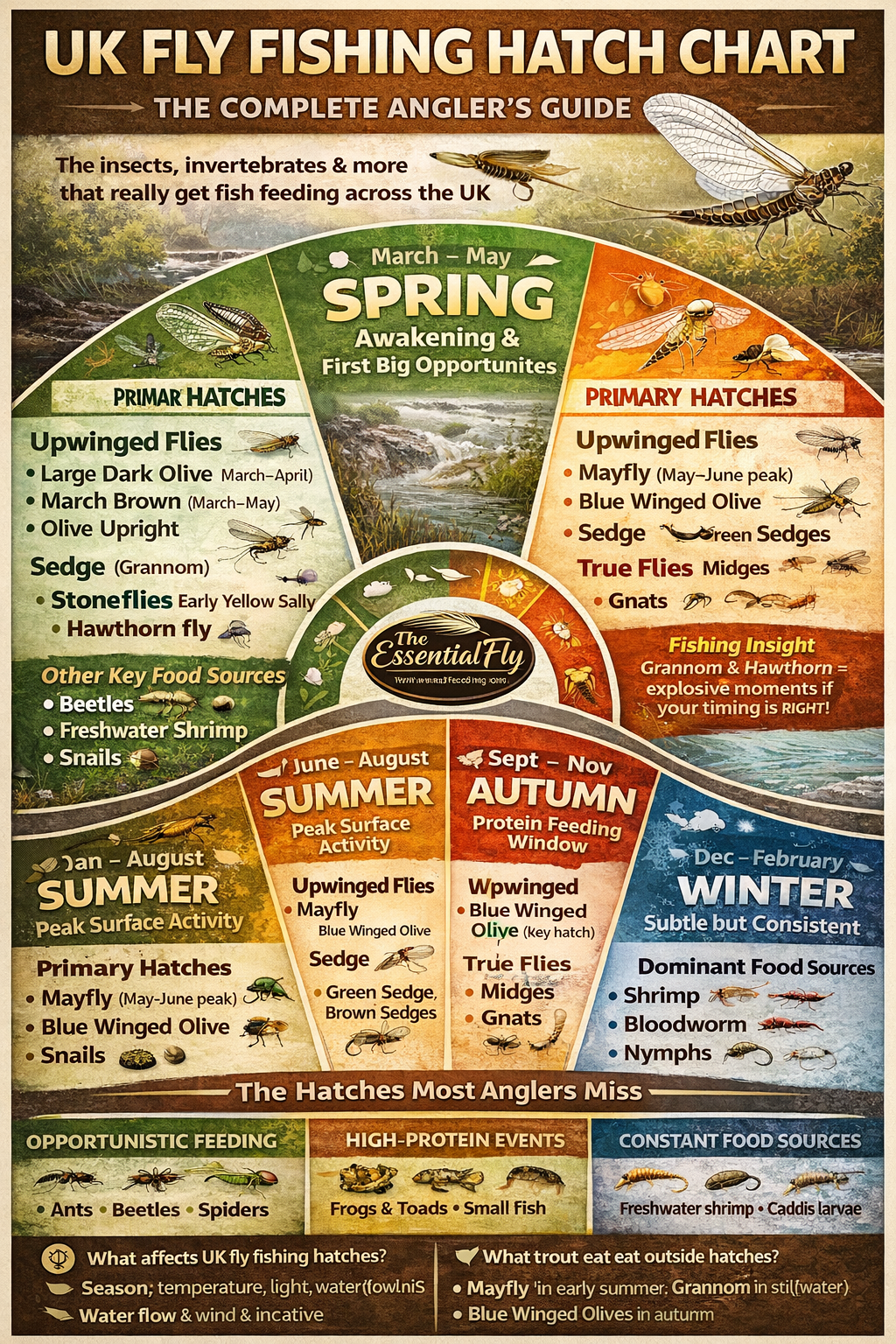
FlyFishFinder has released its 2026 hatch chart for West Virginia trout streams, mapping the insect calendar across the Elk River, Shavers Fork, Cranberry River, Williams River and Seneca Creek.
The guide breaks down hatches by month and stream type, giving anglers a framework to match patterns to water conditions from late winter stoneflies through fall olives. It draws on the classic Appalachian emergence order while flagging the elevation shifts that move the same hatch days or weeks later on high-country water.
“The Elk and the Shavers Fork are the two rivers most anglers think of first,” FlyFishFinder reported, noting the Elk’s trout pushing past 20 inches and the Shavers Fork’s mix of stocked and wild fish on Cheat Mountain. Both follow the same progression from Quill Gordons and Hendricksons in April to Sulphurs and Light Cahills in June.
Early Season Stoneflies and Mayflies
Little black stoneflies appear on mild afternoons in late winter, crawling rocks and bridge pilings on the Cranberry, Williams and Shavers Fork. A #16–18 Little Black Stone, Black Elk Hair Caddis or black nymph fished along the banks takes fish when little else is moving.
Quill Gordons start in late March or April, followed by Hendricksons from mid-April into early May. Hatches come in the early afternoon on mild days. The recommended progression is a nymph first, then a dun or soft hackle once fish rise. Sizes run #12–14 for Quill Gordon and Hendrickson duns, with Hare’s Ear nymphs covering the subsurface game.
Caddis Through the Summer
Caddis hatch from spring into late summer, usually in the afternoon and evening. An emerger or soft hackle works early; an Elk Hair Caddis #14–16 takes over as adults get active. On warm days when other hatches stall, caddis often remain the best option on all the major rivers.
Pale yellow mayflies drive late spring dry-fly fishing. Sulphurs and Light Cahills hatch late in the day on the Elk, Shavers Fork, Cranberry and Seneca Creek. March Browns can show in May on the bigger rivers. A Yellow Sally #14–16 gives a stonefly option in the same weeks. Sulphur Comparaduns #16–18 and Light Cahills #12–14 cover the mayfly side.
Isonychia and Terrestrials Carry Summer Into Fall
Isonychia, a larger swimming mayfly, shows in faster water on the Elk, Shavers Fork and Williams. Nymphs #10–12 work through the day; a dun or Leadwing Coachman spinner works in the evening. The hatch runs well into early fall, filling gaps when other bugs fade.
Grassy banks and low, clear water make ants, beetles and hoppers a real choice in summer. A foam hopper #8–18 with a small dropper covers water on the Elk and Shavers Fork. On Seneca Creek and the Cranberry, a small black ant fished under undercut banks is hard to beat.
Stream-by-Stream Nuance
The Cranberry and Williams rivers fish best in spring when mayflies and stoneflies are active and flows are strong. Summer flows drop, so early or late trips pay off, with terrestrials along the banks. Seneca Creek rewards short casts, careful wading and small flies. Yellow Sallies and Light Cahills carry June; ants and beetles take over through late summer.
Access and special-regulation sections vary by water. The West Virginia Division of Natural Resources publishes current rules and stocking schedules that change by section and season.
Frequently Asked Questions
When do Quill Gordons and Hendricksons hatch in West Virginia?
Hatches come in the early afternoon on mild days.
What is the Elk River known for?
The Elk River holds large brown and rainbow trout, along with native brook trout in the headwaters. It has long stretches of good water and a classic Appalachian hatch order. Caddis, March Browns, Sulphurs, and Isonychia all matter.

What flies work on the Cranberry River and Williams River?
Add a Hendrickson in April and a Yellow Sally in June. A Foam Beetle or Black Ant fills in during summer.
How do you fish Seneca Creek?
It is a small stream, so short casts, low approaches, and small flies matter. A Yellow Sally, Light Cahill, or Elk Hair Caddis #14–16 works in early summer. Ants and beetles take over through late summer.
What are the best flies for West Virginia trout in June?
Isonychia starts to show up on the bigger rivers, so keep a few in #10–12. A Parachute Adams fills in between hatches.
Shavers Fork rises on Cheat Mountain at Thorny Flat, the highest peak in the Alleghenies, making its upper reaches the highest river in the eastern United States. It flows 88.5 miles through Pocahontas, Randolph and Tucker counties before joining Black Fork at Parsons to form the Cheat River. The watershed is more than 97 percent forested, with nearly two-thirds in public land, much of it inside Monongahela National Forest.
Extensive logging early in the 20th century left the upper river too shallow and warm for brook trout until a 2012 restoration project rebuilt four miles in Pocahontas County.
On July 13, 1861, the Battle of Corricks Ford was fought at a crossing near present‑day Parsons, where Confederate Gen. Robert S. Garnett was killed. Multiple West Virginia stage‑record fish have been taken from the Fork, and the High Falls of Cheat, a 15‑foot waterfall, marks a well‑known fishing spot.
When is the best time to fly fish West Virginia?
Summer calls for Isonychia and terrestrials. Fall olives extend the season into November.
Worth a look

Lansing Police Confirm ICE Activity in City on Silver Bells Day
Lansing residents woke up Friday to federal immigration enforcement unfolding on the same streets preparing for the city’s...
Sophie Keane, 17, Wins World Youth Entrepreneurship Challenge in New York
Sophie Keane, 17, from Newcastle West, County Limerick, won the World Youth Entrepreneurship Challenge in New York with...

Why Is Cheddar Cheese Orange? The Annatto Story, History & Flavor Truth
Cheddar cheese turns orange only because cheesemakers stir in annatto, a flavorless extract from achiote seeds, before the...

UND Senior Casia Steinhaus Earns First Astronaut Scholarship
One student from Devils Lake just became the first University of North Dakota scholar in a program that...