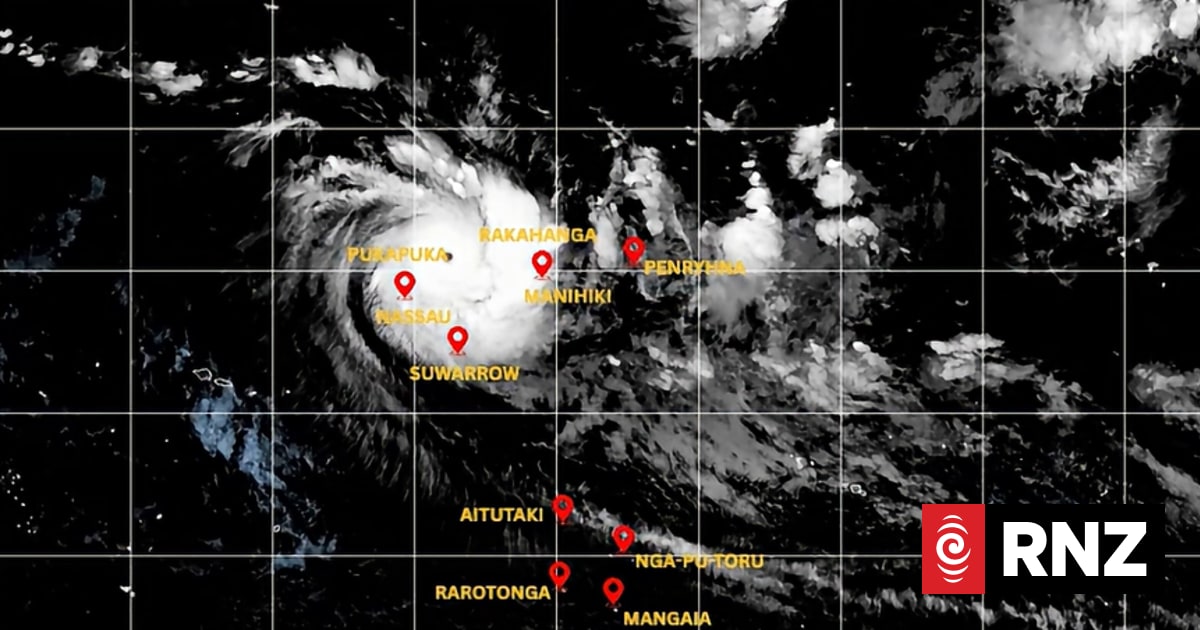
Severe Tropical Cyclone Xavier exploded into a Category 5 monster over the Northern Cook Islands on Tuesday, packing gusts to 315 km/h and threatening coastal inundation for Pukapuka and Nassau, RNZ reported.
The Fiji Meteorological Service, which holds forecasting jurisdiction for the region, confirmed the system was crawling west-southwest at just 7 km/h with maximum sustained winds near 220 km/h. Emergency Management Cook Islands warned that damaging gale-force winds, heavy rainfall, and dangerous seas remain “significant threats” for the low-lying atolls in the cyclone’s path.
“Residents are strongly urged to remain in safe shelter, stay away from coastal areas and follow instructions from local disaster risk management teams,” the agency said.
On Manihiki, resident Jean Marie Williams told RNZ Pacific Waves the “worst is over” for his island as Xavier pulls away, though a strong wind warning persisted Tuesday morning. Damage so far appears limited to wharves, but Williams said the community’s deeper vulnerability is structural: electricity has been offline for more than a year.
“Since we had our power that went down over a year ago we never got it replaced, and we only have power when the sun comes out, charges our solar system, and then we can only use maybe four, five hours’ power, and then shut it down. Only use it for the night time.”
Williams said. Some families run private generators to keep freezers frozen, but the grid itself remains unrepaired.
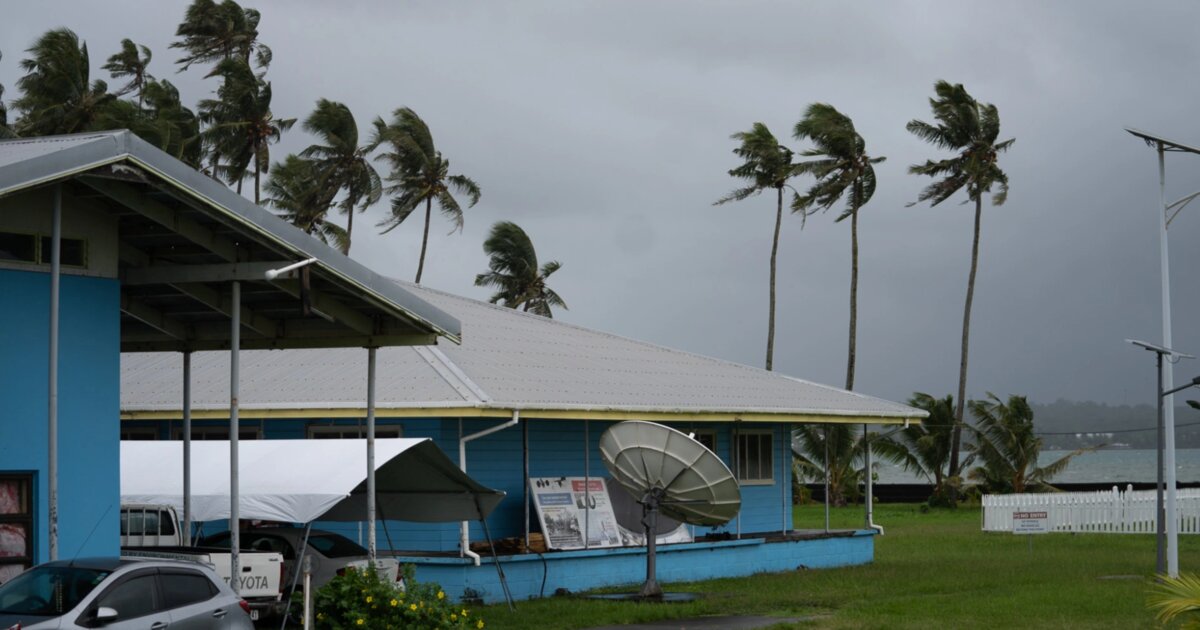
Manihiki’s readiness did not begin with this week’s warnings. Williams said the Island Council activates cyclone-season protocols every October 25 — weeks before the official season starts — deploying workers on near-continuous safety rounds. Crews preemptively removed 99 percent of coconut trees near homes and along roads to reduce projectile hazards.
“Here in Manihiki, on October the 25th, we activate our awareness and preparation for the cyclone season,” Williams said. “Manihiki Island Council have their team, their workers, that go around almost 24 hours, just making sure that people are safe and the families are safe.”
While the Fiji Met Service and RNZ classify Xavier as a Category 5 system with gusts to 315 km/h, the NZ Herald cited the same agency reporting sustained winds of 215 km/h and gusts to 295 km/h.
The Samoa Observer, tracking the storm’s earlier evolution, placed Xavier at Category 3 on Tuesday morning — about 1,120 km northeast of Apia — and noted the Samoa Meteorological Service expects no direct impact on Samoa in the next 24 hours. WeatherWatch, meanwhile, described Xavier as a Category 1 system still developing as recently as Monday, with potential to stall at sea.
The discrepancies highlight the difficulty of real-time intensity estimation for small, rapidly intensifying cyclones in data-sparse regions of the South Pacific.
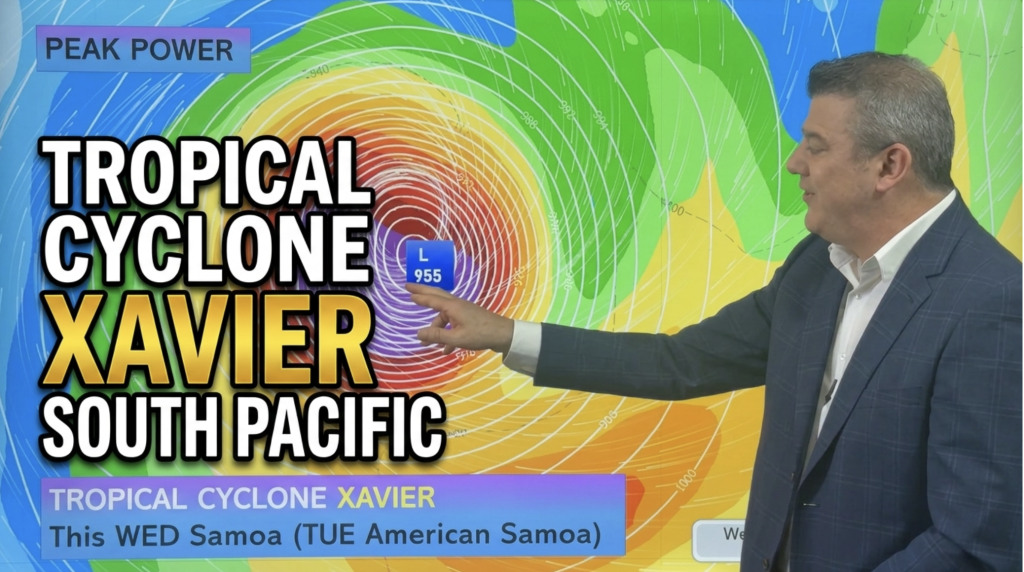
WeatherWatch models suggest Xavier’s remnants could drift toward Samoa within a week, likely as a weak rain event, with a lower probability of showers reaching Fiji.
The Samoa Meteorological Service has forecast one to three named cyclones could form near or pass within 400 km of Samoa during the 2026-27 season, which began this month. Xavier was first identified as a tropical disturbance on November 13 and became a tropical depression by Sunday.
For now, the immediate danger remains fixed on Pukapuka and Nassau, where gale warnings are active and the storm’s slow forward speed prolongs the battering.
Cyclone Xavier forms over Northern Cook Islands – heading south westward toward Samoa https://t.co/SoBMux8yuQ pic.twitter.com/xm7oYUrgvx
Keep reading
- Two Men Jailed for Strangling Taxi Driver and Stealing Cash Float in Nottingham Fare Dispute
- Asean FDI Surpasses East Asia for First Time Since 1990s as Inflows Hit Record $246 Billion
- No. 11 Michigan Wrestling Heads to Rider and Northern Colorado Following Back-to-Back Shutouts (world-today-news.com)

Two Men Jailed for Strangling Taxi Driver and Stealing Cash Float in Nottingham Fare Dispute
Two men were jailed this week for strangling a taxi driver and stealing his cash float after a...

Asean FDI Surpasses East Asia for First Time Since 1990s as Inflows Hit Record $246 Billion
Southeast Asia pulled ahead of East Asia in foreign direct investment for the first time since the early...

Irish Man Charged in New York Over $60M US Military Aircraft Damage at Shannon Airport
A grand jury in New York returned an indictment this week charging an Irish man with destroying a...

Japan Announces Access to Crude Oil Storage for ASEAN at Summit
Japan announced on Tuesday that it will grant Southeast Asian nations access to its crude oil storage facilities,...