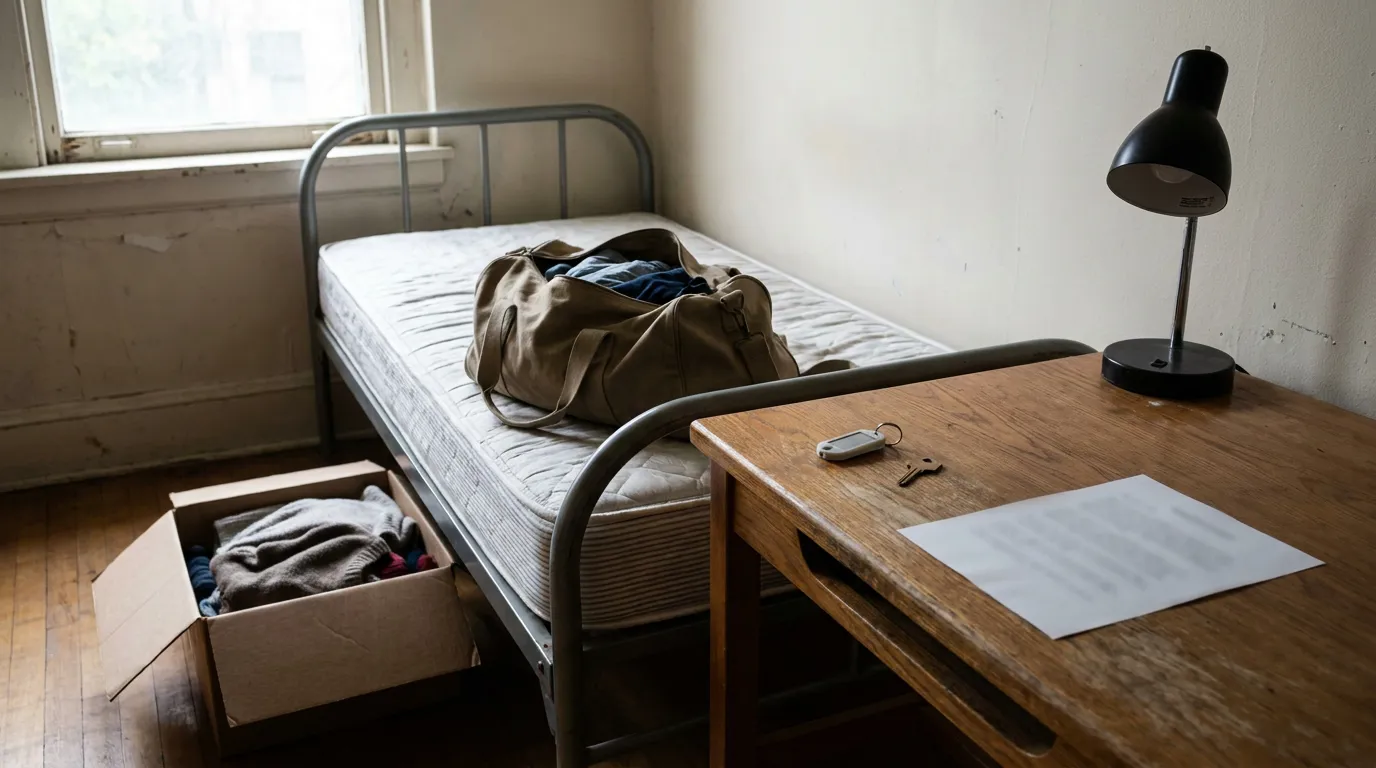
Yes, an Albany-area college can sometimes suspend or remove you before a Title IX hearing begins, but federal regulations strictly limit when and how schools can take that drastic step. Under 34 C.F.R. § 106.44(c), an emergency removal requires an individualized safety and risk analysis proving an immediate threat to physical health or safety arising directly from the allegations.
Getting locked out of your dorm room or barred from lecture halls before anyone has actually heard your side of the story feels like a gut punch. For students in the high-stakes environment of higher education in New York's Capital Region, an interim suspension upends academic careers in a matter of hours.
Hacker Murphy reported that while schools possess the authority to pull students from campus on an emergency basis, they frequently blur the lines between disciplinary penalties and routine safety precautions.
Emergency Removal Versus Supportive Measures
Federal Title IX rules and SUNY system policies draw a sharp operational line between non-punitive supportive measures and full-blown emergency removals. Supportive measures exist to preserve equal access to education without punishing either party. A routine no-contact order or a quiet class schedule change typically fits this non-punitive description, and schools can implement them even without a formal complaint on file.
An emergency removal does the exact opposite by cutting off a respondent’s access to campus, housing, or classes before any formal finding of responsibility. In practice, colleges often treat a heavy-handed campus ban as a simple administrative fix rather than holding it to the rigorous standards required for an interim suspension.
According to Hacker Murphy, schools sometimes rely on the sheer gravity of an accusation to justify a broad exclusion zone that goes far beyond what any actual safety risk demands.
| Feature | Supportive Measures | Emergency Removal / Interim Suspension |
|---|---|---|
| Purpose | Preserve access to education | Address an immediate safety risk |
| Punitive? | No, by definition | Functions like discipline |
| Formal Complaint Required? | No | Not necessarily |
| Typical Examples | No-contact orders, schedule changes | Campus ban, housing removal, class exclusion |
| Burden on Accused Student | Must not be unreasonable | Often severe |
Requirements for emergency student removal under federal regulations
Federal regulations under 34 C.F.R. § 106.44(c) dictate that a school may only remove a respondent on an emergency basis after conducting a documented, individualized safety and risk analysis.
That specific review must uncover an immediate threat to the physical health or safety of any student or individual stemming from the allegations. Following the removal, the institution must immediately notify the student and provide a prompt opportunity to contest the decision.
Federal court action changed regulations when a court vacated the updated 2024 Title IX rules in January 2025, returning enforcement primarily to the 2020 regulations for current disputes, though older matters depend on the rules active when the conduct occurred.
Campuses operating under the SUNY umbrella, including the University at Albany, must align their campus procedures with system-wide interim suspension policies. Private and public institutions across New York must also adhere to New York Education Law Article 129-B (N.Y. Educ. Law §§ 6439, 6449), which guarantees students the right to request a prompt review of interim measures.
Challenging an Improper Suspension in New York Courts
When a college bypasses its own procedural guardrails, accused students have legal avenues outside of campus tribunals. Students can petition a New York state court to review the school’s actions through an Article 78 proceeding, which applies to both public and private institutions under CPLR 7803. Under CPLR 7803(3), a court evaluates whether an administrative decision violated lawful procedure, relied on an error of law, or was entirely arbitrary and capricious.
For private universities, judicial review typically centers on whether the institution substantially complied with its own published student handbook rules. Meanwhile, students seeking immediate relief before a preliminary injunction hearing can request a temporary restraining order under CPLR 6313 by demonstrating immediate and irreparable injury, such as losing a semester of academic credit or housing mid-term.
However, strict filing deadlines apply, as Article 78 petitions generally must be filed within four months under CPLR 217 once a determination becomes final and binding.
Common questions about college suspensions and Title IX
Can my college suspend me before a Title IX hearing?
Yes, though federal guidelines mandate a personalized safety assessment confirming an imminent danger to bodily wellbeing or security stemming from the reported incidents. The school must also provide notice and a prompt opportunity to challenge the removal.
Is a no-contact order the same as an interim suspension?
No. A no-contact order is a non-punitive supportive measure designed to preserve educational access, whereas an interim suspension strips away that access entirely and requires a much higher standard of justification.
Can I go to court over an emergency removal?
Under CPLR 7803, students facing accusations in New York are permitted to initiate an Article 78 lawsuit, provided they do so within the mandatory four-month limitation period. Courts often require students to exhaust internal campus review options first unless an exception for irreparable harm applies.
Can a court stop the suspension quickly?
A court may grant a temporary restraining order under CPLR 6313 if the student demonstrates immediate and irreparable harm. Advance notice to the school is generally required, and courts may require the petitioner to post a bond.
Does winning an interim challenge end the Title IX case?
No. Successfully challenging an emergency removal forces the school to restore campus access, but the underlying investigation and formal disciplinary hearing continue on a separate track.
Worth a look
- Austin-Bergstrom Airport Construction to Impact Holiday Travelers
- PBS Utah Reading Marathon Offers Rewards for 600 Minutes of Reading
- Blades Brown Wins PGA Tour Title as Séamus Power Secures Top-10 (world-today-news.com)
- BBC prepares emergency radio backup plans for national blackouts (newsarchyuk.com)

Austin-Bergstrom Airport Construction to Impact Holiday Travelers
Holiday travelers flying out of Austin-Bergstrom International Airport are stepping into a massive construction zone this season, CBS...

PBS Utah Reading Marathon Offers Rewards for 600 Minutes of Reading
Thirty-four years ago, as the national marathon running boom reached its peak, the Public Broadcasting System launched a...

Jean-Pierre and Éliane Laffont: A Dialogue on Photography, History, and Memory
In a feature published by The Eye of Photography, Jean-Pierre and Éliane Laffont explore their lifelong partnership and...

Day 2 Festival Returns to Finlay Park on Nov. 15
Columbia is bringing back its free Day 2 Festival on Nov. 15, 2026, marking the one-year anniversary of...