The Kansas Sports Facilities Authority released the definitive agreements for the Chiefs’ planned stadium Wednesday, but the documents leave the most expensive variable unresolved: the sales-tax baseline that will determine how much state revenue the project captures.
The authority posted ten signed agreements covering lease terms, construction milestones and community benefits. What isn’t there is the “base year revenue” for the STAR bond district — the threshold above which all state sales-tax growth in Wyandotte and Johnson counties flows to debt service instead of the general fund.
Commerce Secretary David Toland, who doubles as lieutenant governor under Gov. Laura Kelly, has not set that number. His department told The Kansas City Star the baseline will be established when the first bonds are issued, anticipated in the first quarter of 2027.
The December deadline that isn’t
Two of the new agreements state the deal “shall become null and void” unless all conditions are met by Dec. 31. Yet a separate provision makes that deadline “subject to automatic extensions for successive 30-day periods so long as the parties are continuing to work in good faith.” In practice, the financial architecture can slide into the next administration without killing the project.

A governor’s transition changes the calculus
Gov.-elect Cindy Holscher voted for the original incentive framework as a state senator in 2024 but became the deal’s fiercest Democratic critic after Toland and the Chiefs announced terms last December. She called the subsidy a handout to the Hunt family that could cannibalize state revenue for years.
Since winning the nomination in August, Holscher has softened her public stance. “It’s a done deal in terms of what’s been put together,” she said at a Topeka news conference last week. “What my job is as governor moving forward is to make sure that the promises made manifest, making sure there are strong jobs, that our local communities benefit.”
Chiefs Chairman and CEO Clark Hunt told reporters Thursday the team has not spoken with the incoming governor. If Toland leaves office in January without locking in the baseline, Holscher’s appointee at the Commerce Department will inherit the most consequential lever in the financing.
Why the baseline year matters
Kansas’ 6.5% state sales tax in Wyandotte and Johnson counties collectively grew by about $250 million from 2014 to 2024, according to Department of Revenue data cited by The Star. Johnson County alone generates more sales-tax revenue than any other county in the state.
Because sales-tax collections generally rise over time — partly due to inflation — an earlier baseline captures more organic growth for the stadium; a later baseline leaves more revenue in the state treasury. The district boundaries unveiled last month were drawn to “pay off the bonds as early as possible so those revenues can be directed to the state and participating local communities,” the Commerce Department said in a release.
The private share may include fan fees
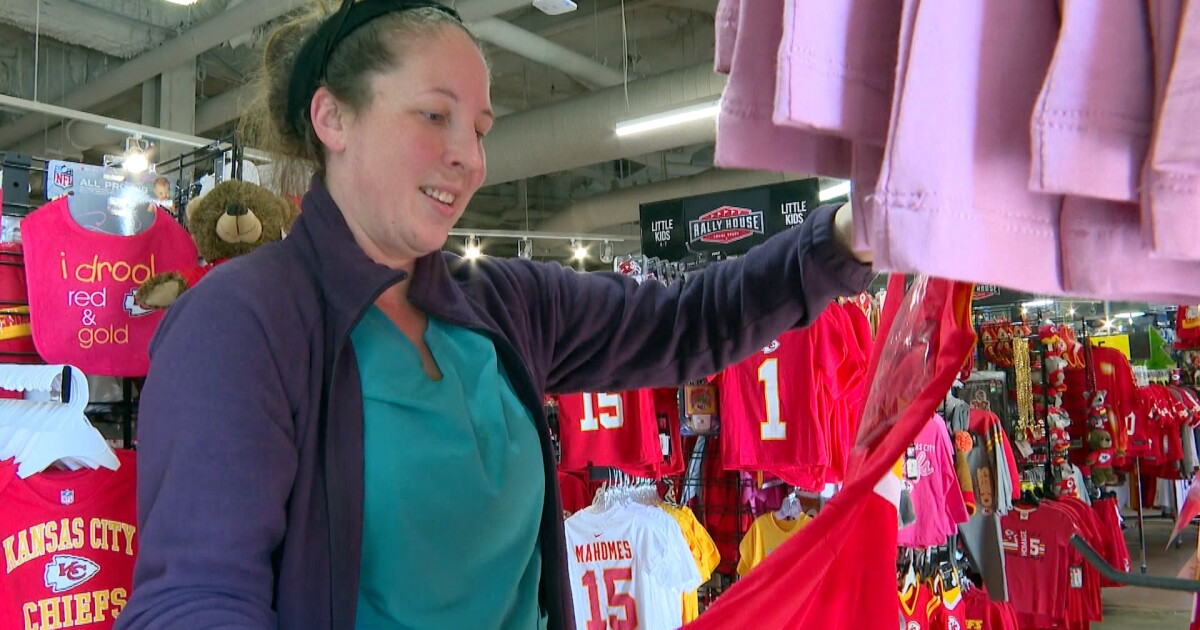
The agreements envision a 60-40 public-private split, with Kansas covering up to 60% of construction costs through STAR bonds — a structure stadium-finance experts have described as one of the most generous public subsidies ever offered to an NFL team.
The remaining 40% is the Chiefs’ responsibility, but the contracts explicitly allow Personal Seat License revenue to count toward that private share. “If we’re going to sell PSLs, we had to factor that into the agreement,” Hunt told The Star on Thursday. He said no final decision has been made.
PSLs are one-time fees for the right to buy season tickets; they do not include the tickets themselves. The Bills raised more than $250 million from over 53,000 licenses for their new stadium, The Star reported. Arrowhead currently has no PSLs. Season-ticket holder Christina Arpin told KSHB the new contracts raise immediate affordability questions: “What financial changes will we have to do to afford them now?”
Location still not final
The lease describes a 300-plus-acre site in Wyandotte County but does not pinpoint it. Hunt said the team has 98% of the property under contract and four months to finalize the location. Previous reporting places the stadium near 126th Street and State Avenue. A new team headquarters and practice facility are slated for Olathe, funded in part by another $975 million in potential state bonds for mixed-use development around the project.
Holscher, who grew up on a farm near Slater, Missouri, and worked for two decades in operations and corporate budgeting at Sprint, was first elected to the Kansas House in 2016 and the Kansas Senate in 2020. She is the first Democrat in 60 years to succeed a governor of the same party, winning the 2026 race after a campaign centered on cost of living and public education.
The authority’s next meeting is scheduled for January. The first STAR bonds are expected to price in early 2027. The stadium is targeted to open for the 2031 season.
OKC Animal Welfare Halts Dog Adoptions After Distemper Outbreak, Three Dogs Euthanized
Oklahoma City Animal Welfare suspended dog adoptions and intakes Thursday after five shelter dogs tested positive for canine...

Morris County Students and Their Families Will Breathe Cleaner Air on the Daily Commute
Morris County students and their families will breathe cleaner air on the daily commute after state officials directed...
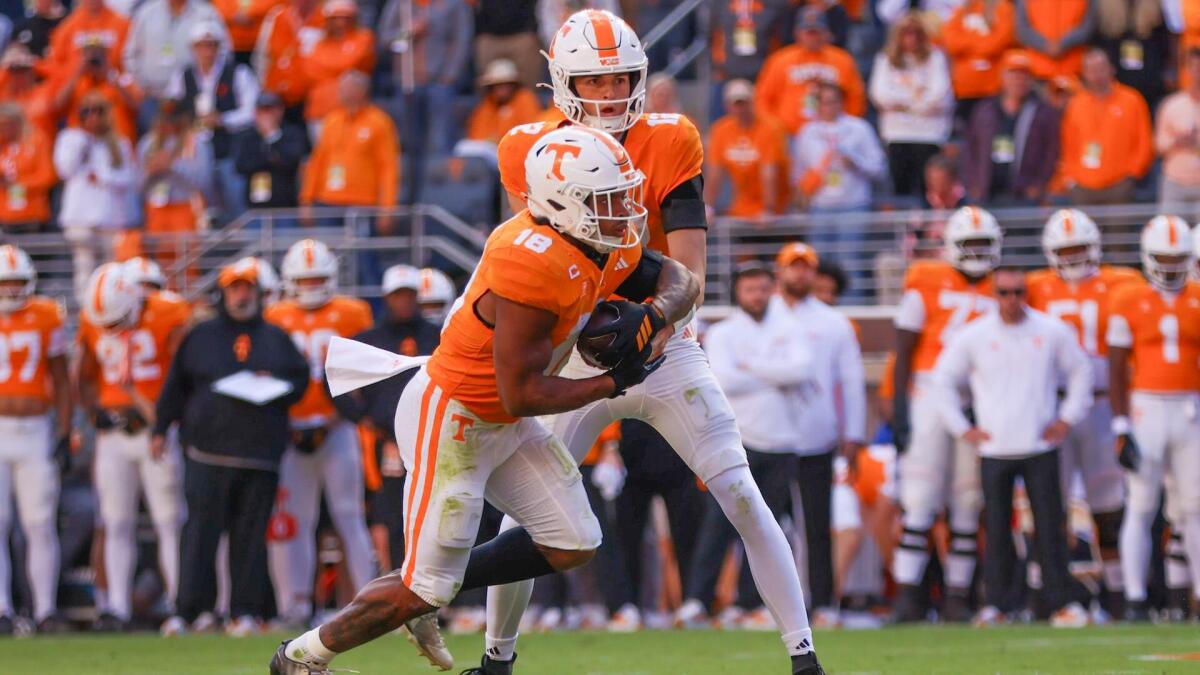
LSU Travels to No. 9 Tennessee as 1.5-Point Road Favorite Saturday
LSU travels to Neyland Stadium on Saturday as a narrow 1.5-point road favorite against No. 9 Tennessee in...

MSU Denver Beats Colorado Mesa in Five, Plays Angelo State Friday
MSU Denver survived a five-set grinder Thursday afternoon, knocking off Colorado Mesa 3-2 in the NCAA Division II...