
Net migration has fallen to the tens of thousands for the first time in decades, a threshold successive prime ministers promised but never reached.
The shift marks a landmark moment in the national conversation about immigration, according to Chris Mason’s analysis for BBC News. Official estimates show 738,000 people arrived in the UK in the year to June while 661,000 left, leaving a net figure in the low tens of thousands. This is a dramatic turn from the near-million spike critics labeled the “Boriswave” under the previous government.
Two decades of broken promises
The story traces back to 1 May 2004, when the European Union expanded from 15 to 25 members overnight. It added 74 million people to the bloc and extended freedom of movement to citizens of Estonia, Hungary, Latvia, Lithuania, Poland, Slovakia, Slovenia and the Czech Republic.
The Labour government at the time chose not to apply transitional controls on workers from the new member states. This decision cranked net migration up and grounded abstract sovereignty arguments in visible community change.
David Cameron’s 2010 manifesto pledged to “take net migration back to the levels of the 1990s – tens of thousands a year, not hundreds of thousands”. His 2015 manifesto renewed the promise to “keep our ambition of delivering annual net migration in the tens of thousands, not the hundreds of thousands”. Theresa May’s 2017 manifesto promised “controlled, sustainable migration, with net migration down to the tens of thousands”. The target became a political mantra.
Boris Johnson broke the pattern in 2019. He offered an “Australian-style points-based immigration system” and insisted “overall numbers will come down”. They didn’t — they soared.
Rule changes, not Brexit, delivered the drop
Brexit repatriated control over migration policy. But the BBC analysis notes it delivered choices, not guaranteed outcomes.
The decline came after Rishi Sunak’s government, with then-Home Secretary Sir James Cleverly, substantially tightened visa rules. The incoming Labour government in 2024 inherited those restrictions and added further measures of its own.

In the latter decades of the last century, net migration was broadly net zero. Sometimes more folk left than arrived.
The 2010 Conservative manifesto of David Cameron harked back to those numbers. The 2015 Conservative manifesto of Cameron renewed the promise. The 2017 Conservative manifesto of Theresa May also included the promise. At the 2019 general election, Boris Johnson was in Downing Street.
The numbers underneath the headline
A lower net figure does not mean low migration flows.
The underlying statistics reveal large but offsetting movements: hundreds of thousands arriving and hundreds of thousands leaving each year.
Meanwhile, the picture varies sharply across the UK. The number of asylum seekers housed in Scotland has risen 20% over the past year even as the UK-wide total falls.
Glasgow remains the council area with the largest asylum accommodation population. Increases were recorded from Aberdeen to North Lanarkshire.

Visible immigration shifts political debate
The argument about immigration once felt theoretical and intellectual to many people. That changed given the scale of immigration they could see.
Plenty of places, particularly beyond the big cities, felt the rapidity of change.
Immigration took on a greater political salience. It became a question of whether all control over migration should be re-imported to Westminster.
What comes next for sectors reliant on overseas workers
The political conversation may be turning a page, but practical questions remain.
Andy Burnham’s push to reform social care in England collides with a migration system now calibrated for lower net numbers. Social care is a sector traditionally dependent on overseas recruitment.
How that sector copes, and whether the current level holds, will shape the next chapter of a debate that has defined British politics for a generation.
As we examine this latest set of statistics, many will reflect that we have collectively as a country – if not everyone individually – exuded an anguish, sometimes an anger at the scale of immigration. It has been one of the standout demographic, social and so political issues of recent times.
Illinois Monitors Iowa Lead Azide Detonation; Plume Predicted Away
“We all agree … a controlled, mitigated detonation of the lead azide here in Iowa at our munition...

Jennifer Garner Volunteers at Clay County Food Distribution Ahead of Thanksgiving
“Welcome to Mountaineer Food Bank distribution right here in Clay County, West Virginia, where there is no grocery...

Nebraska Is the Only State That Drafts Election Workers Like Jury Duty
Nebraska is the only state that compels registered voters to serve as election workers under a 1914 law...
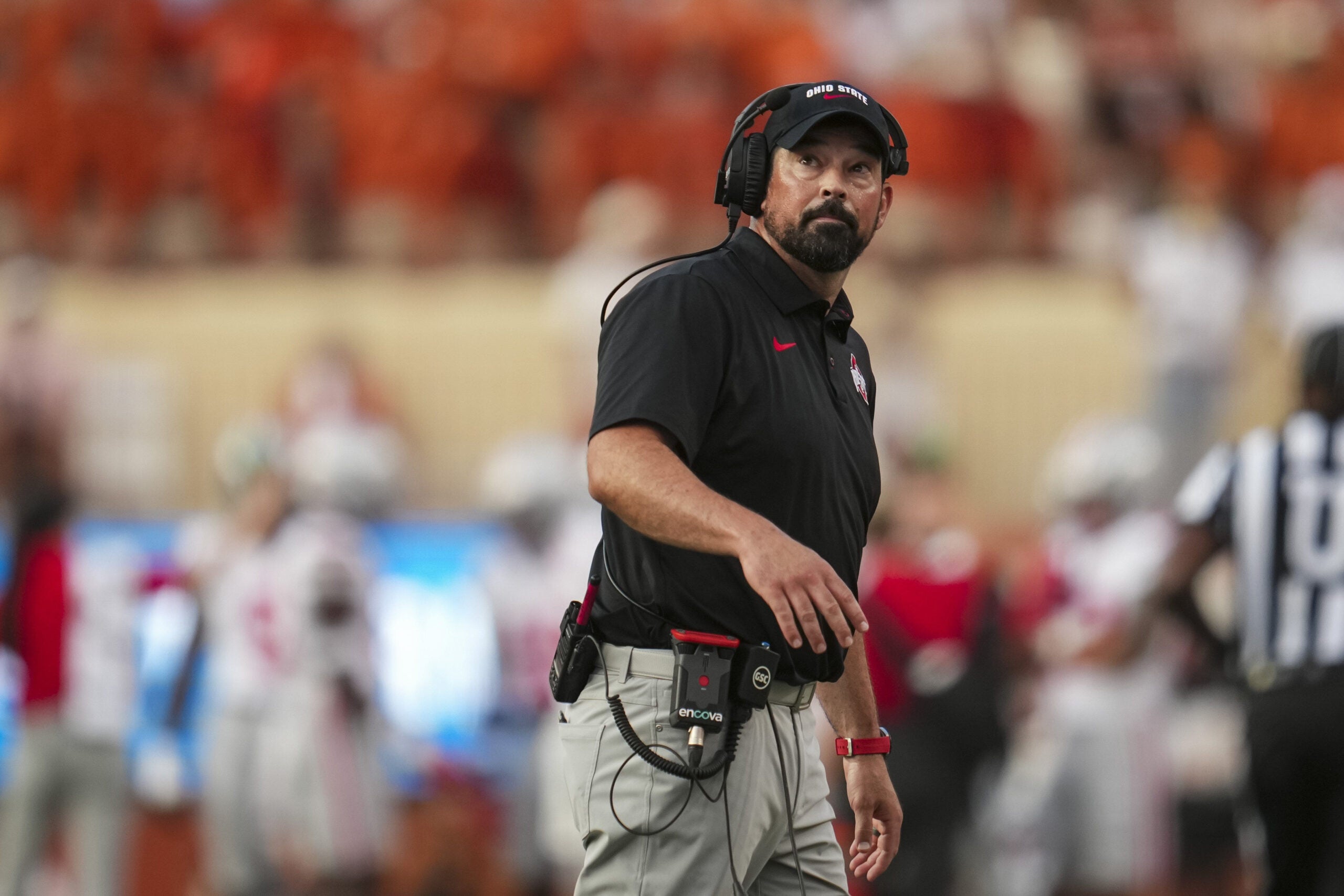
Five-Star No. 1 Recruit DJ Jacobs Decommits From Ohio State Two Days Before Michigan Game
Five-star edge rusher David “DJ” Jacobs decommitted from Ohio State on Thursday, two days before the Buckeyes host...