
The Grand Lodge of Utah rededicated the cornerstone of the Salt Lake Masonic Temple on Saturday, November 21, marking 100 years since the stone was first laid on November 5, 1926. The public ceremony, held at 1:45 p.m. at the building’s South Temple entrance, used traditional Masonic tools — a square, level and plumb — to examine the cornerstone, The Salt Lake Tribune reported.
Centennial ceremony
Grand Master Samuel L. Harris and Grand Marshal Dan Hamilton performed the rededication before a crowd that included Masons wearing ceremonial hats and pins. “This is symbolic of the glorious aim of spreading the cement of brotherly love, which unites us into a society of friends and brothers,” Grand Orator Mario Quintanilla said during the ceremony.
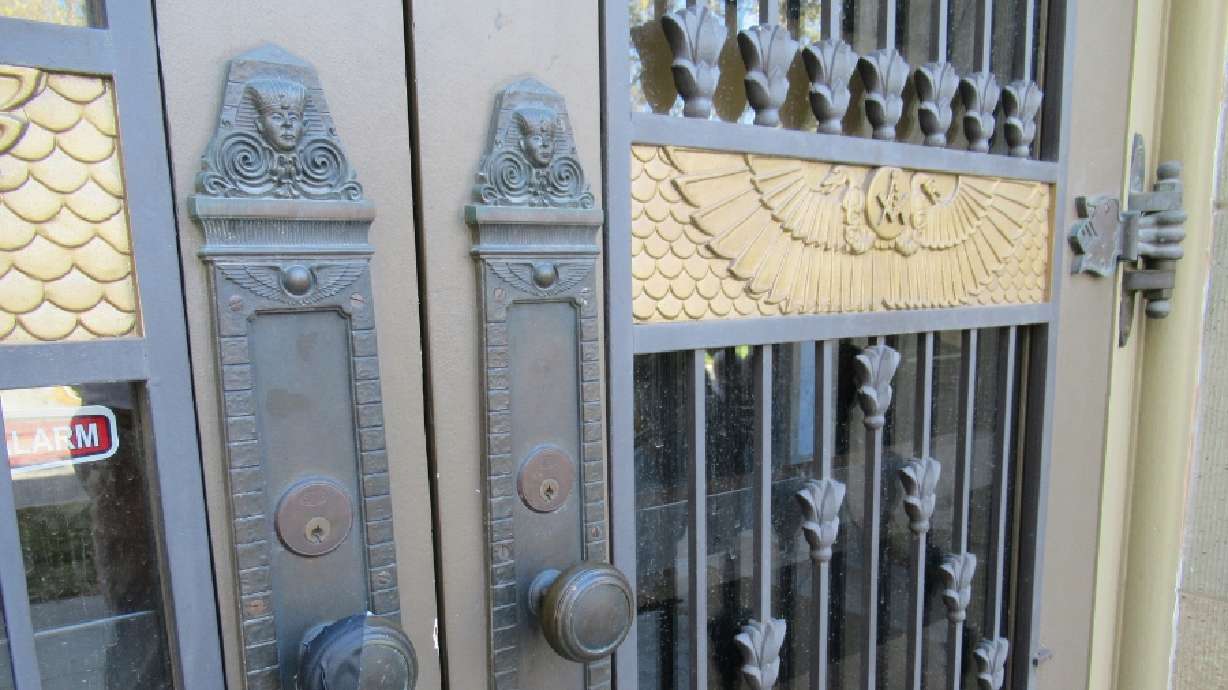
The Egyptian Revival building at 650 E. South Temple opened for occupancy on November 20, 1927, a year after the cornerstone placement, according to temple worker Ashlee Child. Construction in the 1920s cost $750,000 to build and $250,000 to furnish — roughly $19.4 million in 2026 dollars, KSL.com reported.
Public tours host visitors in themed rooms
The temple has shifted from a mostly private space to one that hosts farmers markets, mixed martial arts events and regular public tours. In September, Preservation Utah and the Salt Lake Masonic Temple Association launched a formal tour program. For $30, visitors can see the Egyptian, Moroccan and Colonial rooms, the auditorium with a ceiling depicting the 1920s night sky, and the locker once used by James Cash Penney, the J.C. Penney founder and lifelong Mason.
Tours scheduled for 30 minutes often stretch to four hours because of the volume of questions, Child said. “You get people that are curious that drive by and want to see [inside] the building,” said John Liley, the Grand Lodge’s official spokesperson and a former Grand Master. “We’ve also had people that [think] ‘spooky Masons’ that want to come in.”
Not a religious organization
Liley used the centennial to address a persistent misconception. Members must declare a belief in a Supreme Being and use terms like “temple,” but “it is not a religious organization — though members come from a range of faith traditions.”
The Church of Jesus Christ of Latter-day Saints acknowledges that its founder, Joseph Smith, was a Freemason and notes similarities between some Latter-day Saint temple rituals and parts of Freemasonry.
“A lot of people will say that we’re a secret society,” Liley said. “Again, we’re not. We’re a society with some private features to it.”
Masons rededicate cornerstone in public ceremony
Grand Master Samuel L. Harris said the event offered a rare chance to witness one of the few Masonic ceremonies open to the public.
The Grand Lodge of Utah debuted in 1872 and its members have laid cornerstones across the state, according to spokesperson John Liley. Records show the 1892 cornerstone at the Salt Lake City and County Building was completed under the auspices of the Masonic Fraternity. Utah now has 25 Masonic lodges and many smaller fraternity halls, Liley added.
Masonic architecture uses symbolic themed rooms
The building contains several large rooms each designed around a distinct theme: American colonial, Egyptian and North African architecture. Each room is laid out according to the cardinal directions, with the worshipful master in the east and the senior warden in the west, KSL.com reported.
Two ashlar stones — one rough, one polished — sit beside the master’s chair to represent the journey from an uneducated individual to a refined one.
A winding staircase with three, five and seven stairs on its landings symbolizes Masonic emblems, the five senses and the liberal arts and sciences. Two columns at its base represent the pillars of the Temple of Solomon, according to tour guide Jon Clark. The auditorium ceiling depicts the 1920s night sky, and the roof originally served as a functional sixth floor for gala events.
Restoration fund
Tour revenue helps support the effort.
Keep reading
Michael Bloomberg’s Falcon 900LX Makes 16-Minute Repositioning Hop to Newark Home Base
Michael Bloomberg's Dassault Falcon 900LX flew 17 nautical miles from Teterboro Airport to Newark Liberty International Airport on...

Chatham County Sues to Block Savannah Annexation of Bethesda Land
County filed suit Nov. 13 in Chatham County Superior Court seeking a declaratory judgment and temporary restraining order....

Baltimore Firefighters Sue City Over Unpaid Overtime After Missed Back-Pay Deadline
Baltimore firefighters filed a federal lawsuit Thursday after the city missed a September deadline to pay back overtime...

William Henry Middle Demolition Starts Dec. 7, Pending State Funding
Demolition of the closed William Henry Middle School on Carver Road begins Dec. 7, the Capital School District...