Tennessee earns a SeniorScore of 71, nearly matching the national benchmark of 72, yet hides a 58 in Health & Safety—the state’s weakest category and a figure dragged down by higher-than-average crime rates and lower life expectancy, SeniorAdvice.com reports. That split between financial appeal and protective oversight defines the Volunteer State’s senior care market, where more than 300 nursing homes serve the 16.7% of residents now aged 65 and older, according to U.S. Census Bureau data. CareScout reported on one Memphis community attempting to close that gap through comprehensive services and value pricing.
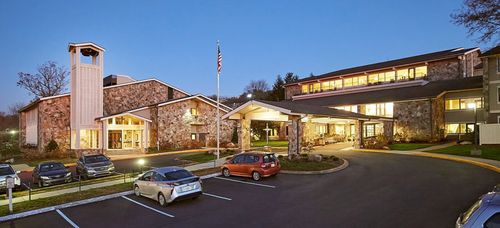
Christian Care Center of Memphis, located at 6500 Kirby Gate Boulevard, Memphis, TN 38119, operates as both a Skilled Nursing Facility and an Assisted Living community. While the average monthly cost for similar properties in the city runs about $3,585, CareScout notes the center distinguishes itself by folding extensive amenities into an affordable package. The facility maintains a 24-hour call system and round-the-clock supervision, with dedicated staff assisting residents through bathing, dressing, transfers, and medication management—services that allow seniors to live comfortably while receiving skilled care.
The stakes are personal for Tennessee’s seniors aged 65 and older, who comprise 16.7% of the state’s 6.8 million residents. Families must weigh the state’s strongest suit—Finances, scored at 69 thanks to no income tax, low property taxes, and below-average senior care costs—against the 58 in Health & Safety. SeniorAdvice.com found Tennessee’s Recreation & Leisure score at 61, lifted by more than 2,700 churches and nearly 300 golf courses, while General Quality of Life sits at 65. CareScout’s review of the Memphis center highlights a potential approach families could use to balance lower-cost policies with safety performance.
Christian Care Center Packs Amenities Into Daily Life
CareScout describes a campus designed for active aging, featuring a game room, library, business room, barber/salon, fitness room, garden, and a dedicated spa/wellness room. Residents take part in movie nights, resident-run activities, scheduled daily programs, community-sponsored events, and music programs. The community also encourages physical health through structured fitness programs and walking paths, aiming to keep residents mobile and socially engaged rather than isolated.
That emphasis on lifestyle matters in a state where the Health & Safety score lags behind national norms. The Memphis facility’s comprehensive care model—combining skilled nursing with assisted living—offers a middle path for seniors who need more than basic housing but do not require constant hospitalization. The 24-hour supervision directly addresses safety concerns that pull down the statewide score.
Hospitals and Churches Anchor the Kirby Gate Location
Proximity to essential services shapes daily life at 6500 Kirby Gate Boulevard. Saint Francis Hospital sits 2.1 miles away, the Memphis Eye Care Association is 1.7 miles distant, and a Walgreens pharmacy is just 0.3 miles from the property, ensuring medication access without long trips. Emmanuel United Methodist Church lies 0.7 miles away, providing spiritual community for residents. For daily errands, Chick-Fil-A is 1.9 miles out and Starbucks is 4.3 miles distant, keeping the facility connected to ordinary city life.
The Neighborhood Reports an 84-Year Life Expectancy
The area surrounding the facility presents a demographic picture that CareScout characterizes as a rich blend of cultures: 61% White, 77% Hispanic, 6% Asian, and 3% African American. The median income in the neighborhood stands at $60,955, and the life expectancy reaches 84 years. That local longevity contrasts with the statewide life expectancy concerns that contribute to Tennessee’s lower Health & Safety score of 58, suggesting the Kirby Gate area may offer protective factors the broader state lacks.
Over 300 Facilities Span the Volunteer State
SeniorAdvice.com identifies specific alternatives across Tennessee, including Maury Regional Medical Center in Columbia, a 20-bed community at 1224 Trotwood Ave in the 38401 zip code with around 55,000 residents; Life Care Center of Hickory Woods in Antioch, a 124-bed facility in the Park Place Condos neighborhood with an average household income of $51,532; NHC Farragut in Knoxville, a 100-bed facility at 120 Cavett Hill Ln in a wealthier area with average per-family income of $98,617 and about 34,000 residents; Life Care Center of Old Hickory Village, a 124-unit facility in the Fairway View neighborhood with approximately 23,000 residents in the 37138 zip code; and Diversicare of Oak Ridge, a 120-unit facility. The state maintains these options through its official facility listings, which catalog the over 300 nursing homes providing around-the-clock supervision, skilled nursing, and various therapies.
Tennessee’s 13 AARP Network of Age-Friendly States and Communities locales—including Chattanooga, Knoxville, and Memphis—offer warm summers and limited winter snowfall, appealing to retirees avoiding climate extremes. The state’s TennCare program supports residents who need Medicaid eligibility for long-term care, though the safety metrics remain a point of tension for policymakers.
For families evaluating Christian Care Center of Memphis against the $3,585 city average, the choice hinges on whether that price represents genuine value or merely the baseline for a state where financial ease has not yet translated into top-tier health protections.

Aaron Appelhans Wins Reelection Defeating Daron Wyatt 7426-5670
"We entered this race putting it in the Lord's hands, and we knew that if we lost, it...

Bismarck High Schoolers Work the Polls on Election Day
Bismarck High Schoolers Trade Study Hall for the Polls — and Get a Front-Row Seat to Democracy If...

Nine states elect historic governors in 2026 midterms: firsts across race, gender, and party
These 9 Candidates for Governor Just Made History Voters in nine states made history on Tuesday by electing...
Aaron Appelhans Wins Reelection as Albany County Sheriff Over Wyatt
Albany County Sheriff Aaron Appelhans secured a second elected term Tuesday night, fending off Republican challenger Daron Wyatt...